
Herbages gaumais en juillet : la palette de la nature épanouie
En plein cœur de l'été gaumais, les prairies se parent de couleurs vives. Découverte des espèces florales qui composent ce paysage unique.
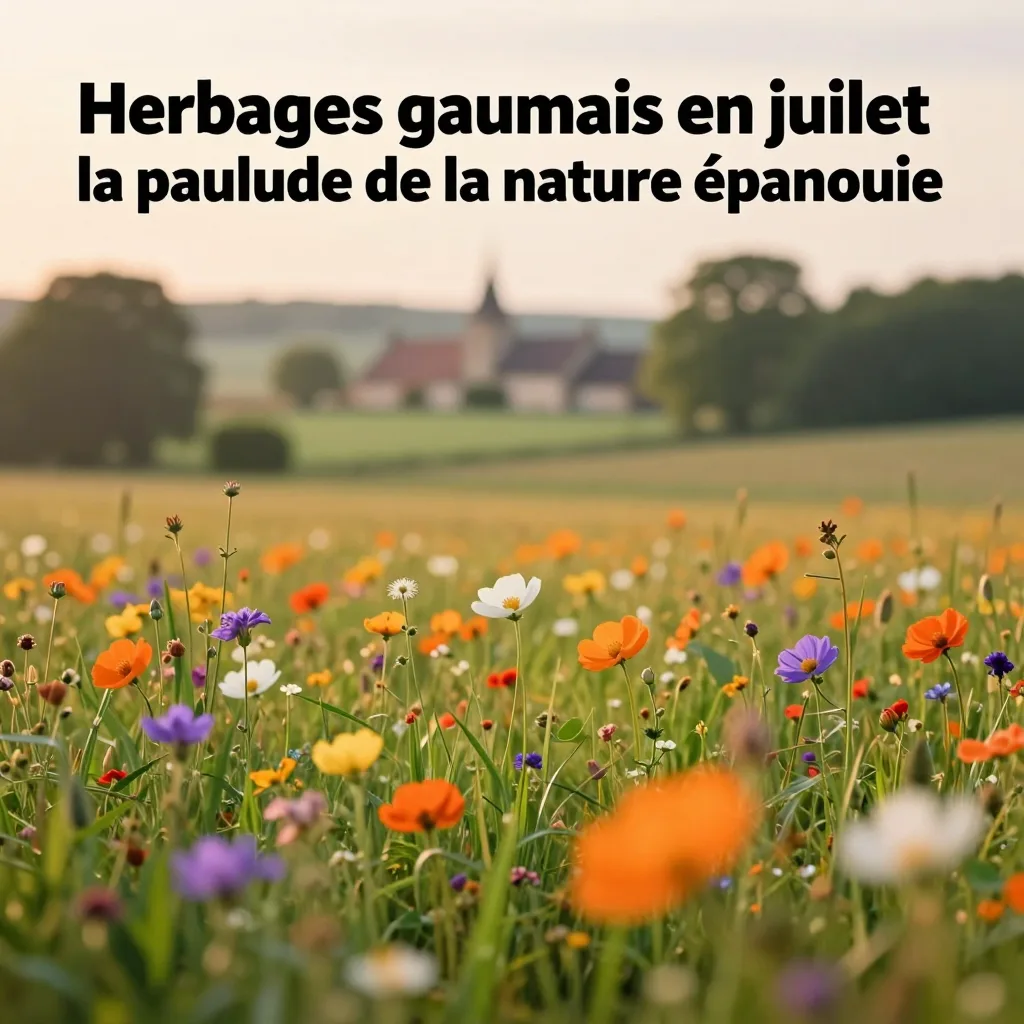
Juillet en Gaume : un carrefour de couleurs
La Gaume enJuly bears the mark of a nature at its peak, where the fields of hayrust and the meadows of flowering grasses weave a landscape of unparalleled richness. The daylight hours stretch long, bathing the valleys of the Semois, the Chiers and their tributaries in a warm light. It is this very light, combined with the richness of the limestone soils, that encourages the proliferation of a flora worthy of the greatest botanical gardens. Walking along the paths that crisscross these open spaces, the walker is struck by the diversity of yellows, blues, and purples that dot the landscape. Ox-eye daisies dazzle in their abundance, their white petals surrounded by a golden disk. Here and there, purple loosestrife rises, its slender stems crowned with clusters of small violet flowers that attract bees by the thousand. Further, the wild chicory paints the roadsides with its sky-blue flowers, a subtle reminder that this region, at the crossroads of the Ardennes and Lorraine, is a melting pot of botanical influences.
Entre deux pâturages : l’équilibre des écosystèmes
These herbages, often overlooked in favor of denser forests or more spectacular cliffs, are in reality the beating heart of Gaume's biodiversity. Their existence is the result of a subtle balance between human activity and the generosity of the soil. The grazing of local breeds, such as the renowned Gaume cow or the rustic highland cattle, maintains the meadows in a mosaic of heights and densities. These animals, adapted to the rugged terrain, prefer the rough grasses of the prairies sèches over the more succulent meadows. Their droppings, scattered across the fields, enrich the soil and promote the growth of a variety of plants. This traditional pastoralism, less intensive than modern agriculture, allows for a richer flora, where even the most discreet species find their place. Among them, the yellow rattle, a hemiparasitic plant, attaches itself to the roots of grasses, living off their sap while leaving space for other more modest plants to flourish.
Promenades botaniques : où observer la nature en épanouissance
To fully appreciate this botanical diversity, the most effective method remains to walk slowly, with no other goal than to observe. The RAVeL network, which crosses the Gaume from north to south, offers a particularly suitable route. Along the old railway lines, now converted into green lanes, the vegetation thrives undisturbed. Here, you might come across the elegant purple angelica, its umbels of flowers rising above the other plants, or the delicate meadow crane's-bill, its pink petals visible from afar. For those who venture off the beaten track, the steep slopes of the Semois valley reveal an even more secret flora: orchids nestle in the grass, such as the common spotted-orchis, a modest but charming representative of the region's wealth.
Les herbages, acteurs discrets du terroir gaumais
Beyond their ecological role, these herbages also play a part in the local identity. The hay harvested in July, once dried, forms the basis of livestock fodder, a vital resource for livestock farmers. But it is also linked to the region's gastronomy: think of the fricassée au poulet, a local dish that often includes herbs from the meadows, or the fromage de chèvre produced by artisanal producers who pasture their herds on these very lands. The flavors of these cheeses, subtle and slightly wild, owe much to the diversity of the herbs consumed by the goats.
Un patrimoine qui demande à être préservé
Yet this heritage, though resilient, is not invulnerable. Climate change, which is making itself felt with more frequent droughts, threatens these ecosystems adapted to a more balanced climate. Intensive agriculture, by reducing the diversity of flora, also impoverishes the soil and the landscape. The preservation of Gaume's herbages therefore requires a collective effort: supporting local producers who maintain traditional grazing, limiting the use of pesticides, and valuing these spaces not only for their aesthetic qualities but also for their ecological functions. In Gaume, every field, every meadow, is a page of a living book. By taking the time to read it, we contribute to its conservation.
Envie de découvrir la Gaume sur place ?
Six maisons de caractère, jacuzzi, jardin clos, à quelques minutes des sites évoqués.
Voir les gîtes