Torgny, Belgium's southernmost village
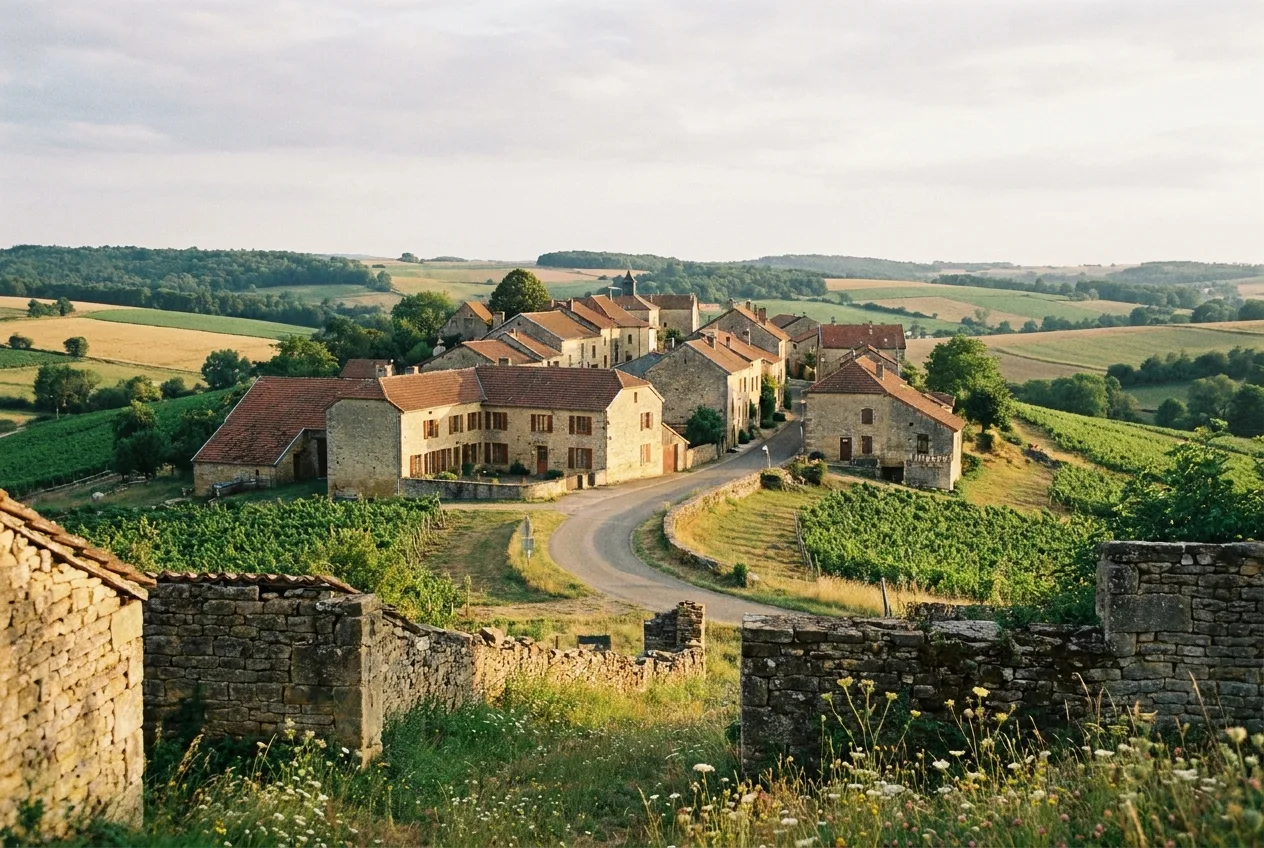
Perched on a sun-drenched hillside facing France, Torgny has cultivated a unique way of life for centuries. Its Lorraine architecture and microclimate make it a rare gem of Gaume heritage.
A village that flirts with the south
In Torgny, there's no talk of geographical coincidence. The first Walloon village — meaning the southernmost in Belgium — enjoys a surprising microclimate that allows vines to flourish on its limestone slopes. The ochre and pale yellow facades, Roman tile roofs, narrow lanes: everything here evokes a Lorraine hamlet rather than an Ardennes village. The Saint-Martin church watches over a cobbled square where time seems to have stopped, surrounded by listed houses that bear witness to past prosperity.
The village has retained the imprint of its wine-growing past. From the Middle Ages onward, monks cultivated vines on these well-exposed slopes. Even today, a few winemakers perpetuate this tradition, producing confidential vintages that surprise palates accustomed to Loire or Alsace wines. The exposed limestone, southern exposure, hot summers: Torgny benefits from precious natural assets for vine cultivation.
Preserved architecture and heritage
Strolling through Torgny means retracing the thread of a carefully preserved rural history. The farmhouses built from local stone, arched porches, small walled gardens: every detail tells the story of an era when building meant building to last. Several houses still bear dates carved in stone — 17th, 18th centuries — and sculpted lintels testify to the skill of local craftsmen.
The restored washhouse, below the village, recalls that water here was precious and communal. Ancient orchards, maintained by a few enthusiasts, shelter varieties of apple and plum trees forgotten elsewhere. The whole forms a coherent picture, protected by heritage listing that prohibits haphazard transformations.
Living heritage
Torgny is not a frozen museum. The village welcomes permanent residents, Sunday visitors, hikers seeking marked trails. Paths radiate toward beech forests, dry meadows where wild orchids and thyme grow. You meet cyclists from neighboring Luxembourg, families picnicking in the shade of lime trees.
The Gaume language still echoes in bar conversations, a savory blend of Walloon and Franconian. Spring village festivals and patron saint celebrations mark the year. Torgny cultivates this border identity, this balance between preservation and daily life, between heritage and conviviality. A village that doesn't compromise with its history.
Want to discover the Gaume in person?
Six characterful houses, hot tub, walled garden — minutes from the sites we write about.
See the houses