
The smugglers of Gaume, bold shadows of the borderlands
Between Belgium, France and Luxembourg, the Gaume border was the stage for a nocturnal ballet: that of the smugglers. A look back at these shadow figures who shaped collective memory.
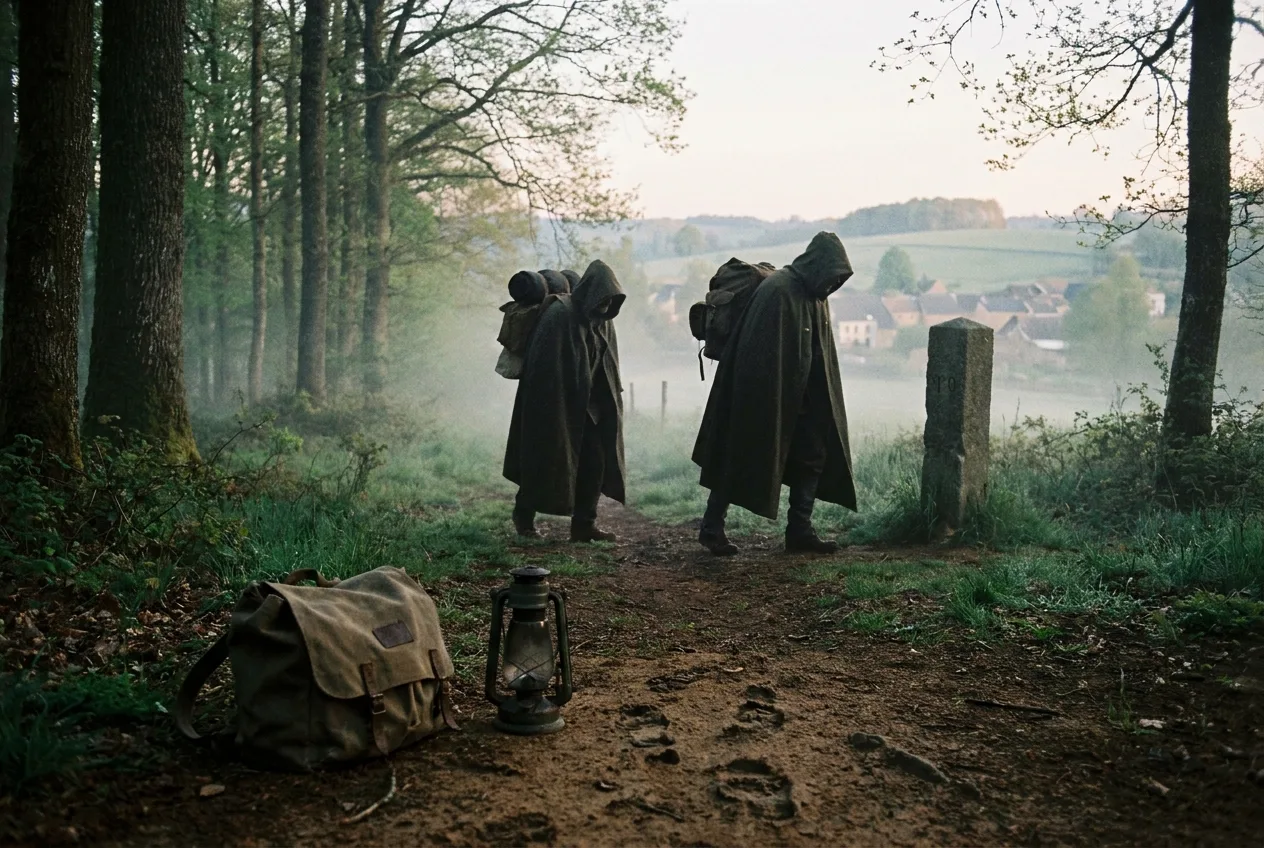
The smugglers of Gaume, bold shadows of the borderlands
Belgian Gaume shares more than sixty kilometres of border with France and the Grand Duchy of Luxembourg. This unique geographical position has shaped, over the centuries, a distinctive border culture. Among its most romantic figures: the smugglers, those shadow couriers who defied customs and crossed forests by night, loaded with coffee, tobacco, alcohol or forbidden goods.
A geography made for trafficking
Wooded valleys, sunken lanes, isolated farms: the Gaume landscape offered ideal terrain for evading customs patrols. Between Torgny and French Lorraine, between Latour and Luxembourg, secret paths numbered in the dozens. Smugglers knew every thicket, every ford, every hiding place in the barns.
This proximity to borders was more than a cartographic detail. It shaped daily life. Depending on the era and tax regimes, the same product could be cheap on one side of the imaginary line, prohibitively expensive on the other. Coffee in Belgium, tobacco in Luxembourg, alcohol in France: each commodity had its own economic geography.
A risky trade rooted in everyday life
Contrary to the romantic image of the lone bandit, smuggling in Gaume was often a collective, family affair. Women hid packages under their skirts, children carried small bundles in their schoolbags. Innkeepers served as relay points, farmers lent their barns to store merchandise.
Customs officers, too, were sometimes local people. Confrontations played out as cat-and-mouse games, between tacit respect and spectacular raids. Some nights, patrols turned a blind eye. Other times, pursuits ended in court, or even prison.
Oral memory, the last testimony
Today, the Schengen area has erased border posts. Former customs barriers have become heritage curiosities. But in village cafés, smuggling tales survive. People still recount a grandfather's nocturnal crossing, the secret hiding place in a certain cellar, the ruse used to trick the tax collectors.
These stories, often embellished by time, testify to an era when the border was not an administrative abstraction, but a lived reality, circumvented, negotiated. They also recall a form of popular resistance against states and their taxes.
Intangible heritage to preserve
Gaume smuggling is part of local identity as much as maitrank or the Gaume dialect. It tells of ingenuity, courage, but also the precarity that pushed entire families to take risks for a few francs of profit.
Some local associations are now collecting these oral testimonies before they disappear with the last witnesses. Exhibitions, books, evening gatherings: the memory of smugglers is gradually emerging from the shadows, not to glorify illegality, but to honour a shared page of history – that of the border people.
Want to discover the Gaume in person?
Six characterful houses, hot tub, walled garden — minutes from the sites we write about.
See the houses