
The fortified churches of Gaume, stone sentinels at the kingdom's gates
Long before castles, it was churches that defended Gaume's villages. Massive towers, arrow slits and refuge belfries tell of a time when faith went hand in hand with survival.
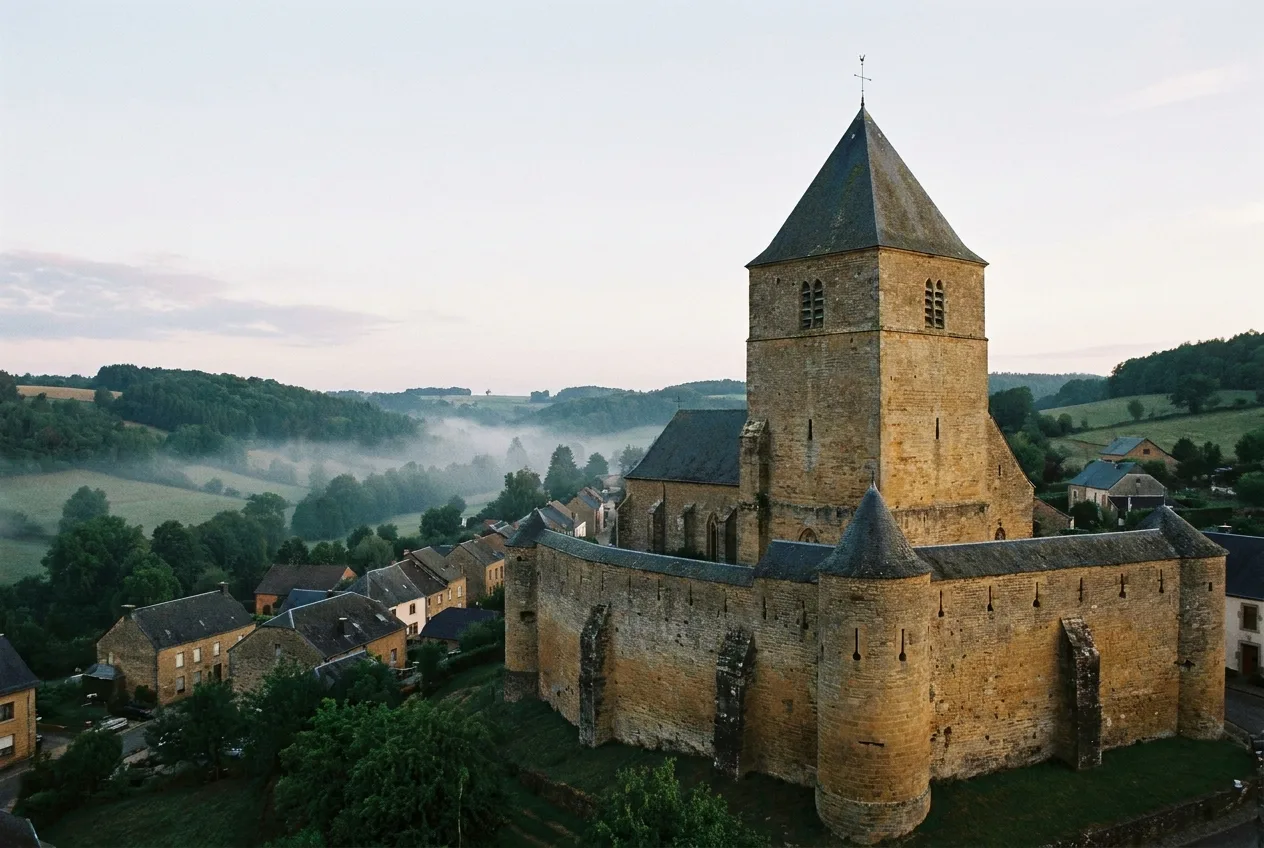
Sanctuaries that knew gunpowder
In Gaume, the church has not always been just a place of prayer. In the villages that dot the border, from Montquintin to Bleid, from Lamorteau to Torgny, thick walls and square towers betray a forgotten function: defense. From the Middle Ages onwards, these buildings served as fortified refuges during raids, pillaging or wars of succession that regularly tore through these marches of the French kingdom. The bell tower became a keep, the nave an armory, and villagers barricaded themselves inside with their livestock and provisions.
These church-fortresses still bear the marks of their dual purpose. In Montquintin, the squat Romanesque tower, pierced with arrow slits, has dominated the village since the 12th century. In Lamorteau, the square sandstone belfry, once crenellated, retains the bearing of a bastion. Elsewhere, traces of wooden galleries remain, from which stones and boiling oil were hurled at attackers. Some churches even had underground passages, secret routes linking the sanctuary to neighboring farms or hideouts in the woods.
Discreet heritage, between restoration and neglect
Today, these fortified churches are often the only architectural witnesses to Gaume's medieval history. The castles have disappeared, swept away by wars or demolished. The churches survived, protected by their sacred function and parishioners' loyalty. But their upkeep remains a challenge. Rural municipalities, with tight budgets, struggle to restore these stone giants. Roofs leak, plaster crumbles, stained glass cracks.
Some have benefited from exemplary restoration campaigns, regaining their austere splendor. Others wait silently for their heritage value to be rediscovered. Rarely do signs explain their history. Tourist circuits highlighting them are equally scarce. Yet they form a fascinating network, an invisible map of old defense lines and invasion routes.
Rediscovering fortified Gaume
Searching for these churches across Gaume means crossing sleeping villages where time seems suspended. It means pushing open a heavy studded oak door, discovering a cool nave with Romanesque vaults, looking up at a tower that has witnessed centuries of fear and hope. It means imagining watchmen scanning the horizon from the belfry, the bell ringing the alarm, families huddling in the shadow of thick walls.
These churches deserve the detour. Not for their splendor — they have little — but for their authenticity. They tell of a harsh, borderland Gaume, accustomed to defending itself. A Gaume where the community gathered around its church as around a rampart. Today they continue to watch, stone sentinels at the gates of a kingdom that no longer exists, keeping alive the memory of a people who knew how to hold firm.
Want to discover the Gaume in person?
Six characterful houses, hot tub, walled garden — minutes from the sites we write about.
See the houses