
The Gaumais cûtchau, when the pig becomes a village celebration
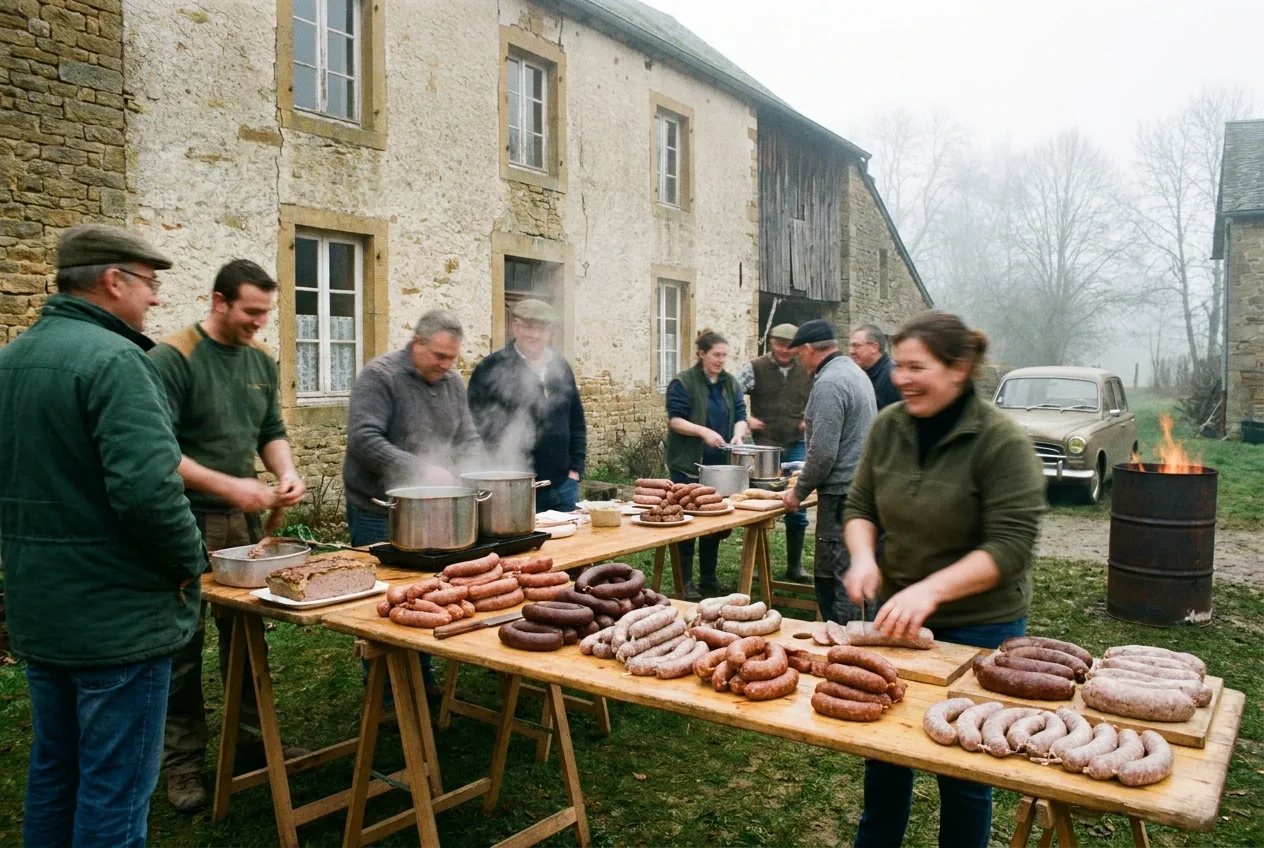
Every winter, Gaume perpetuates an ancestral ritual: the cûtchau, a day of pig transformation where black pudding, pâtés and sausages are made in the conviviality of farms.
A living winter tradition
When the first frosts bite into the Gaumais countryside, the villages come alive with a singular bustle. The cûtchau — pronounced "kutcho" in Gaumais dialect — marks the return of a centuries-old tradition: the collective transformation of the pig. Far from being mere butchery, this day is a social ritual where neighbours and family gather around a know-how transmitted from generation to generation.
In the farms of Latour, Montquintin or Sommethonne, work begins before dawn. The pig, raised locally, is slaughtered according to current sanitary regulations. Then begins the collective work: cutting, preparing the pieces, making black pudding, crafting pâtés and sausages. Each gesture follows inherited precision, each recipe carries the memory of ancestors.
From the pig, nothing is wasted
The cûtchau illustrates a simple peasant philosophy: valorising the animal in its entirety. The hams go to the salting room to become fine charcuterie. The offal transforms into black pudding, flavoured with onions and spices. The fat becomes lard for touffayes — those savoury tarts emblematic of Gaume. Rillettes, liver pâtés, dry sausages: each part finds its destination.
This pig economy long ensured the food autonomy of rural families during winter. Even today, many Gaumais people perpetuate the family cûtchau, less out of necessity than out of attachment to a living heritage. Some farms even open their doors to the curious, eager to understand where artisanal charcuterie truly comes from.
Conviviality and transmission
Beyond technique, the cûtchau is above all a celebration. Between two preparations, people share a glass of Torgny wine or local peket. At noon, the table sometimes gathers fifteen people around freshly cooked black pudding, accompanied by apple compote and country bread. The elders tell stories of their childhood cûtchaus, the younger ones learn the gestures.
This oral and practical transmission guarantees the survival of a know-how threatened by food industrialisation. Pâté recipes vary from one family to another, each jealously guarding its spice proportions, its secret tricks. Some village kermesses now organise public demonstrations, allowing the general public to reconnect with these ancestral practices.
The cûtchau reminds us that in Gaume, gastronomy is not limited to restaurants: it is born on farms, transmitted in kitchens, shared around generous tables. A lesson in terroir and humanity, served hot in the middle of winter.
Want to discover the Gaume in person?
Six characterful houses, hot tub, walled garden — minutes from the sites we write about.
See the houses