
The beech of Gaume, discreet monarch of the southern forests
In the shaded valleys of Gaume, the beech tree reigns as a silent master. This majestic tree has shaped the forest landscapes and collective memory of this corner of Belgium for centuries.
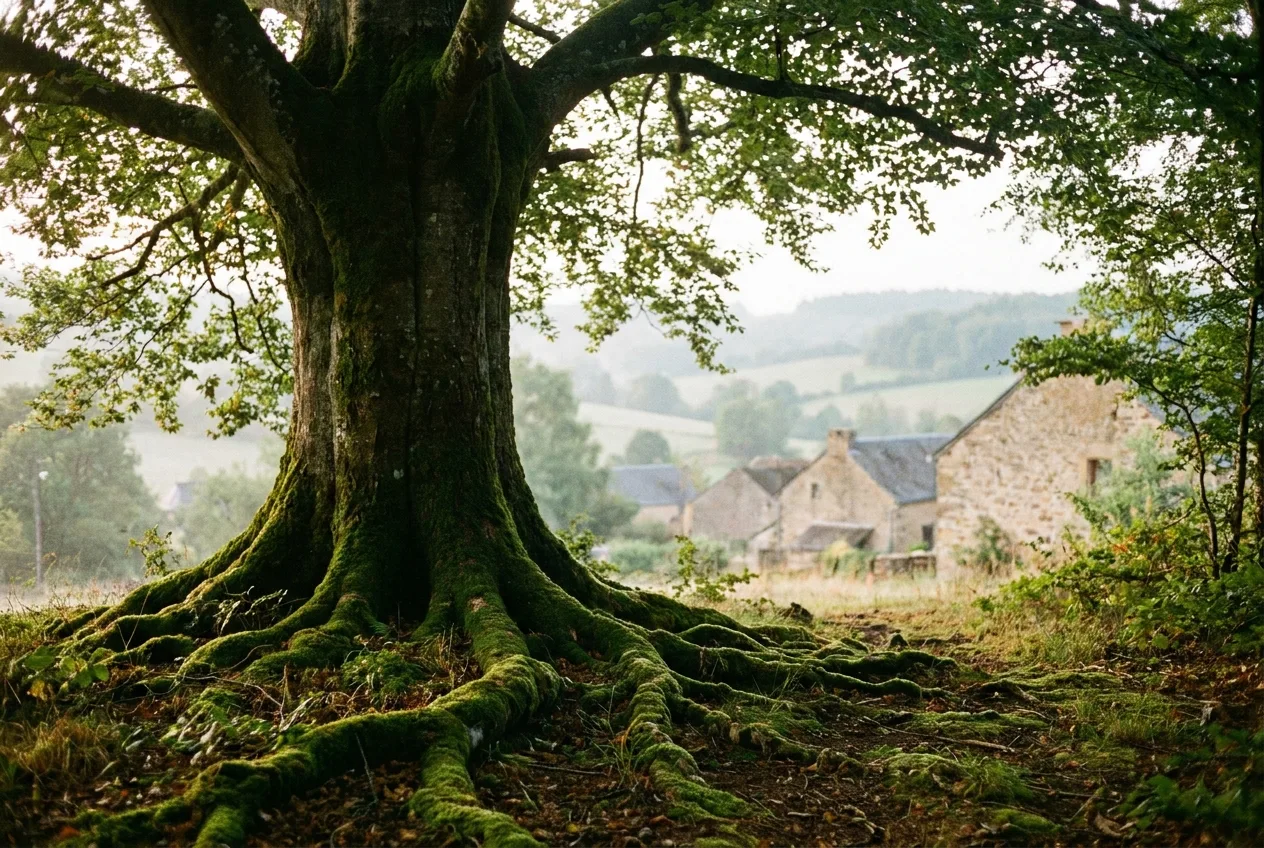
A giant with deep roots
The common beech (Fagus sylvatica) dominates the forest massifs of Gaume with a natural elegance that few species can match. Its smooth, grey trunk, resembling elephant skin, can reach impressive dimensions in the region's old-growth stands. In Gaume, pure beech forests occupy cool, shaded slopes where limestone soil surfaces and moisture remains constant even in midsummer.
These beech forests create a particular atmosphere. Beneath their dense canopy, light filters through in oblique rays that transform every walk into an almost cathedral-like experience. The understory, sparse in low vegetation due to the thick shade, is covered in spring with a carpet of wood anemones and bluebells, before the leaves completely close the vegetal ceiling.
The beech and the people of Gaume
The beech has always accompanied rural life in Gaume. Its hard, dense wood has been used to make furniture, agricultural tools, and frameworks. Gaume woodcutters know its qualities: difficult to work when green, it becomes magnificent once dry and polished. In homes, beech provides appreciated firewood that burns slowly, releasing steady heat.
Beechnuts, those small triangular fruits with brown shells, feed wild boars, squirrels, and forest birds. In the past, villagers drove their pigs into the forest during abundant years, an ancestral practice that closely linked the rhythm of seasons to the peasant economy. This tradition has disappeared, but collective memory retains traces of these "beechnut years" when the forest offered its riches.
Walks beneath the canopy
The beech forests of Gaume offer hikers paths of soothing beauty. The Rulles valley, the woods around Montquintin, and the wooded slopes overlooking the Semois shelter remarkable stands. In autumn, the spectacle becomes magical when leaves turn from deep green to gleaming copper, then to the golden brown that carpets the ground with a covering that crunches underfoot.
Some century-old beeches still bear the scars of ancient initials carved into the smooth bark, silent witnesses to youthful loves or woodcutters' passages. These memory-trees tell in their own way the discreet history of Gaume, the one that doesn't appear in books but can be read in the very texture of the landscape.
To walk through a Gaume beech forest in June, when green light bathes the understory and silence is broken only by a song thrush's call, is to touch the very essence of this region: a subtle balance between generous nature and measured human presence, where each tree carries within it several human lifetimes.
Want to discover the Gaume in person?
Six characterful houses, hot tub, walled garden — minutes from the sites we write about.
See the houses