
Orval's medicinal plant garden, the monks' living pharmacy
Behind the abbey walls of Orval, a secret garden has cultivated healing herbs for centuries. A visit to a monastic tradition still alive today.
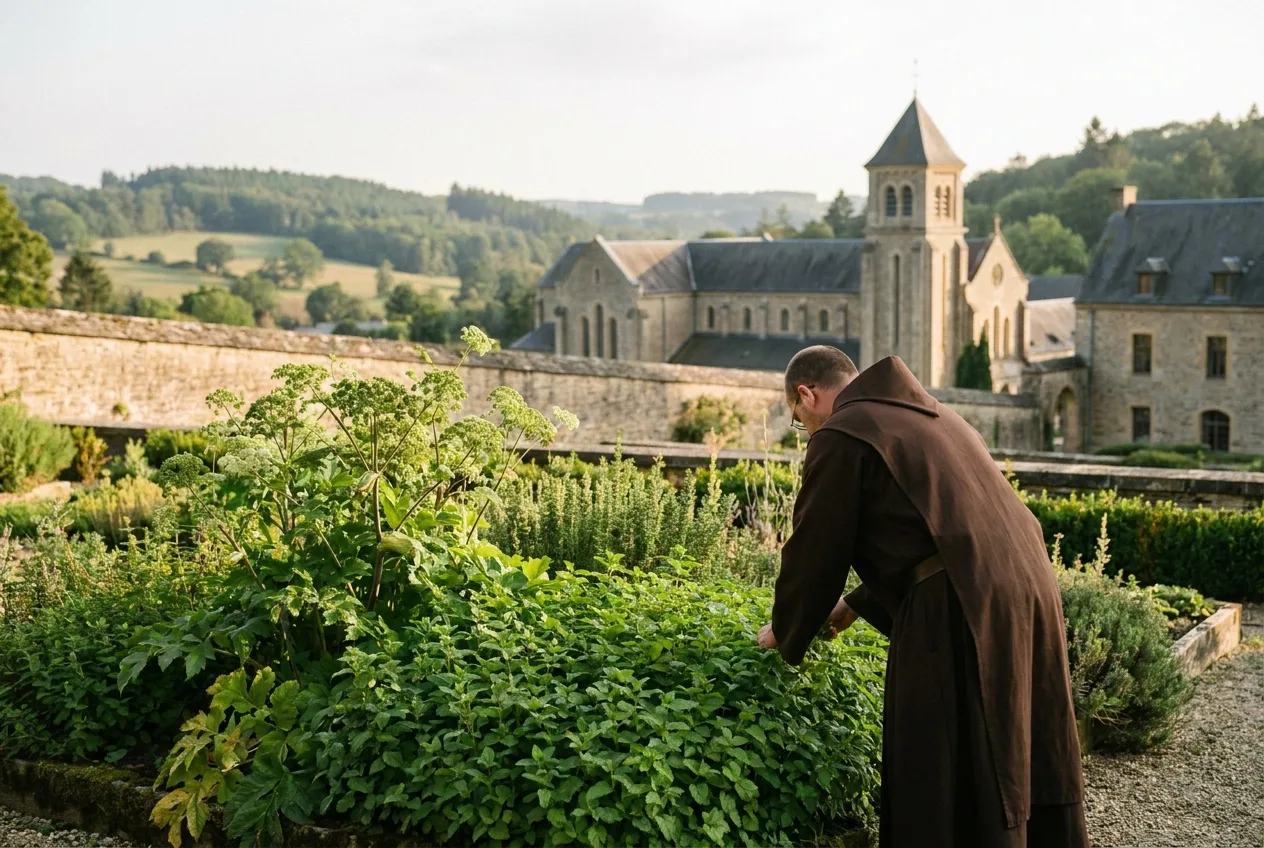
An open-air pharmacy
A few steps from the Mathilde fountain and the medieval ruins, Orval's medicinal plant garden unfolds its geometric beds in an almost monastic silence. This is not an ornamental garden, but a living conservatory of millennial knowledge. Here grow lemon balm, sage, hyssop, valerian — plants with ancient names that evoke prayer as much as healing. The Cistercian monks who made Orval a spiritual landmark were also botanists, pharmacists before their time.
This garden is part of a tradition dating back to the first medieval monasteries. Cistercian rules imposed self-sufficiency: grow your vegetables, brew your beer, heal your sick. Medicinal plants occupied a central place in this closed economy. Each abbey had its herbularius, its gardener-apothecary, who mastered the delicate art of harvesting, drying, and macerating.
Yesterday's simples, today's remedies
The current garden, reconstructed according to historical plans, contains several dozen species. You'll find classics of herbal medicine: chamomile for digestive troubles, thyme for respiratory pathways, peppermint for its soothing virtues. But also rarer plants, like mugwort or rue, whose uses have been forgotten by the general public.
Each bed is carefully labeled, with the Latin name, properties, sometimes a quote from Hildegard of Bingen or a medieval herbalist. The visit becomes a lesson in applied botany, where one rediscovers that many modern medicines find their origin in these leaves, stems, and roots. Aspirin descends from willow, digitalin from foxglove — and the monks knew this well before the laboratories.
A fragile heritage to preserve
This garden is more than a tourist curiosity. It embodies a relationship with living things, a patience, an attention to natural cycles that our era has often lost. The monks use neither pesticides nor chemical fertilizers, respecting a subtle balance between species. Some plants attract pollinators, others repel pests — a miniature ecosystem.
The transmission of this knowledge raises questions. Who still knows how to prepare a linden tea, an arnica balm, a burdock decoction? Orval's garden reminds us that before being consumers of capsules, we could be gatherers, preparers, responsible for our own health. A lesson in autonomy and humility, at the foot of ruins that whisper impermanence.
Visiting this garden means touching living memory, smelling sacred basil, crushing bergamot mint, understanding that monastic wisdom is not limited to Gregorian chants. It also blooms, discreetly, between the boxwood borders.
Want to discover the Gaume in person?
Six characterful houses, hot tub, walled garden — minutes from the sites we write about.
See the houses