
The Dancing Procession of Echternach, a Living Heritage at the Heart of the Greater Region
Every year on May 18, the small Luxembourgish town of Echternach comes alive with the Dancing Procession, a unique spectacle that transcends borders and attracts thousands of participants.
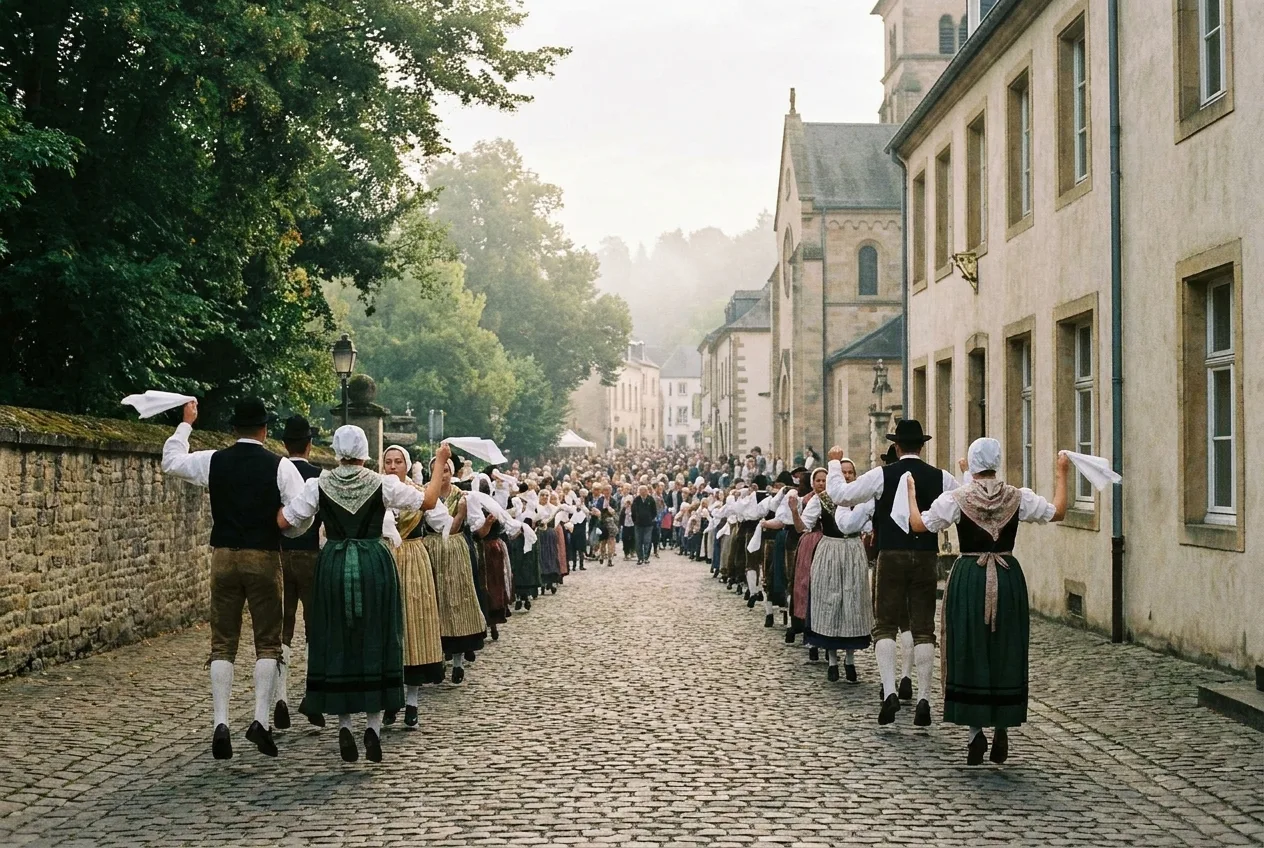
A Millennial Tradition
The Dancing Procession of Echternach, inscribed on UNESCO’s Intangible Cultural Heritage list since 2010, is one of the oldest and most fascinating traditions in the Greater Region. This celebration, which takes place every year on May 18, draws thousands of dancers and spectators from all over Europe.
A Unique Ritual
The procession begins early in the morning, when the first dancers gather in front of the Abbey Church of St. Willibrord. The participants, dressed in colorful costumes, set off in a slow and steady rhythm. The dancers advance in three steps forward, followed by one step back, creating a hypnotic wave that moves through the crowd. This movement, known as the 'schritt', is a collective choreography that symbolizes faith and solidarity.
A Transboundary Celebration
The Dancing Procession of Echternach is not just a Luxembourgish event; it is deeply rooted in the culture of the Greater Region, which includes the Belgian Gaume, French Lorraine, and the Grand Duchy of Luxembourg. Dance groups from these different regions come to participate in this celebration, testifying to the cultural and historical unity that binds these territories.
A Tradition That Endures
Although the procession was interrupted during World War II, it resumed in 1945 and has continued every year without fail. The loyalty of the participants and respect for tradition have allowed this event to survive the vicissitudes of time. Today, the Dancing Procession of Echternach is a symbol of resilience and cultural continuity.
A Shared Heritage
The Dancing Procession of Echternach is more than just a folkloric event; it is a living link between past and present, a celebration of faith and community. For the inhabitants of the Gaume and the Greater Region, it reminds them of the importance of preserving and passing on the traditions that have shaped their identity.
Want to discover the Gaume in person?
Six characterful houses, hot tub, walled garden — minutes from the sites we write about.
See the houses