
Montquintin’s Caves: A Voyage Beneath Gaume’s Hills
Secret cavities carved into limestone weave history through Gaume’s soil. Discover a world where geology and legends intertwine.
A Subsoil Sculpted by Time
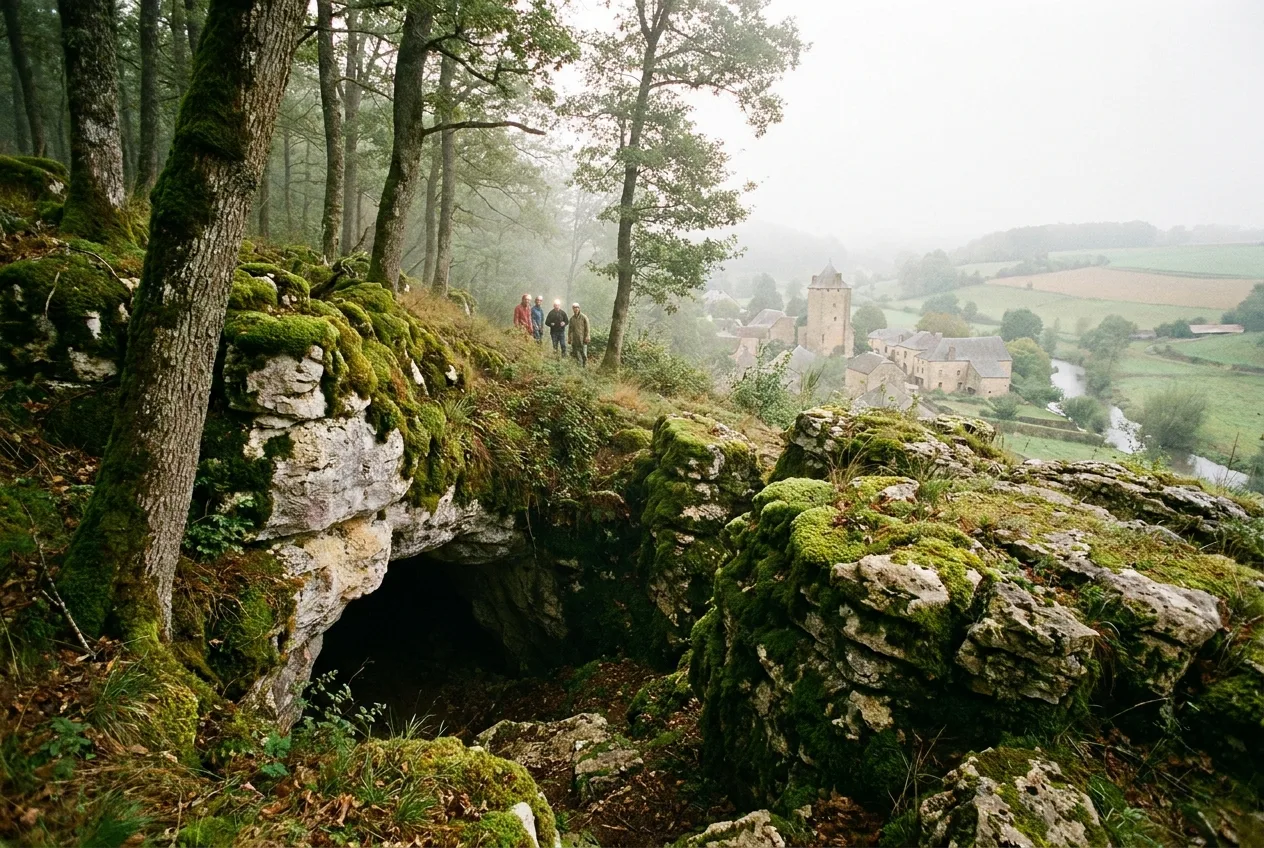
Perched high above the village of Montquintin, these caves offer an unassuming yet captivating dive into the earth’s depths. Carved naturally or lightly shaped by human hands, their network of passageways reveals the marks of bygone centuries. The local limestone, millions of years old, forms strange shapes: ribbed vaults, eerie alcoves, and hidden chambers. Here, the rock seems to whisper forgotten tales, echoes of the first human settlements.
The caves of Montquintin are not a recent phenomenon; their formation dates back to when Gaume was still a seabed. Over millennia, erosion and tectonic shifts sculpted these fissures, providing natural shelter for the Gaume folk as early as the Neolithic period. Archaeological finds suggest their use as storage or even ritual sites long before political borders crossed this region.
Between Myth and History
One persistent legend claims that itinerants or smugglers used these caves as hideouts during clandestine crossings between Gaume and neighboring Lorraine. Rumors circulate of secret passages leading to cellars in the village’s older homes. Though no definitive proof confirms this tale, the caves’ topography and discreet nature make them a fertile ground for storytelling among locals.
Centuries later, these caves served as open-air quarries for residents seeking building stone. History then merged with agriculture: grain and wood were sometimes stored here, exploiting the caves’ natural coolness. Today, though little known to the public, these cavities stand as a testament to the intimate geography of the region, where every hill seems to hold a secret.
A Walk of Small Dimensions
To explore them, one need only head to Montquintin’s heart—a village of half-timbered houses and cobbled streets suspended in time. The path often starts at the central square, winding through orchards and farmhouses before reaching the entrance to the caves. Their location is deliberately unmarked; it’s usually locals or geology enthusiasts who share their existence.
Inside, the darkness is almost total, relieved only by the flicker of flashlights or candlelight from occasional guides. Walls glisten with moisture, exhaling a faint mineral scent as cold air circulates. Delicate stalactites glint in the dim light, while the rock forms ghostly shapes—faces, figures, or abstract forms—as if nature herself played with the imagination.
A Heritage to Discover with Care
Though less dramatic than the cave systems of the Ardennes or Luxembourg, Montquintin’s caves offer a unique experience: an intimate encounter with the Gaume earth. Their limited accessibility preserves their authenticity while creating an exclusive visit. Geology buffs study the local rock formations, while walkers value the off-the-beaten-path discovery.
A word of caution: these caves are fragile systems whose millennia-old balance is easily disrupted. Past quarrying has already taken its toll, but today, visitors must tread carefully to avoid damage. Guided tours, led by passionate volunteers, help explain the local geology while minimizing impact on this discreet yet precious site.
Whether for history, geology, or sheer strangeness, Montquintin’s caves remind us that beneath its peaceful rural façade, Gaume conceals mysteries buried beneath its lush vegetation. A visit here is worth the pause: time itself seems to stand still, suspended between shadow and light.
Want to discover the Gaume in person?
Six characterful houses, hot tub, walled garden — minutes from the sites we write about.
See the houses