
Tracing the Gaume Ring: A Cycling Journey Through History and Nature
A lesser-known bike loop where cycling becomes a storytelling experience of Gaume’s villages and landscapes.
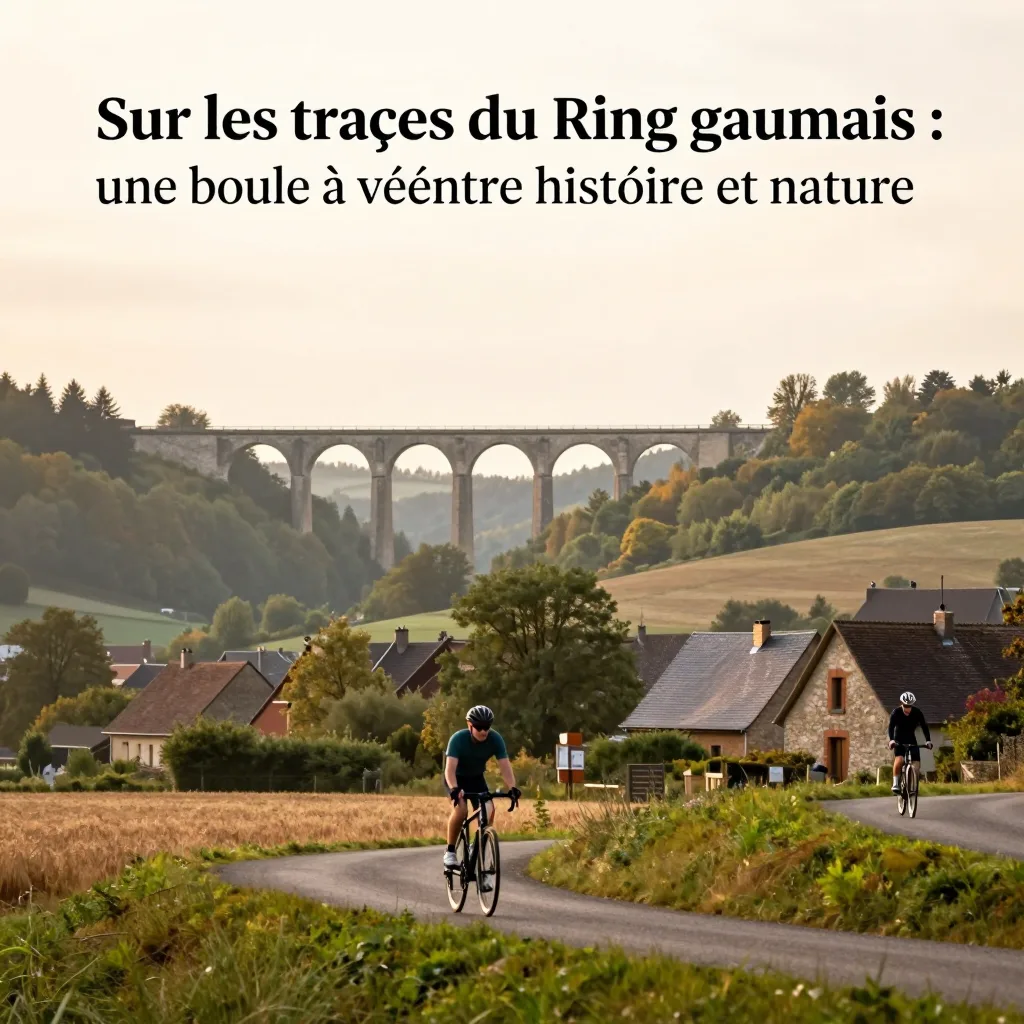
Between viaducts and golden hills: Industrial heritage shaping the scenery
While Gaume is often associated with vineyards or abbeys, it also boasts a discreet yet captivating railway heritage. Along old, now abandoned railway tracks, cyclists can discover what locals jokingly call the Gaume Ring. This 60-kilometre loop connecting Chiny, Florenville, and Étalle follows former lines closed in the 1980s, transforming into a scenic route where industrial history blends with rural landscapes.
Stone viaducts like the one in Buzenol bear witness to a time when trains linked Gaume to Arlon or Sedan. Today, the metal bridges and tunnel overgrown with ivy have become playgrounds for mountain bikers and leisure cyclists. Each kilometre reveals a new facet of the region: vine-covered hills, pastures where horses graze, and thickets where roe deer watch the sunset.
"You feel Gaume breathing differently here," says a regular rider of the route. Villages like Sommethonne, with its Romanesque church, or Suxy, with its stone houses, tell a preserved rural story, away from tourist crowds. The Gaume Ring is more than a bike ride; it’s an immersion into a land where every turn opens a new chapter of history.
A journey where the present talks to the past
The most surprising aspect? The route’s existence owes much to associations and local authorities. In 1990, Wallonia launched the RAVeL project (Réseau Autour des Vallées), converting old infrastructure into soft mobility paths. Some sections, like the track between Chiny and Izel, hug the banks of the Semois, while others delve into the Montquintin forests, where ancient beech trees tower like natural cathedrals.
Points of interest abound: Étalle’s abandoned rail depot now hosts picnic spots popular with families. Further afield, Assenois features a plaque recalling how the line was a strategic asset during both World Wars. Without descending into nostalgia, the route invites reflection on territorial change—the evolution from 19th-century transport to 21st-century leisure activities, Gaume has turned old scars into new assets.
Tips for exploring the Gaume Ring with ease
This loop, suitable for all levels, can be covered in a day—or split into two days for those who prefer slow travel. Village cafés, like the one in Florenville, welcome cyclists needing a break, offering local treats. To avoid July’s midday heat, start early: dawn light over Torgny’s vineyards or pastures near Étalle creates magical scenes.
Some segments, like the descent to Latour, are trickier with loose stones underfoot. Trail maps or dedicated apps help plan the ride. Along the way, cyclists may also spot bike repair artisans—a sign that two-wheeled culture remains alive in Gaume.
Why this loop deserves your attention
More than just a leisure activity, the Gaume Ring opens a window into the region’s soul. It highlights the balance between nature and heritage, the quiet of the countryside alongside industrial echoes. While forests and dry meadows draw hikers, this route offers an alternative way to explore the territory—quiet, uncrowded, and authentically Gaume.
And if your next bike ride in Gaume became a journey through time? Perhaps all it takes is one turn of the pedal to uncover all its secrets.
Want to discover the Gaume in person?
Six characterful houses, hot tub, walled garden — minutes from the sites we write about.
See the houses