
In the Gaume countryside: encounters with those shaping the terroir
Beneath the Gaume summer sun, local farmers uphold age-old crafts. A dive into their daily lives, between harvests and traditions.
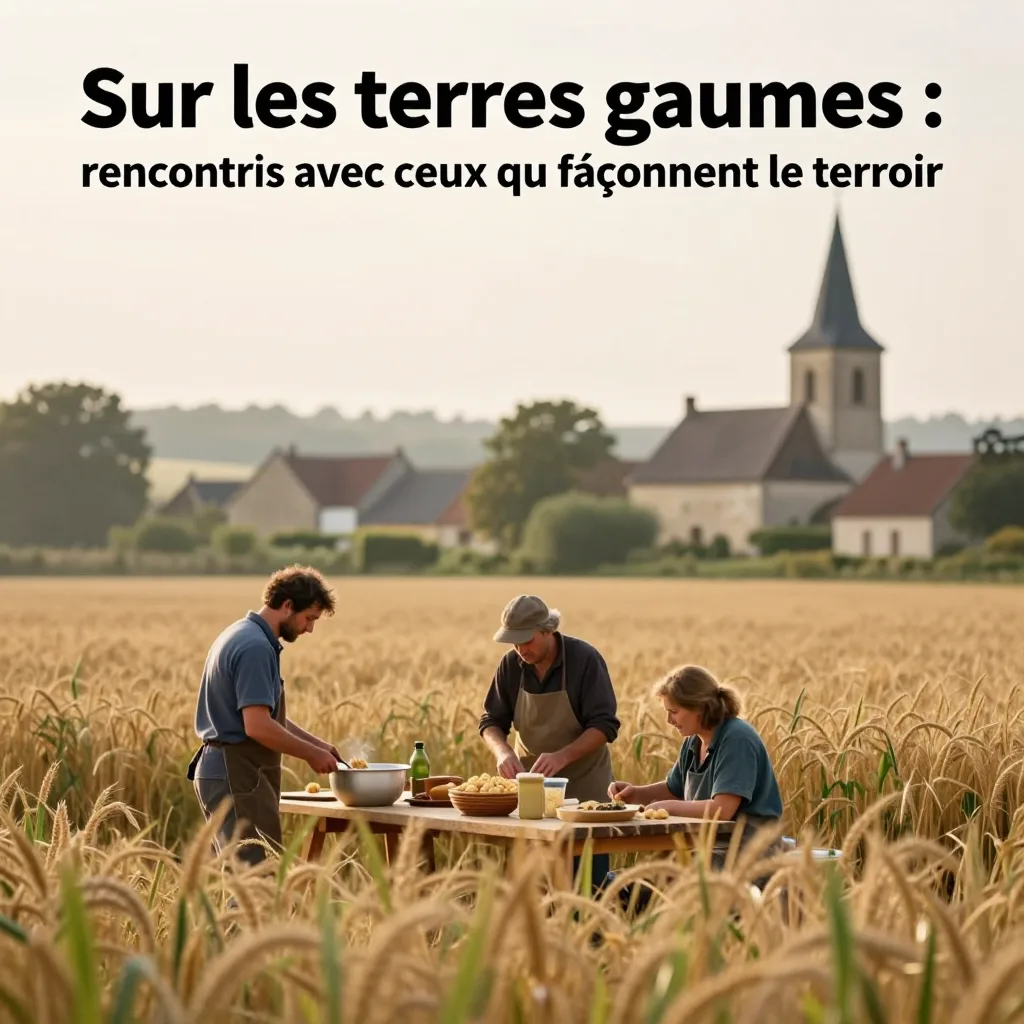
The song of wheat and the silence of stones
The rising sun bathes Virton’s wheat fields in light, where the stalks sway like waves in a lazy breeze. Here, Gaume farmers do not merely tend the land; they weave a nearly sacred bond with it. Their slow, deliberate movements speak of customs passed down through generations. Before a day already warmed by the summer sun, Edmond, a farmer near Sommethonne, explains how he chooses his seeds: “We take the old grain, the kind that resists droughts, not from catalogues. The land tells us what works.” Habits run deep, yet adaptation to a changing climate is etched into every gesture.
Gaume, that corner of Wallonia where the French Lorraine seems to brush Luxembourg, is a land of contrasts. Landscapes unfold between the rolling hills of dry meadows and the deep furrows of cereal fields. Farmers here often juggle multiple tasks: a few dairy cows for artisanal cheeses, an orchard for homemade jellies, or a kitchen garden where forgotten vegetables like the gloire de Paris squash thrive, their sweetish flesh perfect for Gaume pies.
Tools that carry centuries
In a barn shaded by trees in Latour, Jacques, a master wheelwright, works a piece of oak with monk-like patience. His calloused, steady hands shape wood that once turned the wheels of hay carts, now reinterpreted for modern harnesses. “Our ancestors didn’t know about steel tools. We work with what the land provides,” he murmurs while rubbing linseed oil into the wood. Tools hang on the wall — adzes, planes, mallets — still gleaming, proof that time hasn’t dulled their purpose.
Another tangible heritage: the old tobacco barns, echoes of a time when Gaume was Belgium’s pipe dream. Even abandoned in the fields, these long wooden structures, with their louvered windows, breathe history. Now, their purpose has changed: some shelter beehives, others store firewood. Reinvention is second nature here. When he speaks of them, Jean, a livestock farmer, smiles: “We used to dry tobacco here. Now we dry ourselves! Funny, isn’t it? A cool break from the fields, after harvest days.”
Dukes and myths: when the land tells its tale
In villages, stories intertwine — tales of the past and more recent anecdotes. In Montquintin, the Farmers’ House still hosts demonstrations of traditional threshing each summer, using an old-fashioned thresher. Children, wide-eyed, learn how, before the combine harvester, the whole family worked together to bring in the harvest before the storms. “We felt like an army of ants against the giant reapers,” recounts a local while peeling potatoes under the shade of an ancient oak.
Oral traditions live on too. Winter evenings weave tales of will-o’-the-wisps — ghostly lights near marshes — said to be the souls of departed farmers. A legend that underscores the Gaume people’s deep bond with their land, almost a fusion between the living and the soil.
And tomorrow?
Facing climate and economic challenges, Gaume farmers don’t throw in the towel. Some turn to agroecology: long crop rotations, natural mulching, or grass-fed livestock. Others diversify with on-farm processing workshops, selling honey, jams, or cured meats at local markets. “We don’t want to be dinosaurs,” says a young farmer in Étalle. “But our identity matters. We’ll find a way.”
As twilight settles over the hills, the last rays of sunlight gild the old stone farmhouses — a symbol of both a stubborn past and an unbound future. Here, terroir isn’t a hollow word: it’s a way of life, a way of thinking, a way of passing on.
Want to discover the Gaume in person?
Six characterful houses, hot tub, walled garden — minutes from the sites we write about.
See the houses