
Smugglers' trails: living memory of the Gaume borderlands
Between France, Belgium and Luxembourg, Gaume still bears the traces of a century of smuggling. Tales of a clandestine epic that shaped the region's identity.
When borders created outlaws
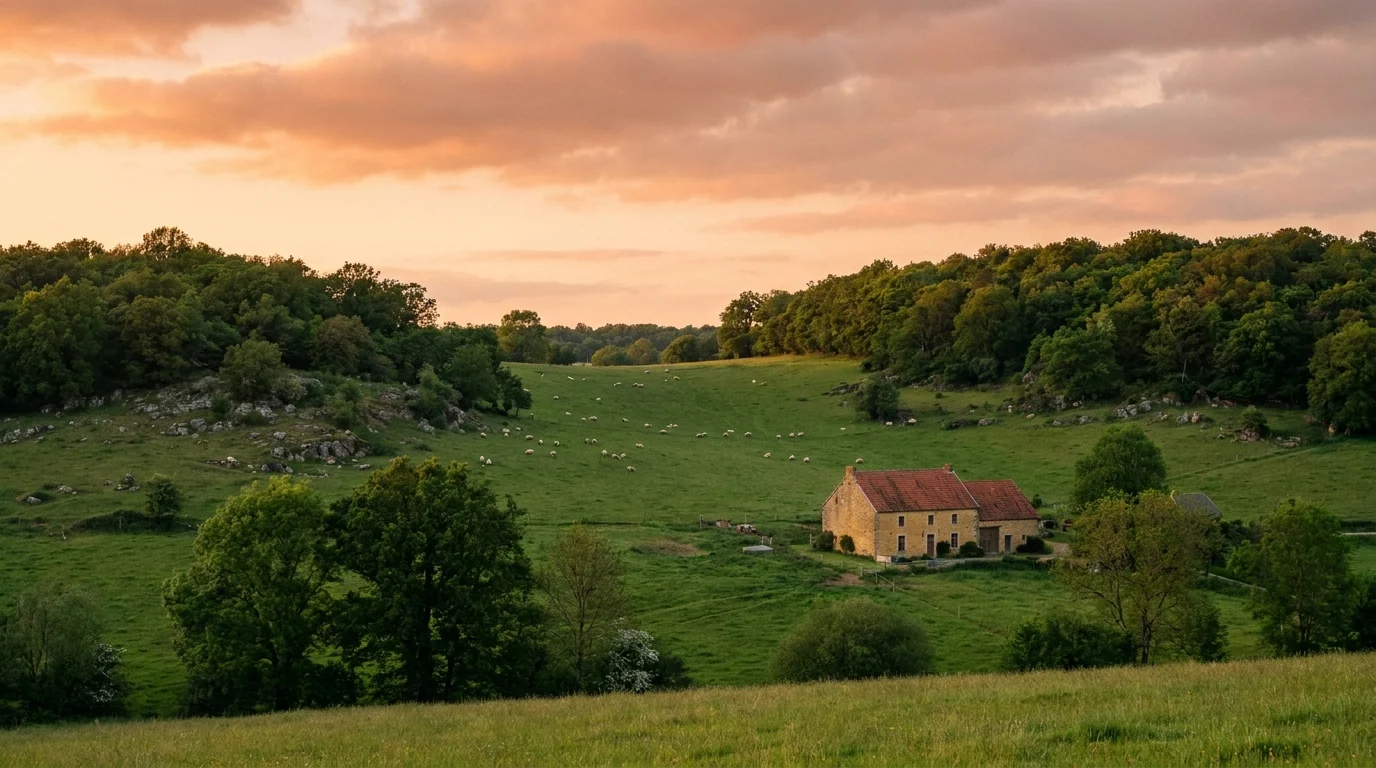
Gaume has not always been this peaceful region of hedgerows and vineyards. For over a century, its sunken lanes and forests sheltered an intense parallel activity: smuggling. Tobacco, coffee, butter, livestock — anything that could earn a few francs by exploiting price differences between France, Belgium and Luxembourg. The inhabitants of Torgny, Latour, Sommethonne knew every path, every ford, every clearing suitable for nocturnal exchange.
This practice, often considered a minor offence by the local population, was as much an economic necessity as a tradition. Customs officers patrolled, but village complicity was such that it took a good dose of luck — or betrayal — to catch a seasoned smuggler. Tales of chases through the woods of Orval or along the Chiers now belong to folklore, but they have marked collective memory.
Sunken lanes and forgotten hideouts
Today, walking certain hiking trails between Montquintin and the French border, one can still make out the old smuggling routes. These sunken lanes, bordered by hedges, served as discreet corridors. Some old barns, some cellars, still bear traces of fitted hideouts — false walls, double floors. In Torgny, a few elders remember the stories their grandparents told: moonless nights, sacks carried on men's backs, agreed signals.
Gaume's topography, with its enclosed valleys and wooded areas, offered ideal terrain for this cat-and-mouse game. The linguistic and administrative border between Lorraine and Gaume added a layer of complexity: French customs officers didn't always speak Gaumais, and vice versa. This cultural barrier played in favour of smugglers, who mastered local codes.
Intangible heritage of a border region
Smuggling wasn't just about profit. It wove bonds between villages, created solidarity that transcended national borders. People married across frontiers, shared harvests, helped each other. This porosity shaped Gaume identity: open, pragmatic, somewhat rebellious towards distant administration. Gaumais itself, a Romance Lorraine dialect, is an inheritance of this cultural continuity beyond lines on maps.
Today, European free movement has erased physical barriers, but memory remains. Some local museums display objects from that era — old customs uniforms, annotated maps, recorded oral testimonies. During walks, a few explanatory panels evoke those bygone times. It's a discreet, almost modest way of acknowledging this shadowy part that was also a part of life, survival, and ultimately, local pride.
Gaume doesn't deny its past as a land of passage and petty trafficking. It makes a story of it, another layer in the millefeuille of its history. Between Orval and Torgny, between fields and woods, we now walk in the footsteps of those who refused borders — and who, in their way, helped make this region what it is: a crossroads, a meeting space, a land of quiet autonomy.
Want to discover the Gaume in person?
Six characterful houses, hot tub, walled garden — minutes from the sites we write about.
See the houses