The Gaume beech: discreet giant of our summer forests
Beneath the green canopy of August, the beech reigns as silent master over Gaume's forests. Portrait of a tree that has shaped our landscapes for millennia.
The aristocrat of the woods
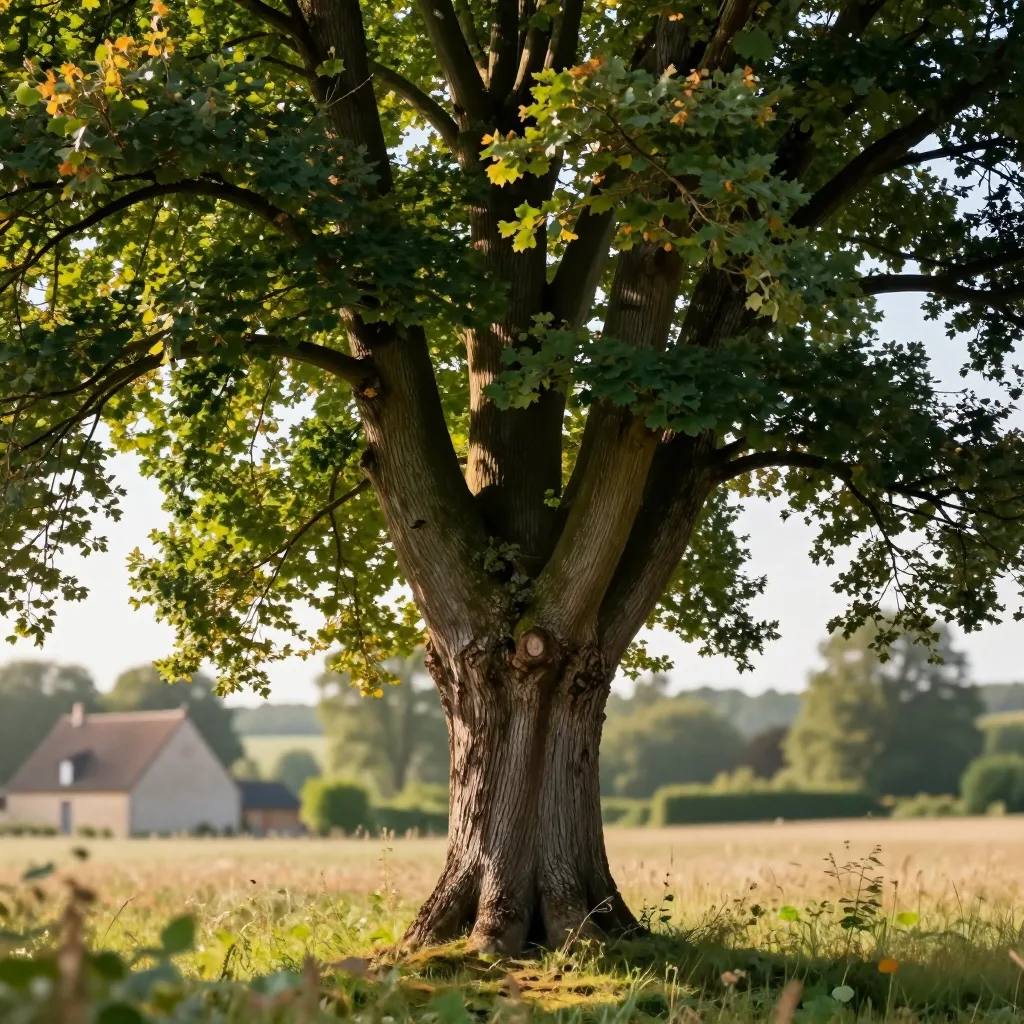
When August sunlight filters through the foliage, it's often a beech tree orchestrating this cathedral of light. In Gaume, this giant with its smooth grey trunk dominates the forest massifs covering nearly half the territory. Near Châtillon, Torgny, or the heights above Virton, beech groves form natural vaults where temperatures drop several degrees as soon as you step beneath the canopy.
The beech — Fagus sylvatica to botanists — thrives on our region's limestone soils. Its powerful roots anchor into the same terrain that gives birth to our dry grasslands. Capable of living three centuries and exceeding forty meters in height, it sets its own rhythm: its dense crown filters little light, creating a thick humus carpet on the ground where only a few shade plants prosper in spring, before the leaves fully unfold.
An ally for Gaume's wildlife
This mid-August, beech trees are quietly preparing their fruit. The beechnuts — those small triangular seeds enclosed in a prickly cupule — won't ripen until September. But already, wild boars and deer prowl the edges, knowing these oil-rich fruits will provide precious sustenance before winter. Squirrels will stockpile them in neighboring tree hollows.
Old beeches also shelter colonies of saproxylic insects, those discreet sentinels of forest health. Black woodpeckers, tawny owls, and bats find refuge in their cavities. A dead standing beech is never truly dead: it becomes a five-star hotel for a whole winged or crawling population.
Living memory of the landscape
Our Gaume beech forests tell a millennial forestry story. After the great ice ages, beech reconquered temperate Europe, becoming the dominant species. In Gaume, traditional forest management — often communal or monastic — shaped groves where venerable trees alternate with young shoots.
Today, these massifs play an essential climatic role: capturing carbon, regulating rainfall, cooling the air. During August's scorching days, a walk beneath the beeches of Orval forest or the Chiny woods offers incomparable freshness. The dense foliage forms a natural parasol, while leaf evapotranspiration creates a humid, soothing atmosphere.
Beneath the canopy this season
At this time of year, Gaume's beech forests reach their vegetative peak. The deep green leaves contrast with the pale, almost silvery bark of the trunks. Walking in the undergrowth means treading a carpet of accumulated dead leaves, observing patches of light dancing in the breeze, listening to the discreet rustling of the foliage.
Foresters know it well: the beech is a demanding but generous companion. Its dense, homogeneous wood has long been used to craft furniture, flooring, and tools. Today, it remains a noble species, symbol of the Gaume forest in its most authentic form. A discreet giant that, in the heart of summer, reminds us that a territory's true wealth is also measured by the shade of its trees.
Want to discover the Gaume in person?
Six characterful houses, hot tub, walled garden — minutes from the sites we write about.
See the houses