Gaume's apiaries: buzzing sentinels of the terroir
Between flowering meadows and ancient orchards, Gaume's bees craft a distinctive honey. Meet a discreet craft that watches over the biodiversity of our countryside.
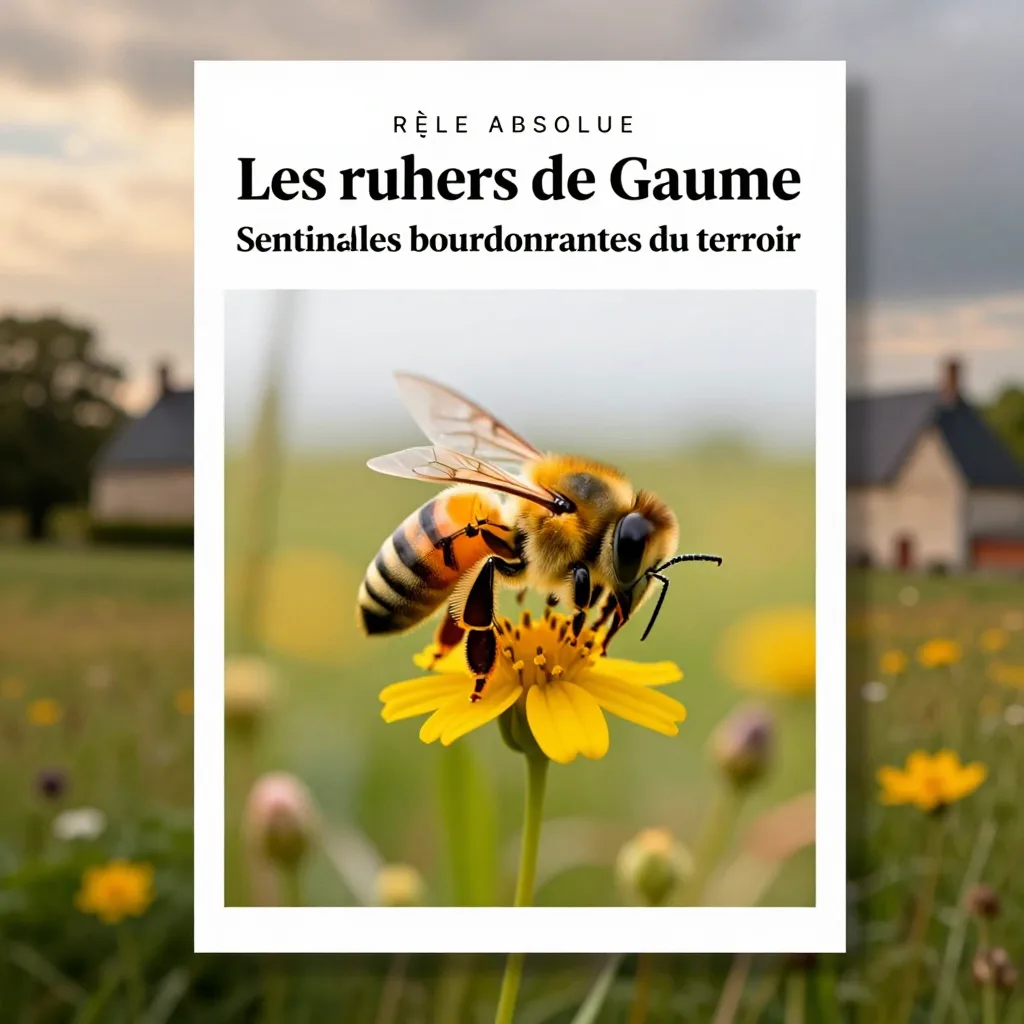
The bee, invisible ally of Gaume
In August's silence, a subtle hum animates the dry meadows and forest edges. Gaume's bees forage tirelessly, visiting in turn the wildflowers of limestone grasslands, century-old lime trees in villages, and the tall-trunk orchards that dot the landscape. This discreet activity shapes a honey with multiple characters: sometimes golden and floral in spring, more amber and full-bodied in late summer, always marked by the exceptional botanical diversity of our territory.
Gaume beekeeping remains an artisanal practice, driven by passion more than yield. Apiaries often nestle away from roads, in clearings sheltered from northern winds, facing the rising sun. This thoughtful placement takes advantage of Gaume's microclimate, that Lorraine mildness rising through the Chiers and Semois valleys. Local beekeepers know every flowering spot: late-mown meadows rich in legumes, hawthorn hedges in spring, lime trees perfuming village squares in June.
A honey that tells the landscape
Gaume honey resembles no other because its terroir resembles no other. Bees here collect nectar from plants rare elsewhere in Belgium: wild oregano from limestone slopes, wild thyme, self-heal, birdsfoot trefoil. This botanical palette reflects in the taste: a balance between sweetness and character, an often creamy texture testifying to slow natural crystallization.
Some apiaries benefit from proximity to ancient orchards, where apple, pear and cherry trees offer generous spring blooms. Others sit near forest edges, capturing nectar from brambles, wild raspberries and chestnuts. Each location produces different honey, a liquid signature of a piece of territory. Gaume beekeepers generally practice sustainable apiculture, without excessive transhumance, leaving bees sufficient reserves to winter.
Guardians of a fragile balance
Beyond honey, beekeeping plays a crucial role in pollinating crops and wild plants. Without bees, a large part of Gaume's biodiversity would collapse. Tall-trunk orchards, village gardens, flowering meadows: all depend on this ceaseless ballet between flower and forager. Gaume beekeepers know this and maintain respectful practices: wooden hives, natural wax, moderate harvests.
This territorial beekeeping fits within a broader effort to preserve Gaume's landscape. It dialogues with farmers maintaining flowering strips, with municipalities delaying mowing, with individuals planting nectar-rich hedges. A fragile but living ecosystem, where bees occupy a sentinel position. Tasting Gaume honey means tasting a preserved landscape, an ancient balance between humans and nature, a terroir gently defending itself against uniformity.
Want to discover the Gaume in person?
Six characterful houses, hot tub, walled garden — minutes from the sites we write about.
See the houses