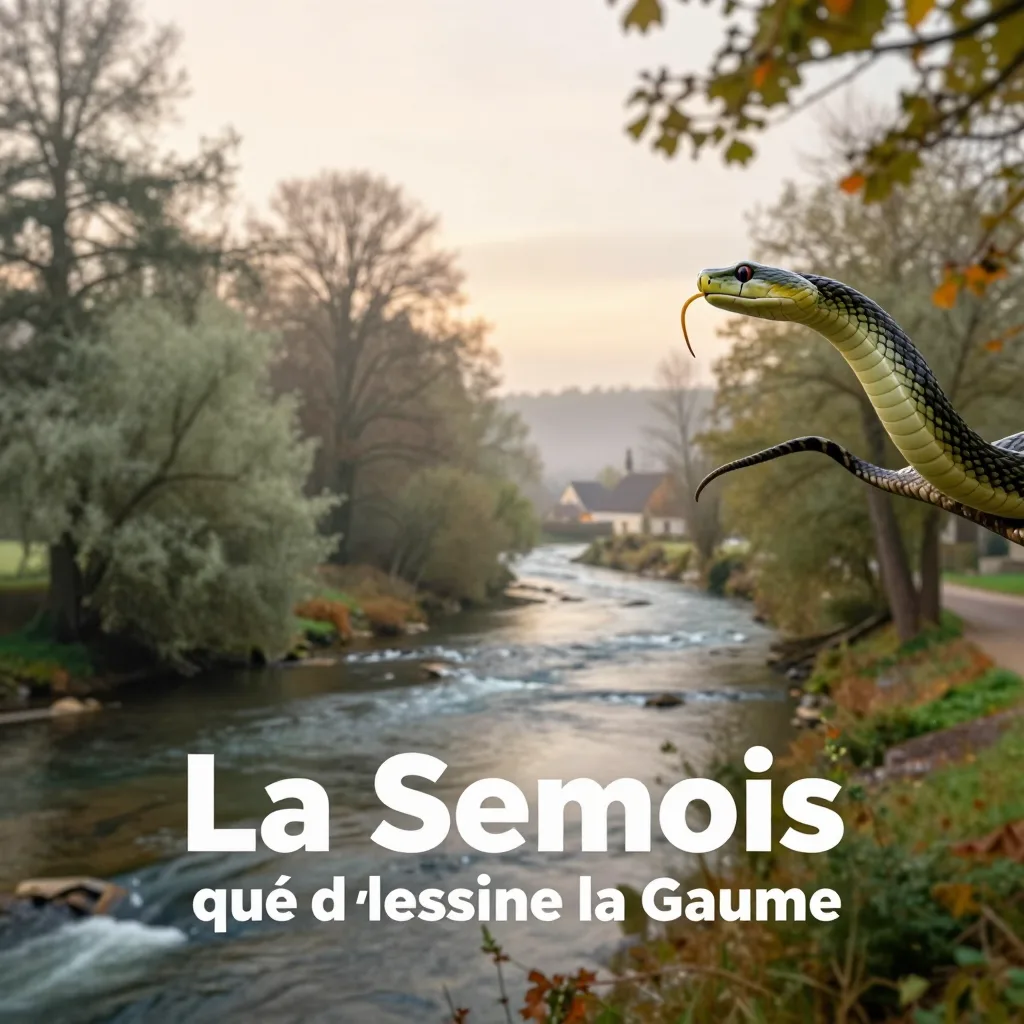
The Semois: the silver serpent shaping Gaume
Emblematic river of our territory, the Semois traces its meanders between deep forests and slate-roofed villages. A journey along waters that have shaped the soul of Gaume for millennia.
The Semois: the silver serpent shaping Gaume
It winds, undulates, caresses limestone cliffs and refreshes meadows. The Semois — or Semoy in France — is much more than a river: it's the vital artery of Belgian Gaume, connecting our villages, inspiring our painters and cooling our summers. From its source in Lorraine to its confluence with the Meuse at Monthermé, it crosses our territory like a silver thread weaving landscapes and memories.
A cross-border river with strong character
Born in the French Vosges, the Semois enters Belgium near Étalle, flows through Florenville, Chiny, and heads to Bouillon before diving back into France. Its capricious course has sculpted steep valleys, spectacular meanders — the Tombeau du Géant being the most famous — and wooded gorges that defy any attempt at wild urbanization.
This geography gives it a dual personality: peaceful in the Gaume meadows, tumultuous as soon as it plunges into the Ardennes massifs. Kayakers know it well: a descent of the Semois in August offers as many contemplative moments as technical rapids. The river never allows itself to be completely tamed.
A precious, fragile, living ecosystem
The Semois harbors remarkable biodiversity. Brown trout, bullheads, white-clawed crayfish populate its clear waters when quality standards are met. The banks offer refuge to kingfishers, grey wagtails and grey herons hunting in ambush.
But this richness remains fragile. Agricultural pollution, severe low water levels during heat waves, tourism pressures: the Semois requires constant vigilance. Local associations watch, raise awareness, clean up. Every gesture counts to preserve this natural heritage we have the privilege to experience.
Walking, paddling, contemplating
The Semois must be earned. Marked trails along its banks, viewpoints overlooking its loops, stone bridges spanning its waters: opportunities to encounter it abound. On foot, from Chiny or Florenville, walks reveal changing panoramas with the seasons. In autumn, the beech forests bordering it blaze copper and gold.
For the more adventurous, descending the Semois by kayak remains an unforgettable experience. Gliding at water level, brushing submerged roots, skirting cliffs where falcons nest: the river then reveals its most intimate secrets. No motor, no noise — just the murmur of water and bird calls.
The liquid soul of Gaume
The Semois has shaped our territory as much as our spirits. It has inspired poets and painters, fed mills and forges, connected isolated villages. Even today, it punctuates our summers, cools our scorching afternoons, reminds us that nature remains sovereign.
In the noise of the modern world, the Semois flows, indifferent and stubborn. It will continue long after us to draw its arabesques in Gaume stone and earth. It's up to us to respect it, protect it, pass on intact this liquid heritage to future generations.
Want to discover the Gaume in person?
Six characterful houses, hot tub, walled garden — minutes from the sites we write about.
See the houses