
Saint-Martin Church in Virton: a stone guardian at the heart of the city
In the center of Virton, Gaume's capital, stands a church whose neoclassical silhouette tells three centuries of history. A journey into living heritage, between blonde stone and collective memory.
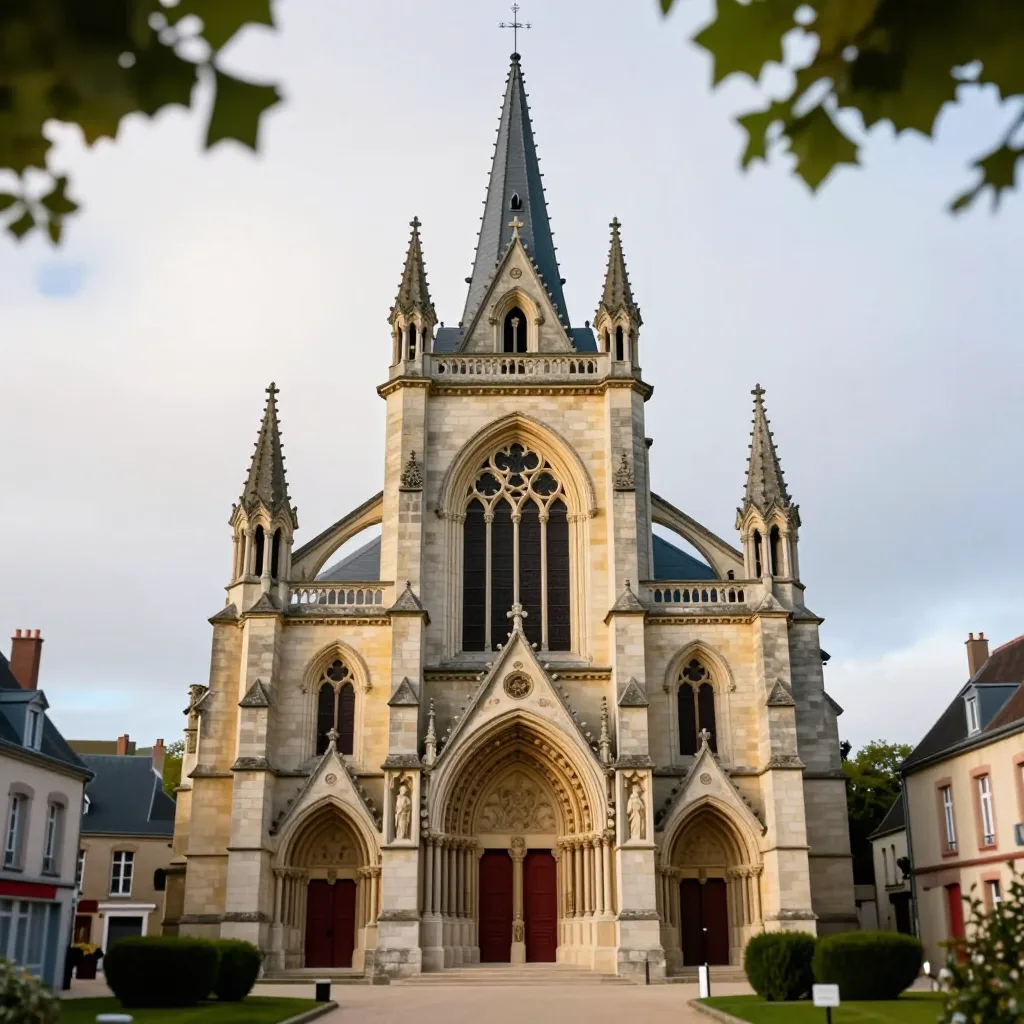
Saint-Martin Church in Virton: a stone guardian at the heart of the city
Some buildings embody the soul of a town. In Virton, capital of Gaume, the Saint-Martin church has played this role since the 18th century. Its neoclassical facade, sober and elegant, has dominated the central square for generations. We pass it every market day, it watches over the village fairs, it rings the hours. Yet how many take the time to truly look at it?
Neoclassical architecture in Gaume territory
Rebuilt in the second half of the 18th century, Saint-Martin church bears witness to an era when sacred architecture sought clarity, symmetry, and balance. The neoclassical style contrasts with the flamboyant baroque of some neighboring rural chapels. Here, no exuberant gilding: the local limestone, that characteristic blonde stone of our villages, structures the whole with rigor.
The nave, high and luminous, invites contemplation without overwhelming the visitor. Fluted columns, rounded arches, sober furnishings: everything breathes a certain restraint, almost Protestant in spirit, though we're in Catholic territory. It's this subtle tension that gives the place its charm.
A bell tower in dialogue with the landscape
Saint-Martin's bell tower, visible from afar, serves as both geographical and symbolic landmark. From the surrounding hills, Virton is recognized by its slender silhouette. This bell tower has witnessed wars, occupations, reconstructions. It has rung out the joys and sorrows of the Gaume community.
Climbing the bell tower — a rare privilege, usually reserved for Heritage Days — offers a panoramic view of Gaume. The gaze sweeps across slate roofs, wooded valleys, fields stretching toward the Luxembourg border. A moment suspended between heaven and earth.
Living heritage, rooted in daily life
Saint-Martin church is not a frozen museum. It still hosts services, weddings, concerts. The organ resounds during summer recitals. The more recent stained-glass windows filter August light in touches of blue and gold. The parish remains active, and this continuity of use gives the place particular depth.
Around the church, Virton life unfolds: Friday morning market spreads its stalls of Gaume vegetables, cheeses, flowers. Café terraces buzz with conversations in Gaume Lorraine dialect. Saint-Martin is not isolated on a romantic hilltop: it's an integral part of daily life.
Visiting without disturbing
The church is generally open during the day. One can enter freely, sit on a bench, let silence do its work. No need for a guide or audio guide: the architecture speaks for itself. A few discreet panels recall the place's history. The essential can be read in the stone, in the light that changes throughout the hours.
For those seeking to understand Gaume beyond bucolic clichés, Saint-Martin de Virton is a precious stop. It speaks of this territory's quiet dignity, of its capacity to traverse centuries without fanfare, keeping intact a certain idea of beauty.
Want to discover the Gaume in person?
Six characterful houses, hot tub, walled garden — minutes from the sites we write about.
See the houses