
Gaume's dry grasslands: the secret garden of wild orchids
On the Gaume limestone hillsides, a discreet botanical treasure thrives away from prying eyes: dozens of wild orchid species, tended by shepherds and sheep.
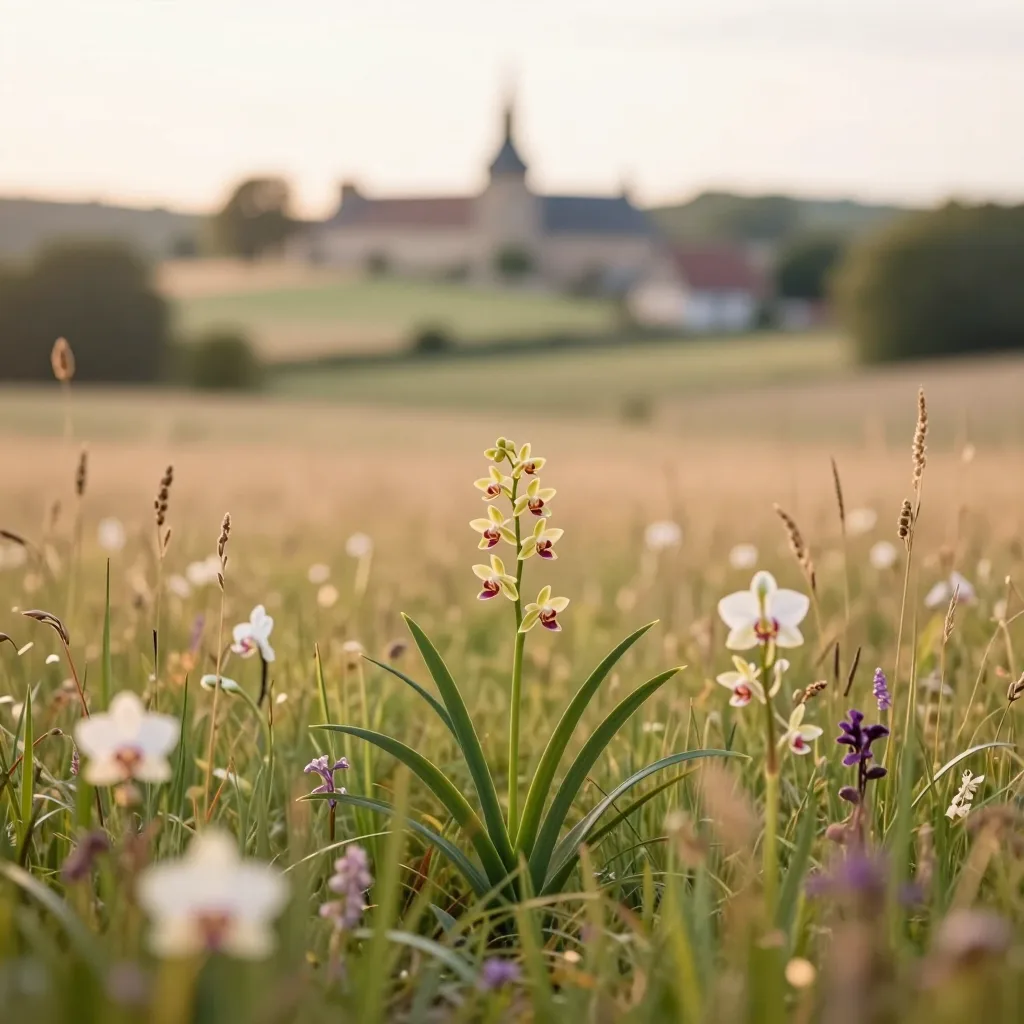
An invisible heritage beside the footpaths
In Gaume, there are gardens no one waters, no one plants, yet they rank among Belgium's most precious. These are dry grasslands: limestone meadows exposed to the sun, sparse in appearance, staggering in botanical richness. Here grow wild orchids — not greenhouse varieties, but discreet, fascinating cousins, sometimes tiny. Several dozen species are recorded in Luxembourg province, some found nowhere else in Wallonia.
These grasslands resemble nothing else. The grass is short, dotted with flowers bearing evocative names: bee orchid, lady orchid, lizard orchid. The limestone soil, poor in nutrients, favours specialised flora that tolerates neither fertiliser nor shade. The slightest abandonment transforms these meadows into wooded scrubland. Their survival depends on a fragile balance: late mowing, extensive grazing, a light human touch.
The quiet return of sheep
In recent years, sheep flocks have been reappearing on Gaume hillsides. Not out of nostalgia, but ecological necessity. Careful sheep grazing keeps these grasslands open without impoverishing them. Sheep graze tall grass, spare already-faded orchids, disperse seeds as they walk. They work slowly, without machines, sculpting the landscape.
Some sites, classified as nature reserves or Natura 2000 zones, benefit from careful management. Other grasslands, privately owned, depend on farmers aware of what they possess. Transmitting this pastoral knowledge has become a discreet but vital issue for Gaume biodiversity.
Where to encounter these discreet orchids
Dry grasslands often hide on south-facing slopes, in areas with marked relief. Some are visible from hiking trails, others require effort. Flowering stretches from spring to early summer, peaking in May and June, though a few late species still appear in August.
To observe them, one rule: stay on paths. These orchids are protected, fragile, irreplaceable. Picking them is forbidden, trampling catastrophic. But contemplating them costs nothing. Simply slow down, crouch, see the meadow differently. Beneath August's golden grass, a miniature world reveals itself — complex, patient, magnificent.
Gaume shelters an open-air botanical garden. It has neither gate nor sign, just sheep as gardeners and orchids as jewels. A living, silent heritage, asking mainly to be left to breathe.
Want to discover the Gaume in person?
Six characterful houses, hot tub, walled garden — minutes from the sites we write about.
See the houses