The Gaume tart: when the oven tells the soul of a terroir
Golden, generous, fragrant: the Gaume tart is more than pastry—it's a sharing ritual that crosses generations and tells the hospitality of a border land.
A cake that smells like home
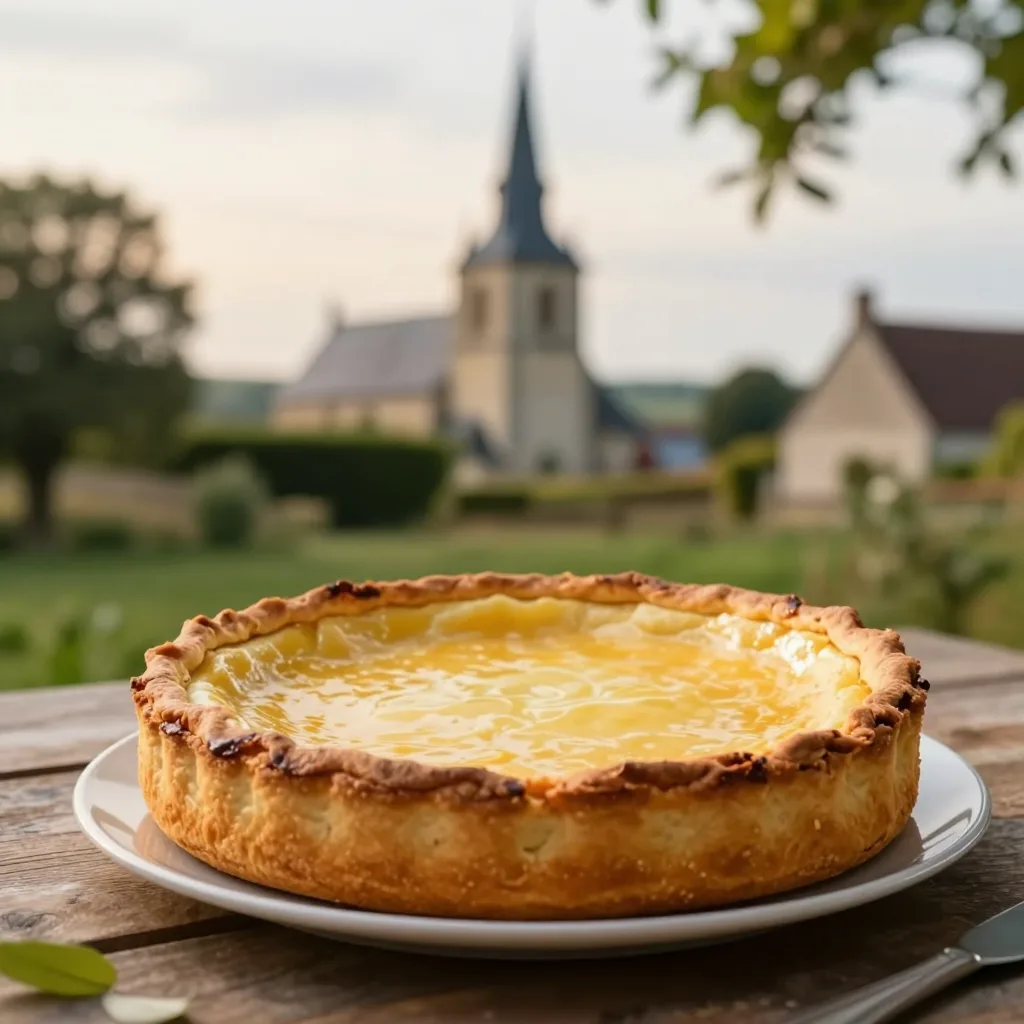
In Gaume kitchens, the tart doesn't wait for grand occasions to show its golden crust. It sits on Sunday tables, accompanies afternoon coffee, greets passing guests. Rich in butter, sweetened with brown sugar and often enhanced with a splash of maitrank or a hint of orange blossom, it embodies the gentle way of life that Gaume cultivates without ostentation. The recipe varies from village to village, from grandmother to grandmother, but the philosophy remains the same: to offer, to share, to extend the conversation over a still-warm slice.
The dough, slowly risen, releases during baking a scent that floats through the streets and reminds passersby that the oven is lit, that the house is open. It's this aroma—blended with vanilla and tradition—that anchors the tart in Gaume's intangible heritage, alongside maitrank or cûtchau. It isn't sold in every bakery—it's handed down, prepared, kneaded with yesterday's gestures.
A thread connecting generations
The Gaume tart travels through time unhurried. It once bore the name "tôte" on some farms, and served as a gift to neighbors during village festivals or births. Some garnish it with prunes, others prefer a plain version, slightly brioche-like, that reveals the quality of local butter. Maitrank variants—that spring liqueur made from sweet woodruff—add a fragrant note recalling May's flowering meadows.
In families, handwritten recipe notebooks are passed down, with approximate measurements—"a knob of butter," "a glass of warm milk"—requiring intuitive know-how from the cook. The tart won't be tamed by precise measures: it demands time, patience, and that particular gesture of testing the dough with fingertips to know when it's ready.
Sharing is already treating
What distinguishes the Gaume tart from simple brioche is the intention behind it. You don't make it for yourself, you make it for others. It appears on the table when friends drop by unexpectedly, when family gathers after a forest walk, when a neighbor has helped out and you want to thank them without fuss. It's a language of generosity, one that needs no grand declarations.
Even today, in the villages of Torgny, Latour or Virton, the tart remains a marker of hospitality. It reminds us that Gaume gastronomy never sought exuberance, but authenticity—measured by the smile of someone taking a second slice, making coffee last a little longer than planned. The tart doesn't rush, it stays. Like Gaume itself.
Want to discover the Gaume in person?
Six characterful houses, hot tub, walled garden — minutes from the sites we write about.
See the houses