
Montquintin: the fortified village overlooking the Ton valley
Perched on its rocky spur, Montquintin unfolds its cobbled streets and medieval fortifications above Gaume. A sentinel village telling seven centuries of military history.
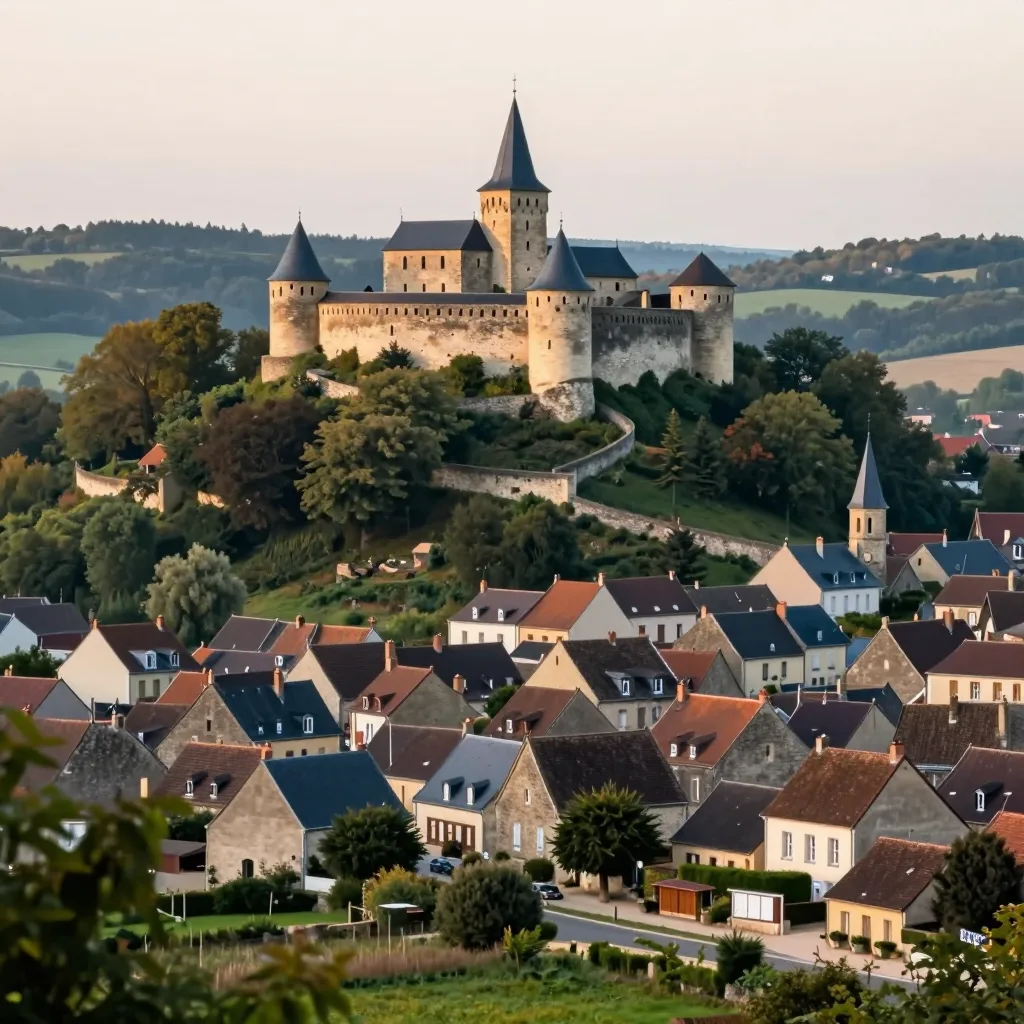
Montquintin: the fortified village overlooking the Ton valley
A few kilometers from Virton, Montquintin stands like a stone sentinel above the Ton valley. This fortified village, listed among the most beautiful in Wallonia, has lost none of its medieval splendor. Its ramparts, fortified gates and cobbled streets tell the story of a strategic location that watched over the border between the duchies of Luxembourg and Bar for centuries.
A fortress born of geography
Montquintin's position is no accident. The rocky spur on which it sits offered a natural defensive advantage to the lords who established their fortress here in the 13th century. The steep slopes plunging toward the river made any attack difficult, and the commanding view over the valley allowed monitoring of troop movements.
The village developed within its ramparts, following the terrain's relief. The stone houses huddle along narrow streets, their facades nestled against the fortifications. This defensive organization shaped the architecture of the place: no large open squares, but covered passages, chicanes, ogival gates that slowed down enemies.
The scars of history
Montquintin's ramparts bear the marks of several centuries of conflict. The Thirty Years' War, French invasions, wars of succession have all left their imprint on these walls. Bastions were modified, gates reinforced, moats widened according to evolving military tactics.
Today, you can still follow the complete circuit of the fortifications by taking the path around the village. From the rampart walk, the view embraces the valley and Gaume hills as far as the eye can see. On clear days, you can make out the church steeples of neighboring villages—Latour, Rulles, Saint-Mard—marking the landscape with their familiar silhouettes.
A living village within ancient stones
Montquintin is not an open-air museum. It's an inhabited village, where residents carefully maintain the heritage left by their ancestors. Facades are restored respecting local architecture, gardens flourish against old walls, streets still echo with walkers' footsteps.
The Saint-Brice church, rebuilt after the destructions of World War I, watches over the village square. Its square bell tower dialogues with the rampart towers, recalling that the sacred and military long coexisted in these border places. Inside, a few carved stones bear witness to the medieval building that preceded it.
The rampart walk
The best time to discover Montquintin remains late summer afternoon, when the low-angled light makes the ochre stone sing and shadows lengthen in the streets. You enter through the Porte de France, climb toward the summit, descend via stairs worn by centuries. Every corner reveals a detail: a carved beam, a statue niche, a lintel engraved with an ancient date.
From the ramparts on the valley side, the gaze plunges onto meadows where cows graze, orchards punctuating the slopes, the silvery ribbon of the Ton winding between alders. It's Gaume in all its gentleness, contemplated from a stone eagle's nest that once defended this passage land.
Want to discover the Gaume in person?
Six characterful houses, hot tub, walled garden — minutes from the sites we write about.
See the houses