
Mirwart Blue Stone: The Mineral Soul of Gaume Villages
For centuries, blue stone quarried near Mirwart has adorned the churches, farms, and fountains of Gaume. A look at a mineral heritage that tells the story of local building traditions.
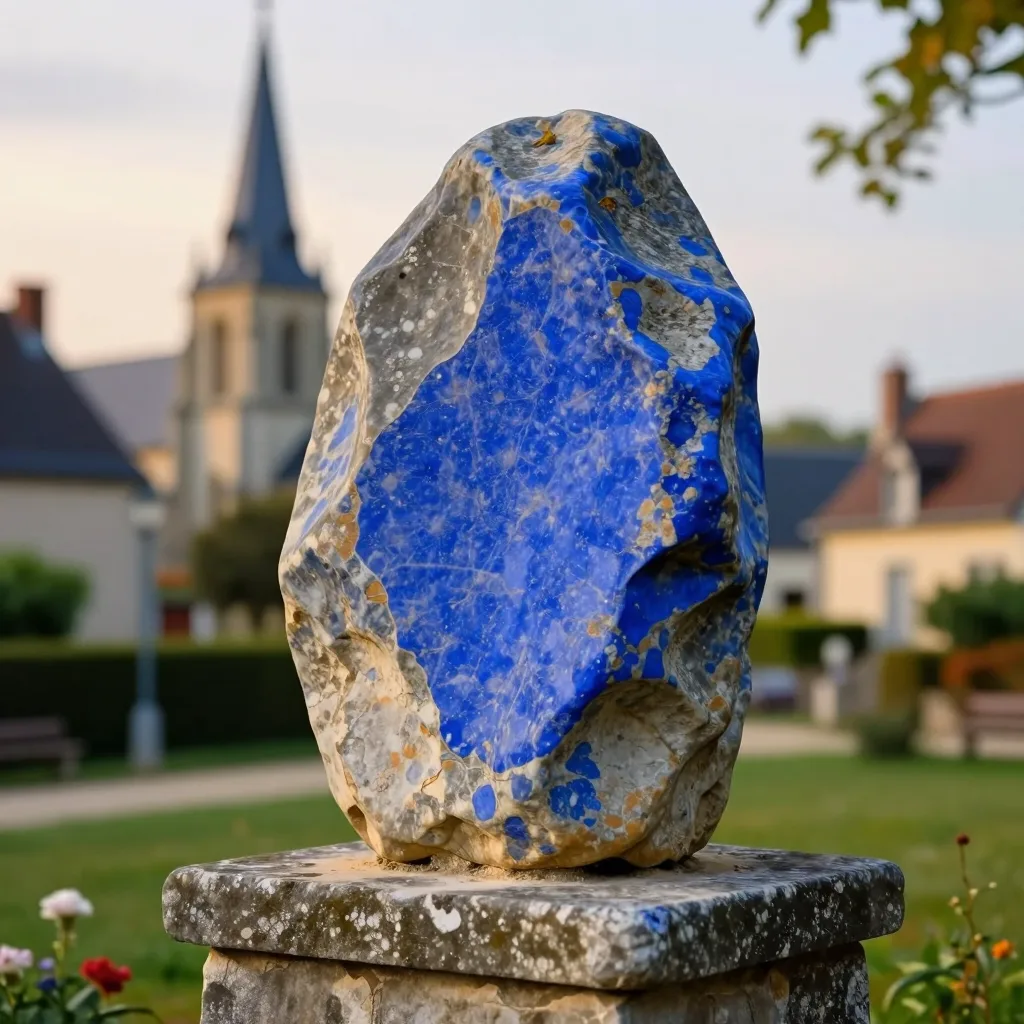
A Limestone That Crosses Centuries
Walking through Gaume's villages, you encounter this grey-blue stone everywhere, almost black when wet. On old farmhouse lintels, church steps, well curbs. This blue stone, quarried since the Middle Ages near Mirwart and Saint-Hubert, is one of the visual signatures of the Gaume terroir. Dense and durable, it crosses centuries without flinching.
Unlike the pale limestone of southern France or Vosges sandstone, Gaume's blue stone is Carboniferous limestone, formed over 300 million years ago. It polishes well, resists frost, and develops over time a patina that adds character to façades. Every village has its share of buildings where it appears: window frames in Torgny, church foundations in Virton, public benches in Florenville.
From Quarry to Village
For generations, blue stone extraction shaped local life. Quarrymen worked in open pits or galleries, freeing blocks with crowbars, then saws. The blocks then went to stonemasons, essential craftsmen who shaped each piece by hand: thresholds, sinks, tombstones, roadside crosses.
Today, the historic large quarries have closed or modernized. But the built heritage remains, living testimony to this expertise. Restoring an old Gaume farmhouse often means reviving these blue stone elements: cleaning an engraved lintel, repointing a low wall, preserving a village fountain.
A Discreet but Tenacious Architectural Identity
Blue stone doesn't shout. It blends into the landscape, solid and silent. Yet it structures Gaume's visual soul: it anchors houses to the ground, connects buildings to the territory's geology. It's a mineral memory, speaking of continuity, peasant solidity, repeated gestures.
Walking through Gaume also means learning to read these details: a date carved in a lintel (sometimes the only memory of an old construction), a mission cross carved from a massive block, a communal washhouse whose curbs still bear the wear marks of washerwomen. Blue stone tells, to those who know how to look, the story of a territory shaped by people and time.
Want to discover the Gaume in person?
Six characterful houses, hot tub, walled garden — minutes from the sites we write about.
See the houses