Bees of Gaume: Flying guardians of the terroir
From the banks of the Semois to the orchards of Torgny, invisible work in hives crafts the flavors that define Gaume’s gastronomy.
Summer fields humming with life
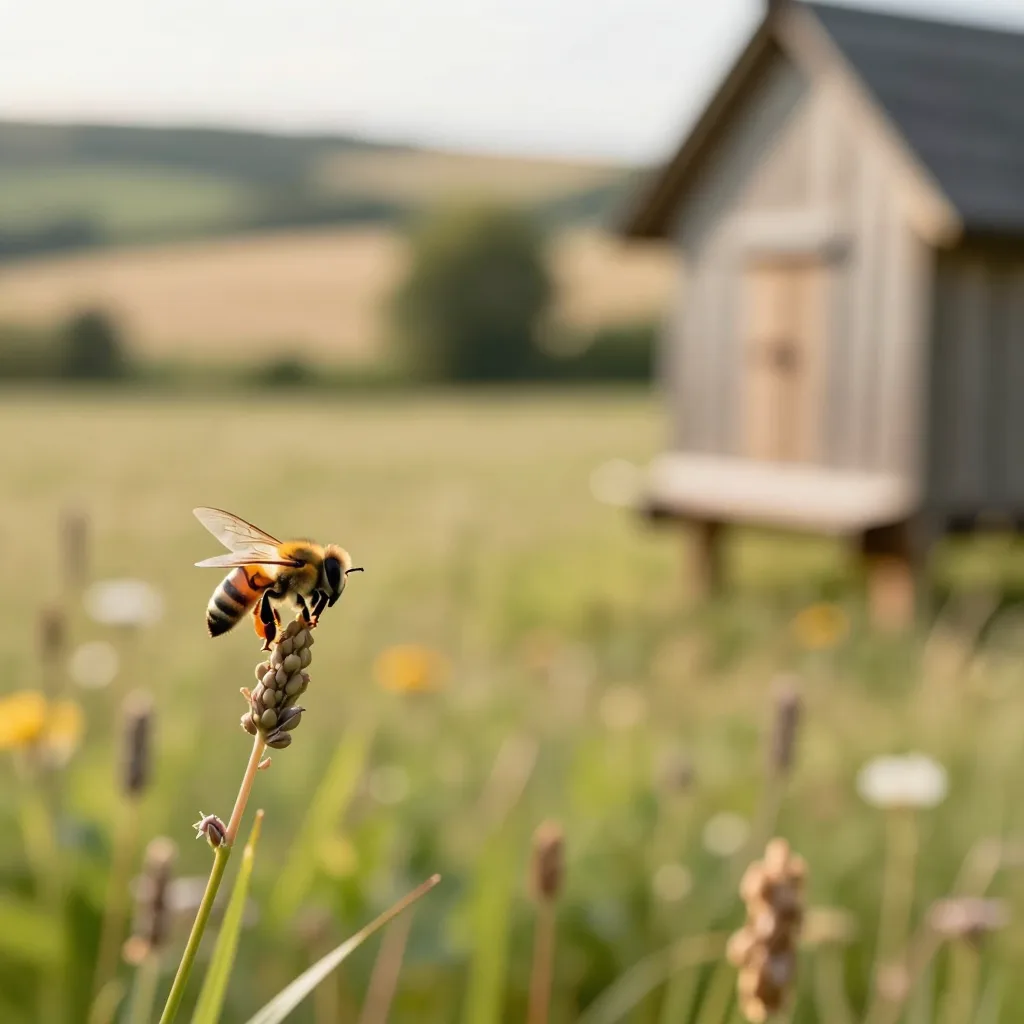
When the sun beats down on Gaume’s slopes in July, a quiet yet constant melody fills the air. It's not the wind in the vine leaves, nor the murmur of rivers, but the buzzing of bees. Tens of thousands are busy flitting from flower to flower, turning pollen into a sweetness that will eventually reach our glasses of wine, our baskets of fruit, or the golden honey you’ll find at village stalls. In Gaume, where every hedgerow seems to promise nectar, these insects are the unseen architects of a land of flavor. Here, they don’t just cultivate the soil – they make it sing.
On the sun-kissed slopes of Torgny, where vines offer up their ripening clusters, bees play a very special role. Their pollinating visits swell the grapes that will become Torgny wine, this local jewel with its white-fruit aromas. Without them, the vines would be sterile, and the picturesque landscape of vineyards would lose part of its charm. A few kilometers away, in orchards where apples and plums ripen, it’s the same dance: as many fruit varieties as apple trees, and as many foraging zones as there are hedgerows. Local beekeepers watch these movements with almost reverent attention. Their work isn’t about controlling nature—it’s about accompanying it, in a delicate balance of patience and observation.
The craft of hives: a skill woven into village life
Setting up a hive in Gaume isn’t just a technical affair—it’s a story of transmission. Generations have stood behind their straw-woven beehives or wooden boxes in farmyards and garden corners. Traditional woven straw hives, once common, have given way to wooden and polystyrene models—easier when it comes to honey extraction. Yet the spirit remains unchanged: deep respect for the bee and its essential role. Gaume beekeepers form a tight-knit community where tips are swapped over stove corners or in meadows, buzz against buzz.
Some still use carved wooden hive bars passed down from father to son like a family heirloom. Others adopt natural treatments against varroa, the parasite threatening colonies. Here, talk is less about yield, more about good practice. Gaume honey—whether linden, acacia, or chestnut—carries within it the flavors of broom-covered hills, gorse bushes, and oilseed rape fields. It’s rare, local, and above all—it’s earned. The beekeeper doesn’t rush the hive like an orange press; they wait for the right moment, when the hive is full and the bees have finished their seasonal work.
Orval Abbey and the bees: a thousand-year-old alliance
In the timeless shadow of Orval Abbey, bees forage in silence. They’ve been part of the landscape since the Trappist monks took over the surrounding acres nearly a century ago. Here, the honey isn’t just any product: it’s the fruit of blessed land tilled by hands that pray as much as they plow. The monks produce a dark honey with hints of thyme and heather, sold in monasteries and gourmet shops. But beyond commerce, there’s deep symbolism: bees, in Christian tradition, symbolize work, community, and sweetness. Their honey is a bit like the blessing of the fields turned into flavor.
This connection between abbey and hives isn’t new. From the Middle Ages onward, European monasteries cultivated apiculture as a sacred art. At Orval, this tradition has been revived with care: hives inspected, reasoned transhumance to nearby heathlands, hand extraction. Orval honey isn’t just a local product—it’s a piece of the historical puzzle, an echo of centuries when Gaume’s landscapes already buzzed with the same rhythms.
Bees as sentinels of healthy terroirs
Gaume beekeepers say it plainly: bees are the most reliable thermometers of their environment. When they vanish from an area, it’s an early warning sign. Disappearing hedgerows, pesticide use on large crops, or summer heatwaves are the main culprits. In Gaume, where farming remains essentially traditional and diverse, the threats are less acute than elsewhere. Still, vigilance is key. Some villages have chosen to plant specific hedges, create pollinator refuges, or limit chemical treatments near waterways.
Here, the beekeeper becomes an observer, a guard. They note the years when clover blooms too early, when bees abandon hives in winter. They share these observations with market gardeners and winegrowers, forming an invisible chain of solidarity. Because in Gaume, it’s clear today that no one can afford to ignore the bee. Neither the farmer, nor the consumer, nor even the casual walker admiring blooming meadows. Their fate is tied to that of a land that refuses to be tamed.
A future waiting to be foraged together
If you pass through Florenville or Chiny come October, you might get lucky and taste some chestnut honey, with its smoky, lingering notes. It’s the time when the year’s last harvests are shared before colonies head into winter. And if you pause to listen while crossing a meadow in summer, you might just catch the persistent buzz of a working bee behind the breeze. A Gaume bee, no more, no less—a winged guardian of this region’s soul.
Want to discover the Gaume in person?
Six characterful houses, hot tub, walled garden — minutes from the sites we write about.
See the houses