
The Iron Man and his Oratory: The Mystery of Bouillon
In the streets of Bouillon, a metal silhouette guards a fragment of history. Exploring the enigmatic 19th-century steel statue and its stone altar.
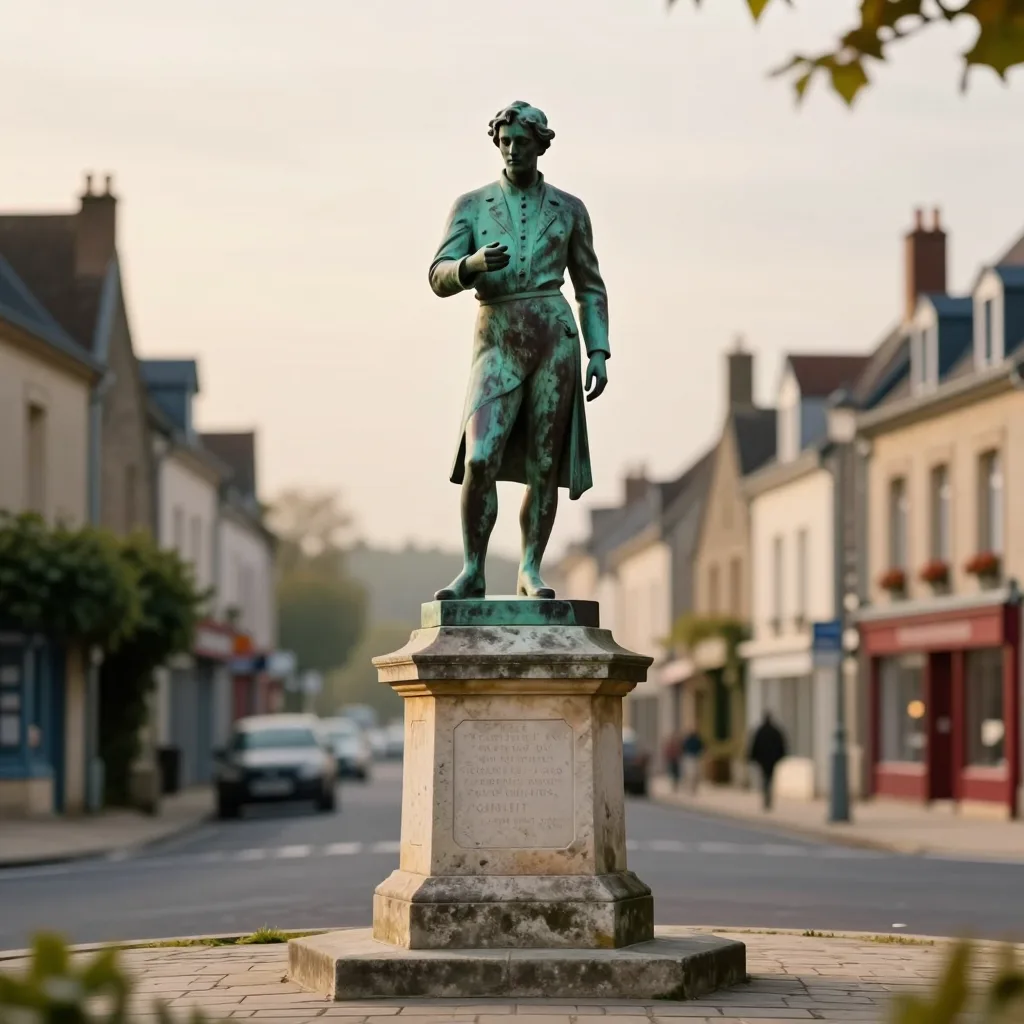
A sentinel of iron in the heart of the city
Walking through the cobbled streets of Bouillon, you come across the piercing gaze of a figure made of iron, almost cradled by time. Perched atop a pedestal of grey stone, a stylised equestrian statue has been watching over the town for decades. A name unknown to many, yet one of the most intriguing symbols of the Gaume region. Its history, blending legend and reality, withstands the test of precise archives.
This iron figure, with its simplified, almost streamlined features, does not seem to represent a warrior or a king. Instead, its understated appearance evokes a protective figure, as if standing guard over the locals since time immemorial. At the foot of the pedestal, a worn stone altar bears inscriptions that have faded with the years. Some see an offering, others a discreet homage to a forgotten local figure. Yet the mystery endures: who was this man? When was he erected? The answers have been lost to the stacks of old records.
It is hard to imagine that this statue, now a fixture in the public space, was once overlooked. The people of Bouillon have given it a central place, as though it has always been part of the landscape. Children in the village speak of it being put in place after a flood or an epidemic, in a sign of gratitude. Others whisper that the Iron Man is linked to a vow made during wartime, a legend that persists without formal evidence.
From stone to iron: a working-class tradition
Another quirk of this curiosity is its craftsmanship. The statue, made of cast iron, bears the marks of artisanal work typical of 19th century Lorraine foundries. At the time, the Gaume was a crossroads of exchange between the Duchy of Luxembourg and Belgian provinces, and local artisans mastered the art of metal. Like the bell towers of Gaume churches or the wrought-iron balconies of Virton, this figure bears witness to a forgotten skill.
The absence of a name or clear inscription suggests it was less a monument glorifying one individual and more an object embodying a promise or protection. Perhaps it honours an unknown person whose act changed the lives of the community? Whatever the case, the iron silhouette and stone altar form a unique, almost mystical ensemble: a place where the past and present meet under the ever-changing Gaume sky.
A place of passage and silence
Today, the Iron Man is no longer the subject of daily conversation, yet it remains a landmark for locals. Located near the stone altar, a bench invites you to sit and observe the statue from different angles. Visitors linger here, intrigued by this blend of iron, which withstands the passage of time, and stone, which seems to have absorbed centuries of prayers or wishes.
Experts agree on one point: this statue was no accident. It was likely created to mark an event or simply to beautify a public space following a change in the village. Yet its most captivating quality is its power to inspire stories. Every visitor leaves with their own version of the truth, often drawn from local imagination rather than historical documents.
In Bouillon, the Iron Man and his altar are more than an amusing oddity. They remind us that the history of Gaume villages is made up as much of stones as silences, of legends as much as certainties. And somewhere, deep within this unassuming little statue, perhaps the echoes of the people who erected it still linger, asking for nothing in return.
Want to discover the Gaume in person?
Six characterful houses, hot tub, walled garden — minutes from the sites we write about.
See the houses