
Virton’s street lamps: keepers of light and memory
For over a century, street lamps have watched over Virton’s streets. But who remembers their role in daily Gaume life?
From oil lamps to modern street lighting
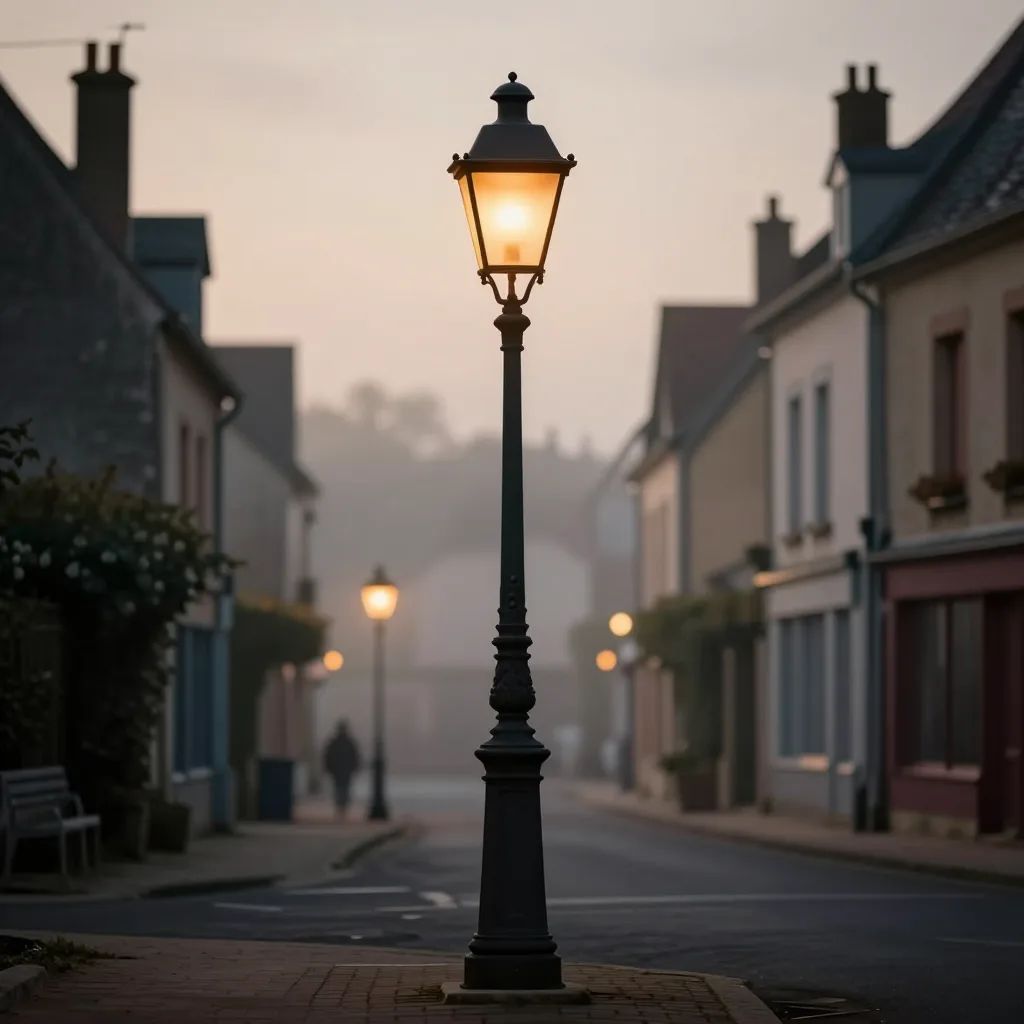
In the Virton skyline, when night falls, a soft glow still diffracts between the old buildings. The street lamps, standing like sentinels, do more than illuminate: they tell a forgotten story of daily life. At the start of the 20th century, Virton’s streets were not as brightly lit as today. Only a few oil lanterns, hanging from houses or wooden poles, barely pierced the darkness. It wasn’t until 1912 that Virton installed gas-fueled street lamps, a technology then considered cutting-edge.
The Gaume night was now punctuated by flickering flames, maintained by municipal workers known as lampists. Their evening rounds began at dusk: with a long pole, they lit each lamp one by one, before letting the city fade to black at dawn. A ritual that imposed a collective discipline. Locals timed their return to make the most of this benevolent light, often a gathering point for late-shift workers or nighttime strollers.
Between local legends and folklore
Virton’s street lamps aren’t just functional objects: over time, they’ve gathered tales and legends. The most famous one, located at Marché Square, is said to be haunted by the spirit of a merchant who, locals claim, perished there during a harsh winter in 1850. Today’s passersby sometimes describe an unexplained glow around the column, as if history clings to the stone. Another belief holds that the lamps mysteriously extinguish during full moons, as if to remind us of nature’s primacy over human inventions.
A lesser-known detail: during World War I, the street lamps were temporarily turned off to avoid signaling the town to the enemy. The darkened streets became the stage for secret convoys or coded exchanges among resistance fighters. These episodes, though less glorious than other Gaume tales, are part of the town’s identity. Even now, when walking past the old train station or Grand-Place, you’ll meet elders pointing at these lampposts with a chuckle: “You see? This is Virton’s memory.”
A heritage to reinvent
With the arrival of electricity in the 1950s, gas lamps gradually disappeared, replaced by modern models. But Virton hasn’t forgotten its luminous origins. In 2010, the town restored a handful of these historic street lamps, turning them into urban sculptures and symbols of its past. Some were repainted in pastel tones, others left to their original patina, better to tell their story. Today, these rehabilitated lanterns no longer light up, but they watch over the town’s heritage, offering a reflection on light, the passage of time, and shared memory.
Perhaps that’s their greatest legacy: even the most prosaic objects can become guardians of identity. By strolling under their former artificial glow, you’re carried away by a Gaume night where the present converses with the ghosts of lamplighters and merchants of another century.
Want to discover the Gaume in person?
Six characterful houses, hot tub, walled garden — minutes from the sites we write about.
See the houses