Saint-Hubert Forest in autumn: when light dances in the beeches
Explore the golden mysteries of the Saint-Hubert Forest, where the reddening beeches hold legends and traditions that captivate every autumn.
Among russet beeches and age-old legends
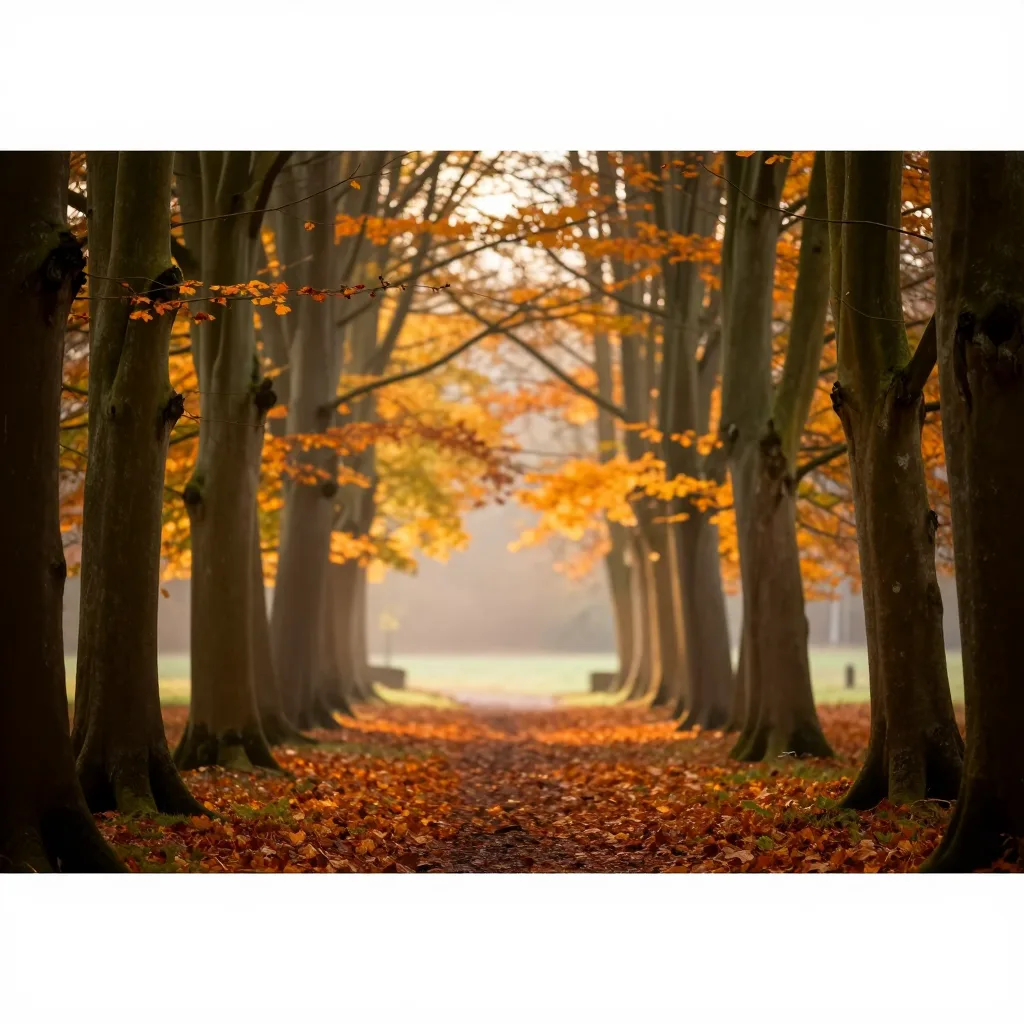
On the eastern fringe of Gaume, the Saint-Hubert Forest spreads like a sea of russet and gold. As weeks pass, the trees seem to catch fire: the beeches, pillars of this leafy kingdom, shed their green cloaks for flaming attire, while oaks, slower to respond, deepen to a crimson hue. This spectacle, visible earlier than in other Belgian regions, marks the Gaume autumn. The southwest breezes, carrying moisture, tease the leaves, detaching them one by one to dance before letting them silently fall to the ground.
Here, the forest is not merely an ecosystem, but an open book where locals still read signs. Elders used to say that on full-moon nights, when fog lingers between the trunks, you could glimpse the shadow of the Sacred Deer of Saint Hubert wandering between the groves. This deer, a local emblem of legend, would carry a luminous cross between its antlers, a symbol of its conversion to Christianity — a myth shared with neighboring Lorraine, where Saint Hubert was born. The path leading to the Saint-Hubert chapel, nestled in the forest, is lined with stations recalling this tale.
A living heritage, between hunting and stillness
The Saint-Hubert Forest is also a playground for fresh-air lovers, mushroom hunters, or those seeking silence. Marked trails allow one to follow old marcottage lines — former linguistic borders between Wallonia and Lorraine — where Gaume and Lorraine dialects once mingled.
Yet this seasonal beauty is fragile. The shade of beeches, while preserving moist underbrush, also limits young saplings’ growth. Squirrels and wild boars find refuge here, digging up acorns and beechnuts with tireless energy. On bright days after a rainfall, the air is redolent of moss and fallen leaves. It’s then that locals, baskets in hand and knives at the ready, venture into the forest to return with cep, chanterelle or parasol mushrooms. A harvest that, despite its spontaneity, always comes with respect for the land: only take what you need and never cut the mycelium.
Light passed down through generations
Deep into autumn, when afternoons grow short, the forest turns into a theater of side-lit scenes. Sunbeams, filtered through leaves, paint shifting patterns on the ground, green one moment, golden the next, depending on the angle. The elongated shadows of the trees seem to stretch eastward, as if guiding walkers towards the setting sun. This spectacle is what old sketches from Tontelange or Latour tried to capture, with drawings of forests showing beeches with incandescent crowns.
But the magic isn’t just in the landscapes. In nearby villages like Musson or Saint-Léger, the last wood fires still crackle in slate hearths. Rustic dishes are prepared here, like smoked wild boar meat or mushrooms sautéed in butter, served with rye bread. There, in the echoes of families gathering, the forest takes on another dimension: no longer just a backdrop, but an actor in daily life.
So whether you're a Sunday pilgrim or a seasoned hiker, the Saint-Hubert Forest in autumn offers an answer to the call of the seasons. No need to seek miracles: just pause for a moment, breathe deeply, and let the light play between the branches. In this silence where mist mingles with today’s fallen leaves, hides the secret soul of Gaume.
Want to discover the Gaume in person?
Six characterful houses, hot tub, walled garden — minutes from the sites we write about.
See the houses