
The stag's bellow in Gaume: September roars beneath the oaks
Mid-September, the forests of Gaume change register. The stag's bellow fills valleys and undergrowth — an ancestral voice inviting silence and slow walking.
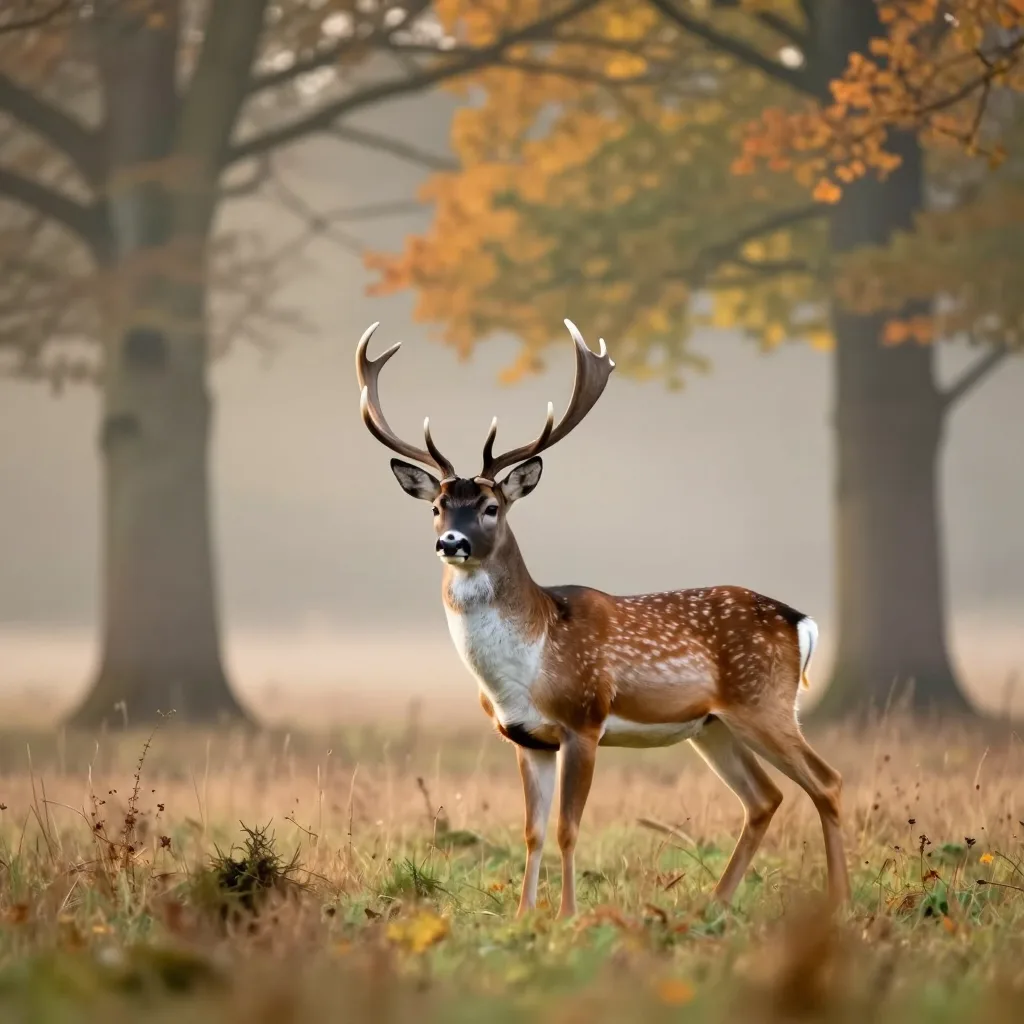
All it takes is a silence. A clearing at dawn, mist still clinging to the trunks, and then the voice rises — deep, guttural, coming from nowhere and everywhere at once. The stag is belling. You don't truly hear it: you feel it vibrate in your breastbone, in the soles of your feet, in that part of the body that still remembers the stone age.
A voice older than Gaume itself
In September, the forests of Belgium's southernmost tip shift register. The beech stands near Orval, the oak woods along the Semois, the groves between Florenville and Chiny are no longer content with the usual rustle of leaves. They roar. The stags — the ten-pointers, the twelve, the twenty — hurl their presence across the valleys, competing in volume to stake out an ancestral territory.
The sound is hard to describe for anyone who hasn't heard it. It's a growl that climbs into a whistle, a lament that shatters into splinters, an animal breath that seems to rise from the earth as much as from the ridgelines. At moments, three or four voices rise simultaneously, answer one another, provoke each other. The whole of Gaume vibrates like a sounding board.
This is not a show. It is a season. And this season has a name: the rut.
On the trails, senses wide open
Mid-September, the light skims low across the undergrowth. Ferns turn brown, blackberries bulge toward a deep purple, and the air carries a scent of damp earth laced with tannins. It is in this setting that attentive walkers — those who set out at dawn or dusk — strain their ears.
At Torgny, the vineyards overlook the rolling hills and the wind carries sound waves for several kilometres. In the woods of Bouillon, between the Semois and its incised meanders, bugles resonate against rock walls as if inside a natural amphitheatre. Further south, toward Étalle and the nearby Grand Duchy of Luxembourg, the beeches become cathedrals and the bellow multiplies in successive echoes.
To walk those days is to accept slowing down. To stop. To close your eyes for a handful of seconds and let hearing reclaim the lead from sight. The body tunes in to a world it has almost forgotten how to perceive.
An invitation to disappear
The bellow belongs to no one. It belongs to the woods, to the afternoon birdsong that precedes nightfall, to the hard-packed tracks trodden by deer for centuries. The challenge, in Gaume, remains simple: let the forest do its season without imposing our noise upon it.
Stay on marked trails. Silence engines. Walk low, speak less, listen more. The bellowing stag does not flee man solely from survival instinct — it flees the eruption, the abruptness, the clamour of a world that has forgotten how to be still.
Whoever has listened, on a September morning, among the beeches of Gaume, will never forget that voice. It settles somewhere behind the ribs, like a long note that refuses to fade.
Want to discover the Gaume in person?
Six characterful houses, hot tub, walled garden — minutes from the sites we write about.
See the houses