
Gaume's Washhouses: Where Water Once Whispered to Villages
Under the shade of a linden tree or in a limestone hollow, the washhouses of Gaume still hold the echo of a village life that fell silent too quickly.
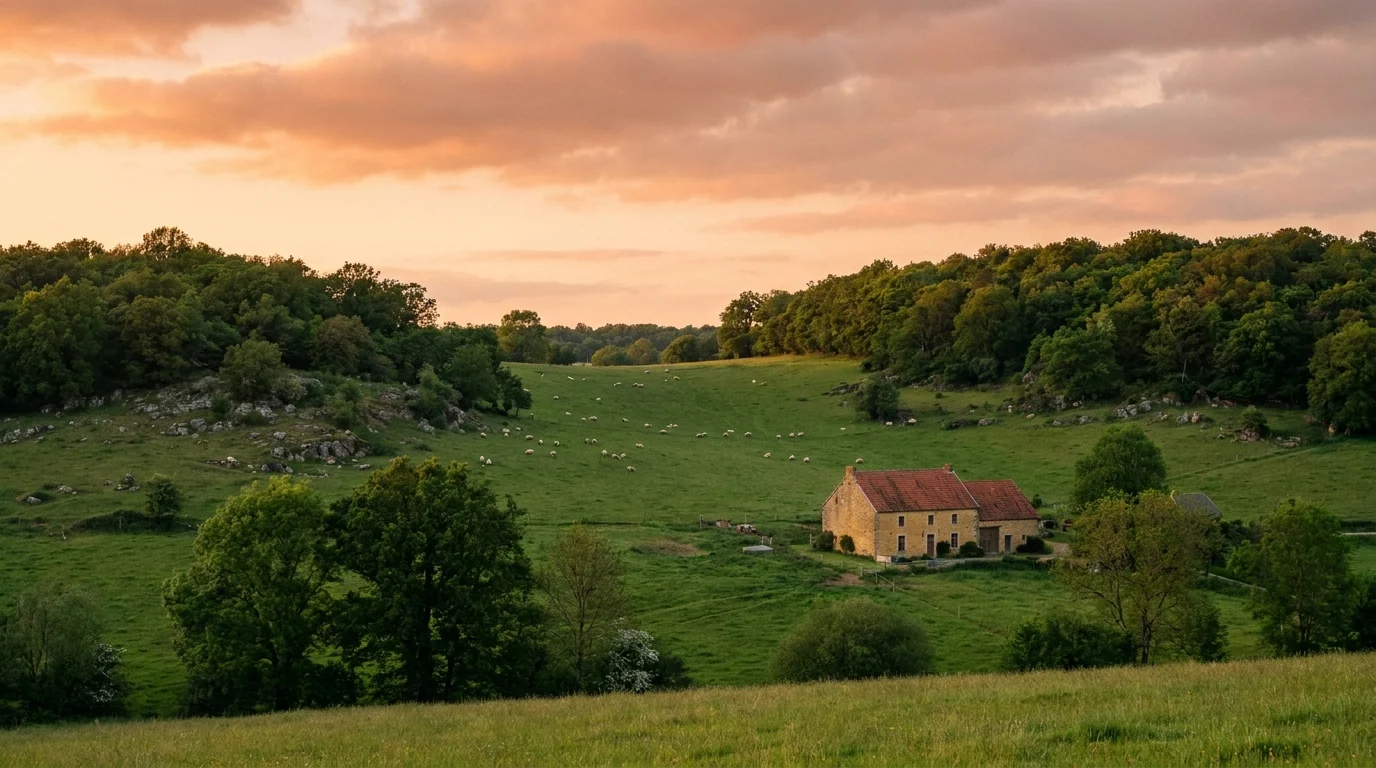
On September the twentieth, light finds its balance. The days shorten without anyone quite noticing, and in the villages of the Gaume, a clear stream keeps running beneath stone roofs that nobody looks at any more. The lavoirs — washhouses. This modest architecture of everyday life, carved from the calcareous stone of the Lorraine subsoil, was for centuries the nervous centre of peasant existence. Today, a handful remain, at Sommethonne, around Montquintin or on the edges of Florenville, often furred with moss, rarely illuminated.
The Water That Spoke to Women
A washhouse is not a fountain. It is a covered structure, closed on three sides, where the back is sheltered from northerly winds and light falls through a low opening oriented south-east. The washerwomen laboured there for hours, forearms plunged in water that stayed cold in August as in January, because it rose from a limestone spring at eight or nine degrees. They washed, they rinsed, but above all they talked. Village news circulated through the laundry faster than through Sunday coffee. Debts were settled there, griefs murmured, new romances passed along. The washhouse was a public square where women finally had a territory of their own.
Stone and Spring
Geologically, the Gaume is a land of springs. Fractured limestone, clay that blocks, faults that push water tables upward: water surfaces everywhere, and every hamlet found its fountain. Gaume washhouses follow a simple model: a basin in dry stone or jointed rubble, a coping worn by generations of knees and washboards, a slate or country-tile roof, sometimes a wooden drying rack for hanging linens. At Sommethonne the basin is deep enough that the spring's flow creates a small permanent cascade, a sound children heard before opening their shutters in the morning. Nothing spectacular, but a technical precision inherited from the observation of Lorraine fountains, passed from master mason to apprentice without a single plan ever drawn.
The Silence Regained
Many washhouses have been filled in, demolished, swallowed by vegetation or by a car park. Laundry migrated to washing machines and women to other public squares. Some villages, thankfully, have undertaken to reopen a basin, unblock a coping, rebuild a roof structure. The gesture is modest. It is not about assembling a museum or turning a workplace into an attraction. It is about preserving a tactile memory. When you lay your hand on the stone of a restored washhouse, you still feel the hollow left by the washerwomen's knees. That hollow says better than any commemorative plaque how many bodies, how many winters, how many Sunday sabbaths leaned there. On September the twentieth, light is equal. It enters an open washhouse as it once entered at the same hour. No more beaters, no more bleach, no more conversations. Just the water flowing, faithful, in a stone basin that waits without complaint. It is little, and it is already a great deal.
Want to discover the Gaume in person?
Six characterful houses, hot tub, walled garden — minutes from the sites we write about.
See the houses