
The mills of the Semois: when water ground the time of villages
Along the Semois, the Viron and the Ton, stone wheels, dried-up channels and street names betray a forgotten industry: grinding grain by river current.
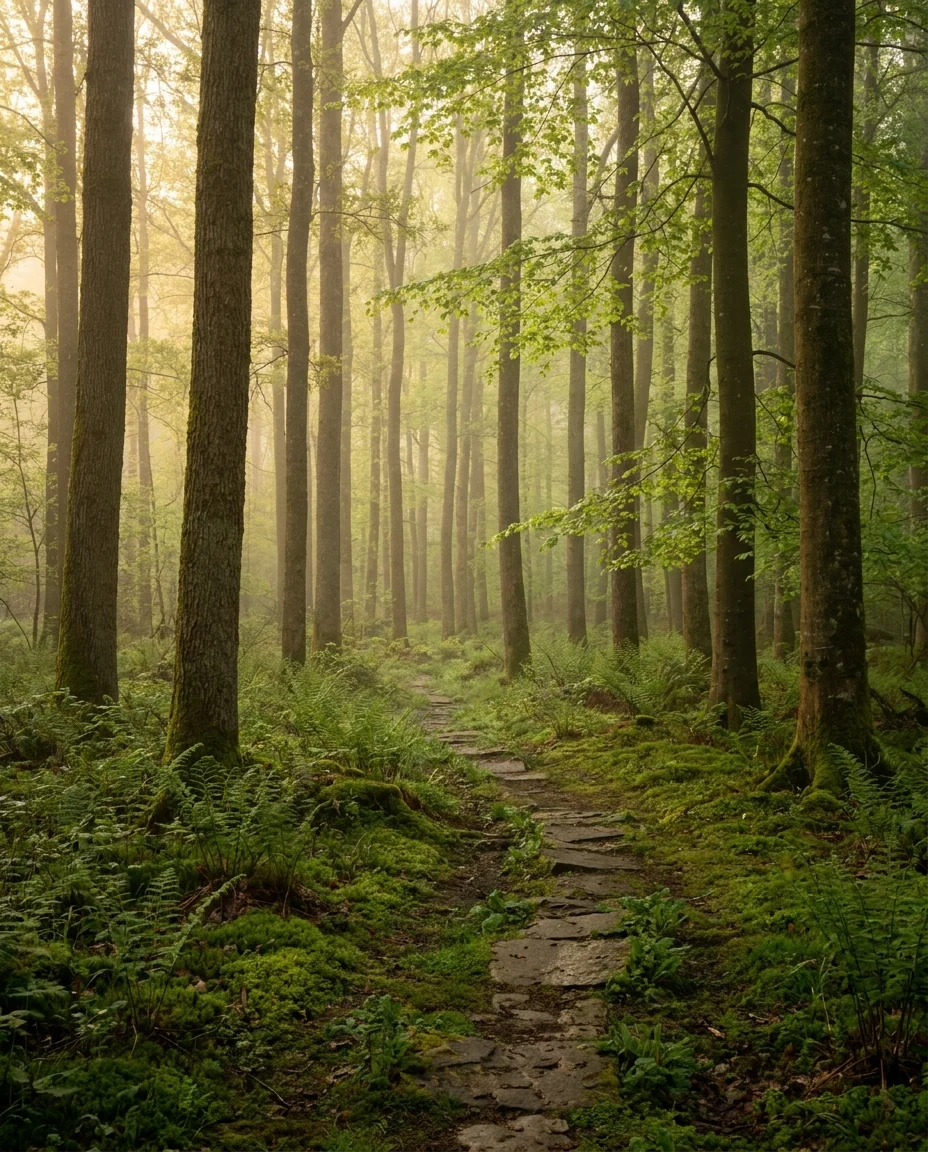
In this early October, the Semois rolls a darker water, fed by September rains. Walking along its banks or those of its tributaries — the Viron, the Ton, the Goutelle — you eventually notice discreet remnants: a paddle wheel frozen against a wall, a channel cut into rock now empty, a street name that smells of milled grain. The mills of Gaume are not all dead. Some have become nothing more than silences in stone.
The village, its millstones and its water
For centuries, no Gaume village of any honest size grew without its mill. The Semois and its small streams offered just enough flow to turn a waterwheel, and the surrounding fields yielded enough wheat, spelt and rye to keep the stones turning for much of the year. The mill was not simply the bakery upstream. It was the village's social crossroads. Grain arrived in sacks, flour left in baskets, and while waiting your turn, the queue transformed into a bistro. You talked about weather, the price of hay, whether the boy from the neighbouring farm was a good match for the miller's daughter.
The miller held a singular place. Not the richest, not the most learned, but the most indispensable. A poor harvest year could reduce his clientele to a few neighbours, and the whole village felt that mechanical silence as an internal cooling.
What remains, what the water has reclaimed
Most of these mills fell silent in the second half of the twentieth century. Industrial silo milling rendered the small rural hydraulic workshops obsolete. Some were abandoned on the spot: the wheel seized up, the roof gave way, moss devoured the internal mechanism. Others were converted into homes, artist studios or rural holiday cottages — and their occupants sometimes do not know that their living room housed, one generation earlier, two sandstone millstones.
Some traces remain legible for those who walk slowly: a dressed-stone channel following a footpath, a weir partially consumed by aquatic vegetation, an inscription carved above a lintel between Florenville, Bouillon and the Viron villages, between Torgny and Virton. It is a scattered, stubborn cartography that only slow walking and a low gaze towards the waterline reveals.
October, the season of full mills
Autumn was historically the most intense period. The wheat had been harvested, the spelt dried in the meadows, and everything had to be milled before winter locked the dirt roads. The Semois, swollen by rains, provided ideal pressure on the wheel. The miller worked from dawn to dark, the queue of sacks stretched across the yard, and children watched the flour cloud escaping from the hopper.
Today, water still runs full and fast over the old weirs. The meadows are empty, the sacks have vanished. But the sound persists, in another form: that of the fall, the slide over stone, the murmur of a channel no one maintains anymore. Walk a kilometre along the Viron or the Ton, any direction, in any village, and you will hear it. It is Gaume's most discreet, most stubborn echo — the one that says grain passed through here, and that the water, at least, has not forgotten.
Want to discover the Gaume in person?
Six characterful houses, hot tub, walled garden — minutes from the sites we write about.
See the houses