
Foraging Gaume's October mushrooms beneath the beech canopy
The first October rains crack open Gaume's undergrowth. Beneath the beech woods of Étalle, porcini and chanterelles bring a whole village back to the table.
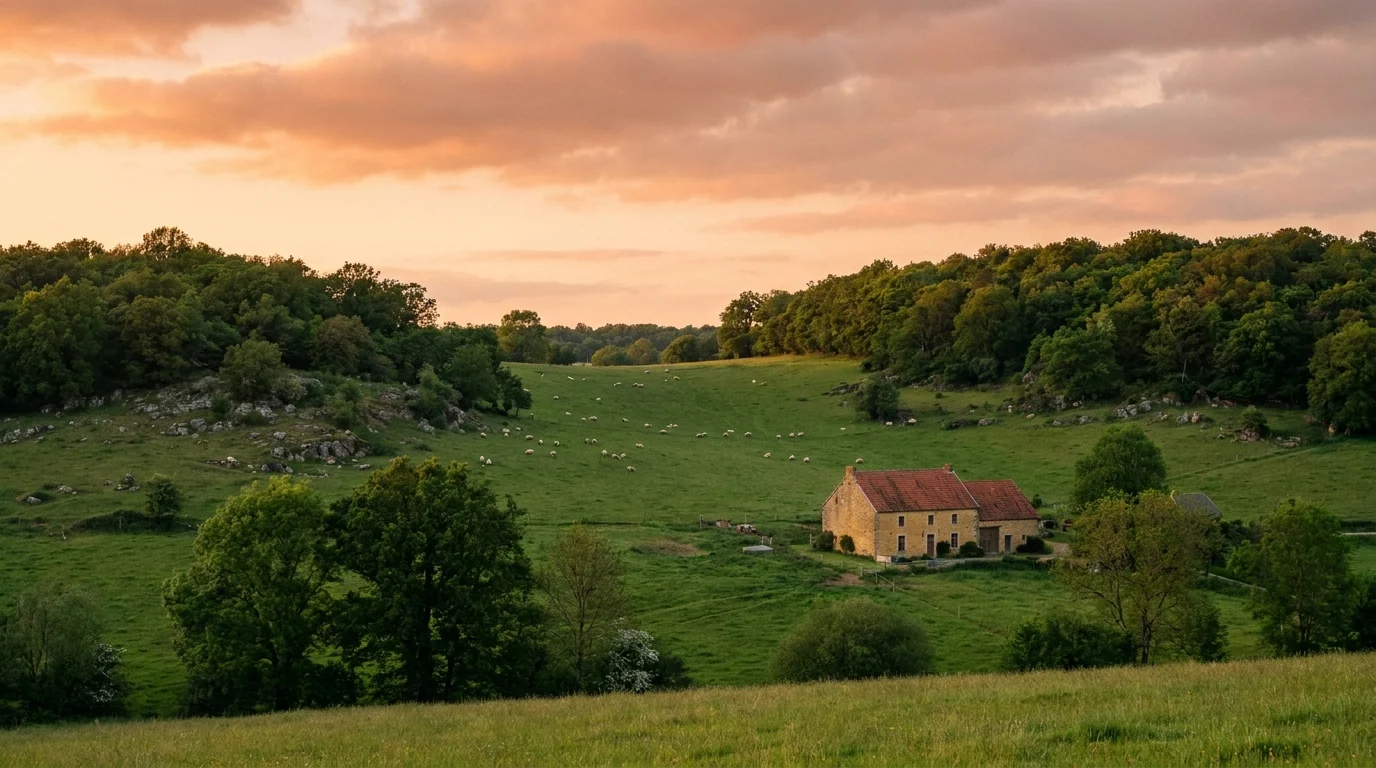
There is a morning, in early October, when Gaume's soil shifts its mood. One night of fine rain, two or three degrees cooler, and the undergrowth begins to speak. The beeches of Étalle and Florenville, still half-green, start weaving their carpet of russet leaves. And in that warm dampness, porcini raise their brown caps as if to say: "So, autumn has arrived."
I walk with my eyes low. This is a Gaumais reflex, a habit picked up in childhood when a grandparent takes you beneath the trunks and whispers: "Look, there, under the moss." Mushroom foraging in Gaume is not a hunt. It is a silent conversation with the ground, a patience learned on the limestone slopes around Orval.
A seasonal map beneath the beeches
Gaume's beech forest is a living organism you read with your hands and your eyes. By late September, the first orange chanterelles emerge between the shallow roots. October is the time of porcini, of black trumpets along the streams, of red-footed boletes in the clearings where mist still lingers at dawn.
The limestone soil of the Gaume plateau gives these mushrooms a firm flesh, a brighter colour than their Ardennian cousins. Village mycology enthusiasts — in Sommethonne, Montquintin, Latour — say among themselves: a bolete born on soft stone does not taste the same as one born in heavy clay. It is terroir, even under the trees.
Picking with patient hands
In Gaume kitchens, the rules are old and passed down without ever being written. You do not cut, you twist. You close the hole with a tap of the heel. You leave the oldest cap, the one whose spores have done their round. And above all, you never fill the basket so full that you can no longer see the young shoots under the leaves.
I have seen ten-year-olds, on an October Sunday, walking in single file behind their father through Étalle's woods, not touching a single cap before the father has nodded. This is a school of looking. A slow apprenticeship built on refusals: leaving the half-hidden girolle, not scraping the stump, not lingering in a clearing too full for another to find.
The evening sauté, a village ritual
By late afternoon, the gravel lanes of the farms are lined with baskets. Everything is emptied, scraped, brushed with a knife. The sceptics halve each cap and sniff. Then comes the pan, the hazelnut butter, the crushed clove of garlic. Nothing more. Gaume does not complicate the harvest once it reaches the table.
You share it too. The neighbour who never walked, the cousin from across the Meuse who stops by, grabs a basket, and leaves before dusk. This generosity of the hillsides is perhaps what the season offers most anciently, before even the first porcini: the certainty that the undergrowth belongs to no one and feeds everyone on an October day.
Want to discover the Gaume in person?
Six characterful houses, hot tub, walled garden — minutes from the sites we write about.
See the houses