
The log drivers of the Semois: when timber took to the river
Before railways, trucks and asphalt, the Gaume sent its oaks down to the Meuse. The draveurs guided rafts of timber along the Semois. Memory of a river that was a road.
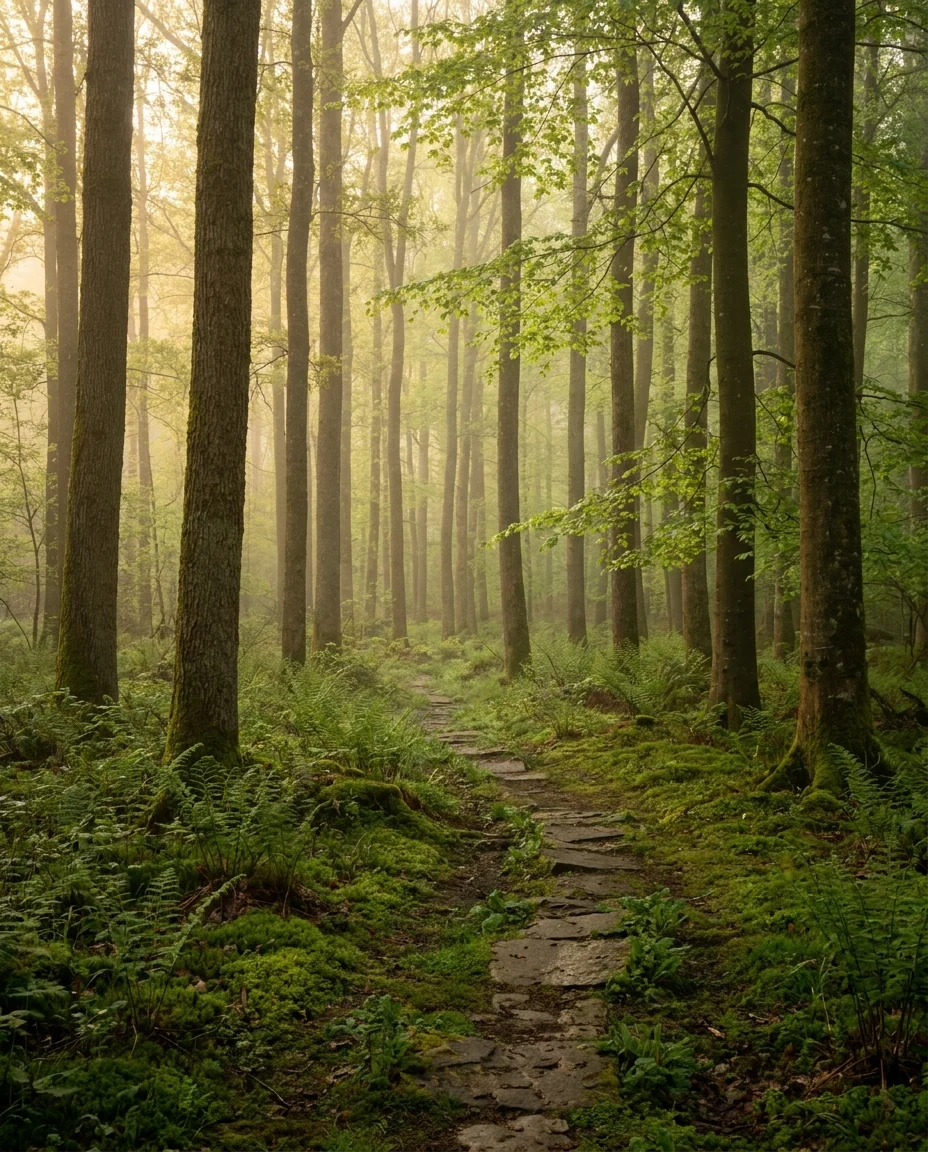
In the Gaume, between the Semois hills and the wooded plateaus climbing toward Lorraine, timber travelled for centuries without roads. It went by water. The drave — floating logs down rivers — was, for generations, the main way out of the forests of the Gaume and the Ardennes. In winter, you felled trees. In spring, the river rose, and the hill men took the current.
The hill oaks and the spring current
After the winter felling, the trunks — oaks and hornbeams from the Gaume slopes, beech and spruce from the higher faces — were hauled to the bank by ox or horse teams along narrow lanes cut through the moss. They were lashed into rafts, the trains de bois, bound with braided rope and oak cross-ties. Then the Semois, swollen by March and April rains, became a road. The draveurs waded in, sometimes to their thighs, and followed their cargo for kilometres, pike in hand, to the confluence with the Meuse.
The journey was long, sinuous, full of obstacles. A trunk jammed under an old stone bridge, a stump snagged in a meander, a raft splitting at a bend — all of it had to be sorted out in the rain, in the cold, hands numb in April water. And there were transit disputes. Toll rights on the Semois fell under different jurisdictions village by village, between the Gaume and Lorrainer territory. The draveur cared only for getting his wood down alive.
The man with the pike, half-farmer, half-river
The Gaume draveur was a farmer in winter and a freshwater sailor in spring. He did not own the river; he worked it as one works a field, by season, by necessity. His tools fit in a satchel: a gaff hook to snag rafts, a broad-bladed knife to cut rope, a flask of coffee to hold back the mist on April mornings.
Whole families worked the trade, from one end of the valley to the other. At Torgny, at Montquintin, in the hamlets clinging to the right bank, the old ones still say that boys learned the craft before they learned to read. They read the water as one reads a text: a swirl, a vein, a tongue of current, and they knew where the raft would settle.
The work was hard and the pay was little. The timber reached the Meuse furred with foam and mud, sometimes diminished — a trunk lost, a rope snapped — and the accounts never quite balanced. The last great drave on the Semois dates to the early twentieth century. The railway had already killed the river-road.
What remains in stone and in words
Today the Semois carries only canoes, herons and the russet light of October. But the landscape keeps the memory of the trade. Old stone walls along the bank, at Torgny as upstream toward Lorraine, speak of former unloading ramps, timber quays, drave passes. Place-names murmur: Port du Bois, Quai des Trains, rue de la Décharge.
And the Gaumais patois has kept a vocabulary of log-driving that nobody in standard French understands any more: haler, débusquer, embâcler, traversiner. Verbs of action, of mud and of effort, which have no use left but still live in the mouths of the old ones, Sunday after Mass, when one remembers that the river was a road and that wood was the gold of the hills.
Want to discover the Gaume in person?
Six characterful houses, hot tub, walled garden — minutes from the sites we write about.
See the houses