
La coursade in the Gaume: when the village presses apples together
Late October in the Gaume, a few farmyards still turn their presses. La coursade isn't a festival: it's an end-of-season ritual where the juice flows, talk drifts, and memory lingers.
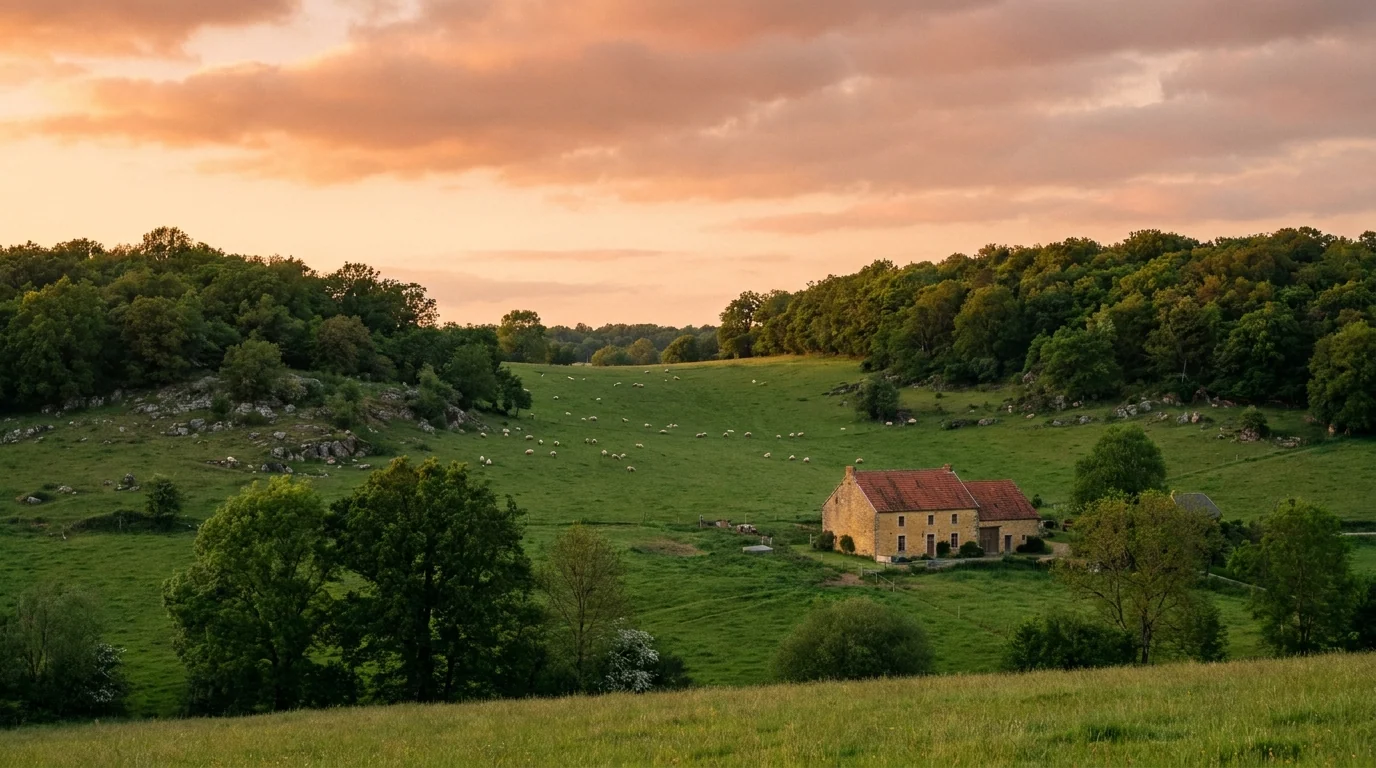
The sky is already grey on this twentieth of October. The apple trees on the hillside are nearly bare, but in the yard of a farm between Virton and Étalle, the wooden press waits. Picked three days earlier — sometimes underripe, sometimes wormy, it doesn't matter here — the fruit is piled on and pressed. The coursade of the Gaume is nothing like a folkloric demonstration. It is a day to close out the harvest, a family ritual that for generations gathered neighbours and kin around a single act: extracting the juice of Gaume apples and letting it ferment for winter.
The gesture and the conversation
You start by washing the fruit in the trough, then feed it through the hand-cranked grinder, that iron machine smelling of cold metal and sweet pulp. The must drops into a bucket, then into the oak cage press. You tighten slowly. The juice comes out cloudy, amber, tasting of soil and dead leaves in a way no supermarket bottle ever will. Children turn the crank; adults discuss the weather, the price of firewood, someone's dog. Nobody films. Nobody explains to an audience. You press because pressing is necessary, because there are too many apples for two people.
In the Gaume, every village took its turn. The press passed from house to house, from ducasse to ducasse, between October and November. The juice fermented in glass demijohns lined up in the cellar, behind the bottle rack. You got a sharp, barely sweet cider drunk at teatime with a slice of cûtchau. And quietly, without mentioning it too loudly, you distilled a spirit your grandfather saved for All Saints' Day, for funerals.
A tradition fraying without vanishing
Today the coursade survives in fragments. A neighbour with three trees calls the cousin who owns the press. You press on Saturday morning, lunch on a touffaye and a tourte, then head home with jerry cans of juice you won't necessarily keep. Young households along the Semois valley still press, often just for themselves, without the lending ritual that once bound the village together. The press itself sometimes sleeps at the back of a barn, dust and cobwebs over the cage — too heavy to scrap, too beautiful to burn.
It is honest to say so: the coursade is not what it was. But the juice running from the press on this midweek morning, in Torgny or Sommethonne, is the same. Cloudy, faintly astringent, alive. It doesn't need a label to be good.
The Gaume apple, a discreet terroir
The Gaume does not produce commercial cider. It produces apples: reinette grise, boskoop, api-rouge — varieties planted by grandparents at the edge of the orchard, never named with precision. You recognised them by hand, by the slightly lumpy shape, by the way the flesh crumbled under the teeth. Pressed together without hierarchy, these fruits give a juice that tastes of hillside, of limestone, of the wind coming off Lorraine.
On the twentieth of October, in a Gaume yard, the press is still turning. Not for visitors. For the people who live here. For the stubborn pleasure of making, with your own hands, something you cannot buy ready-made. The juice flows. The conversation continues. And that is quite enough.
Want to discover the Gaume in person?
Six characterful houses, hot tub, walled garden — minutes from the sites we write about.
See the houses