
The October rut: when the stag makes the Gaume beech forest shudder
Late October, in the limestone beech forests of the Gaume, a guttural cry echoes between the trunks. The stag roars, and the forest answers with silence.
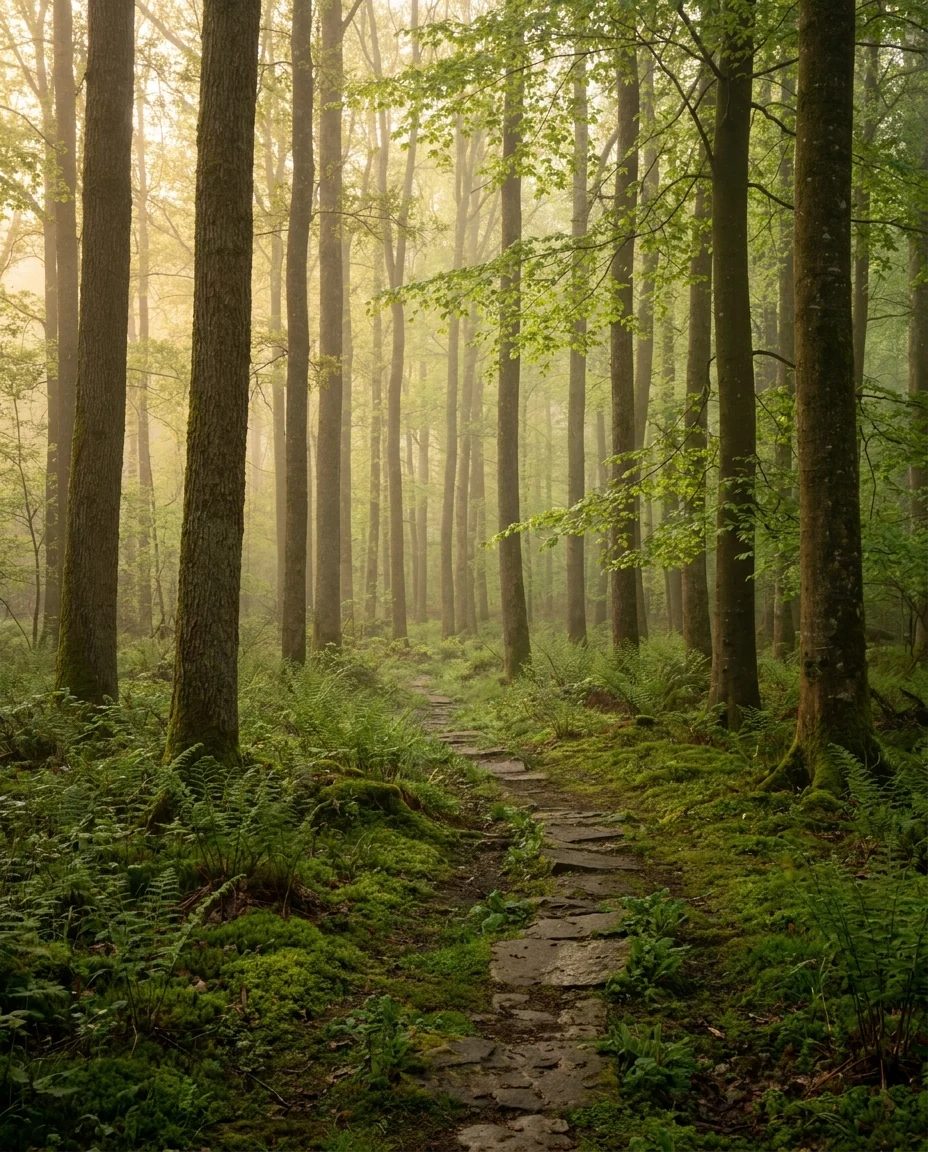
It is six in the morning somewhere between Torgny and the Lorraine border. Mist clings to the ground beneath the beeches, a milky sheet through which no bird can pass. Then, in the hollow of a ravine, a sound rises. Deep, hoarse, almost human. The stag is rutting, and you feel, between your ribs, that the earth is still warm under the fallen leaves.
The Gaume does not count its deer. They live where the beech forest clings to the limestone, on south-facing slopes that the villagers call the tchasse — that land of gentle hills and stunted boxwood. In this late October, they leave the high plateaus to descend into deeper woods, where springs still seep beneath the moss.
A cry that belongs only to beeches
The stag's roar is not a bellow. It is a long breath, broken into three notes, snapping in the throat like a branch being twisted. Beneath the beech canopy, the sound does not scatter: it rebounds, returns from further away, splits between two smooth trunks stretching into infinity. The acoustic landscape of the Gaume beech forest is unique. The foliage, already almost entirely fallen, lets every vibration pass without smothering it, and the limestone bedrock reflects the low frequencies like a cathedral.
This is why the elders of Virton or Florenville said you had to climb to the ridges to hear the rut. Not in the Semois valley — too damp, too planted with conifers that absorb everything. On the slope, between hornbeam hedges and yellowed autumn meadows, the cry carries. It carries until the mist lifts and devours it.
Listening, a very Gaumais gesture
There is no touristy "deer watch" in the Gaume as one finds in the central Ardennes. There is a more intimate habit: going to listen. A man from Montquintin, once summer is over, gets up at five. He mounts his bicycle or takes the small road climbing toward Sommethonne, and he walks. No marked trail, no notebook, just his boots in wet leaves. He has not come to see. He has come so that the sound passes through his body before the day begins. To check, he sometimes says, that the forest is still standing.
This listening needs no interpreter or telescope. The stag roars twice, three times, then falls silent. The mist tears apart in shreds. Then you hear a crack, a dry cough in the next ravine. That is all. You walk back down the slope, push the bicycle forward. The day can begin.
An autumn that makes itself heard
October in the Gaume is not only a matter of colours. The beech leaves, once on the ground, produce an immense rustling, a slow tidal noise that the wind lifts in waves. The stag roars over that carpet. The mist holds the sound as wool holds warmth. And for a few more weeks — between All Saints and the second All Saints, for in the Gaume they celebrate twice — the beech forest speaks in a low voice. You only need to climb, before coffee hour, before the foresters' trucks also ascend the ridge. You only need to place one foot before the other and listen to the hill breathing beneath its crown of bare branches.
Want to discover the Gaume in person?
Six characterful houses, hot tub, walled garden — minutes from the sites we write about.
See the houses