Gaume's marl: when the soil gives the village its colour
Below the beeches of the high Ardennes, Gaume changes its ground. And with the marl comes a whole world: ochre, fertile, built from its own stones.
A border you won't find on any map
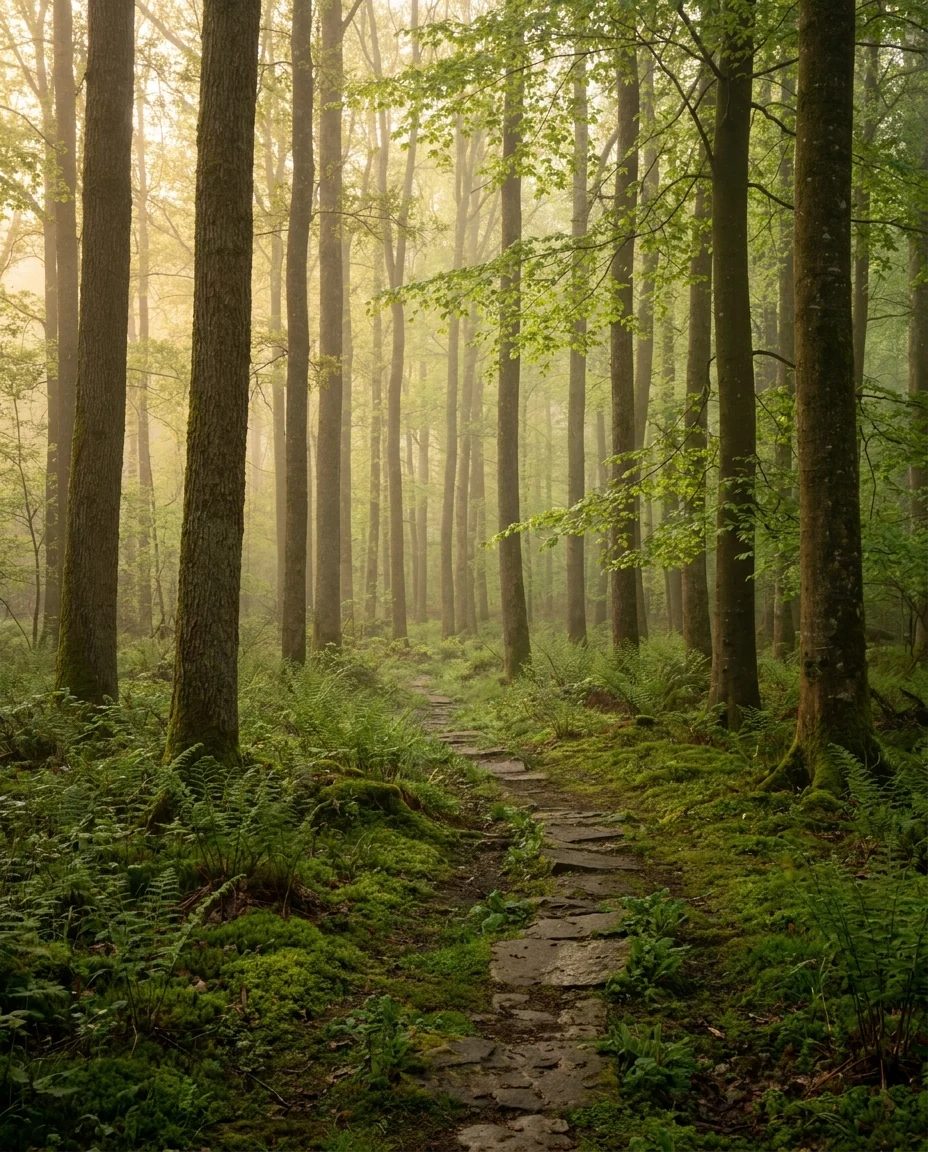
Descending from Florenville toward the south, you change worlds without crossing a single line. The Ardennes fade, the limestone gives way. Underfoot, a softer, fatter earth that clings to boots and tyres: marl. This soil is not a geological footnote. It is the very reason Gaume is not the Ardennes, the reason Belgium has a small Provence at its southern doorstep.
Marl is that blend of calcium carbonate and clay laid down by ancient seas, millions of years ago. In the Gaume basin, it surfaces in thick layers, alternating with hard limestone beds. This stratification produces the region's rounded hills, the slopes where Torgny's vines cling on, the green pastures just where, a stone's throw north, the rocky substrate forces bare moorland upon the landscape.
When marl inhabits the walls
The Gaume builder has always worked with what lay beneath the spade. The old houses of Sommethonne, Villers-devant-Orval, or the hamlets of the Virenque valley carry the trace of this soil: hard limestone ashlar for corners and doorways, infill of softer marl blocks, limewash or raw-earth rendering. The colours join in: the cracked white of limestone, the ochre yellow of iron-rich marl, the blue-grey of deeper marl strata.
You do not paint a Gaume house as you would paint an Ardennes one. Here, the stone shows itself. It speaks of season, of stratum, of place-name. A marl wall in November is a bark that breathes, holding the night's dampness and giving it back at dawn. The old folk knew this without formulating it. They simply called it « la pierre du pays » — the stone of the country.
October in the marls: the light changes
In late October, Gaume tips into a palette the Ardennes never know. Bare marl fields, ploughed for winter, throw back a luminous ochre under the first low autumn suns. Still-leafed hedgerows frame those parcels like vignettes: the Gaume bocage, that green mesh of vegetation that holds the fat soil on gentle slopes, wears its last colours before the bareness comes.
Market gardeners and vintners know it: marl retains water in summer, drains in winter. It feeds the meadow, bears the vine on its slopes, gives the cheesemaker matter enough to ripen a rind, the brewer enough to purify water. Everything typical that Gaume produces — from the cheese to the glass of white — is a product of that clay-limestone layer. Not a terroir marketing invention. A geological reality, readable in the taste.
Walking along the sunken lanes between the hedges in late afternoon, touching a rubble wall where the marl has blackened with rain, watching the Virenque thread between the low meadows: you understand then that Gaume is not a backdrop. It is a geology that became culture. And that culture you keep in your palm, like a handful of fresh earth.
Want to discover the Gaume in person?
Six characterful houses, hot tub, walled garden — minutes from the sites we write about.
See the houses