The Orval That Ages in the Cave: A Monk's Patience and Slow Cheese
In the cellars of Orval Abbey, a rinded cheese has been sleeping for months. A lesson in Gaumaise patience, half Lorraine, half Ardennes, that no one rushes.
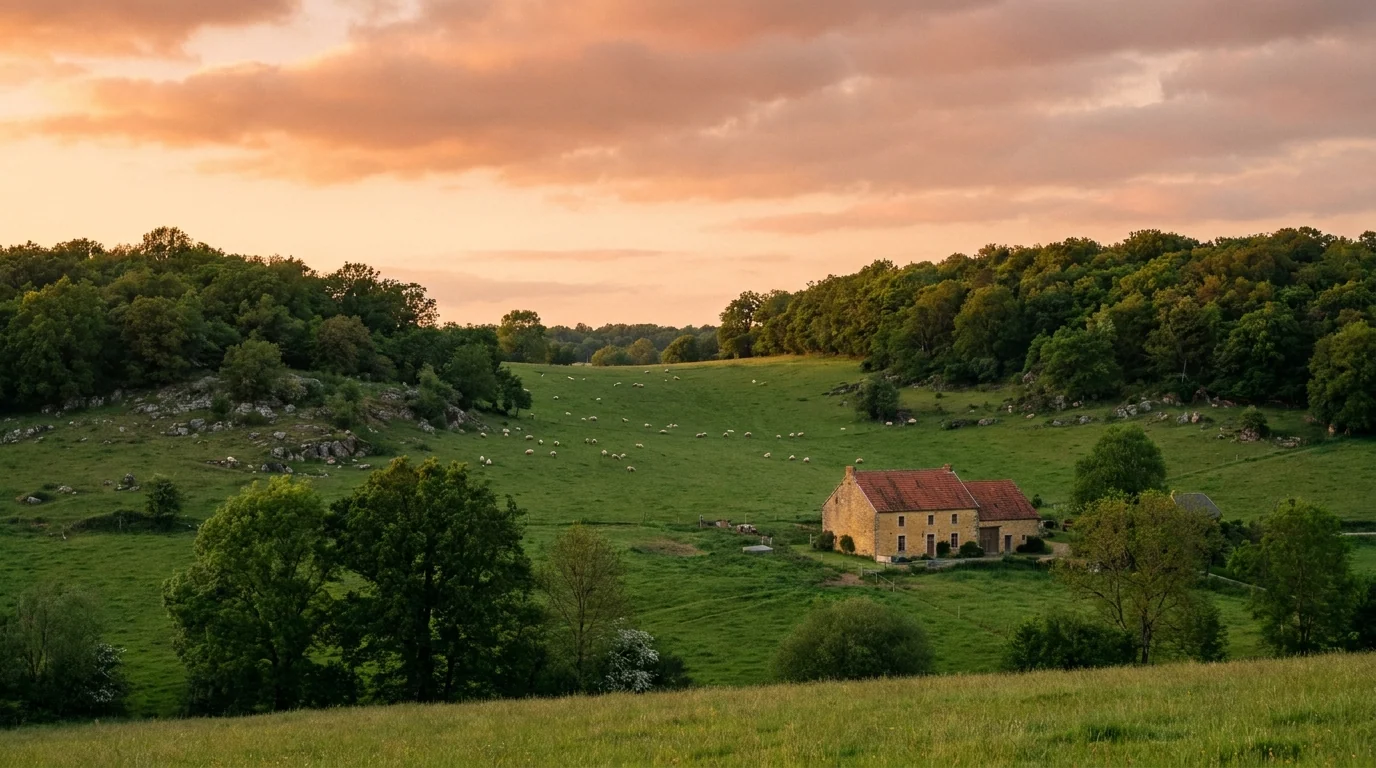
In the Gaume, November smells of beeswax and wet earth. But in the cellars of Orval Abbey, another scent rises: that of a cheese that has been sleeping for months, its rind reddened by patience, and whose emergence no one rushes.
A Rind Formed in Silence
The cheese of Orval was not invented for the market. It was born from a necessity: to provide the Trappist monks with a food that keeps, that nourishes, that lasts through the cloister's winter. The recipe is simple — milk, rennet, salt — but the gesture that turns it into something else lies entirely in time. Weeks in moulding, months in ripening, the rind slowly taking on its characteristic orange-red, the bacteria that carve the paste and transform it from the inside.
They say the aging monk does not command. He accompanies. He turns the wheel, observes the surface bloom, adjusts the cellar's ventilation according to the day's humidity. It is a craft of intimacy: you must know the cheese the way you know a landscape you walk every morning. In the Gaume, this relationship with long time has a name: Gaumaise patience, half Lorraine, half Ardennes, with that quiet stubbornness that makes you wait until the end of the meal before talking about dessert.
The Terroir Enters the Wheel
The milk comes from the surrounding pastures, those grass meadows that the mild Gaume climate cradles year-round. The hay still carries traces of the marl soil and the limestone. One cannot say it often enough: Orval cheese tastes of the Semois, its meanders, its alluvial meadows. It tastes of the hornbeam hedges that line the fields, of the southern winds rising from the Chiers valley. The cattle graze a map, and the map appears on the tongue.
This is what sets a terroir cheese apart from a recipe cheese. A recipe can travel. A terroir cannot. And that is why aging in the cellar, in the very subsoil of the abbey, a few steps from the ruins that the Gaume admires each summer, is not a logistical detail. It is an anchoring. The soil of the place permeates the cellar air, and the air permeates the rind.
A Gesture That Refuses to Hurry
Today, everything goes fast. We want taste right now, novelty every week. Orval cheese resists this acceleration through the sole force of its slow maturing. It is not sold as a product; it presents itself as a decision: that of the Trappist community to keep a rhythm, to refuse to industrialise what the body cannot outrun.
When you step into the abbey gardens at the threshold of November, you measure how this cellar time is also a time of watching. Not anxious waiting, but attentive watching — the kind you give to a ripening wheel, as you give a nightlight to a sleeping house. The Gaume has always known how to do this: watch over what grows slowly, in the Torgny vines as in the Orval cellars.
You do not taste this cheese to fill yourself. You taste it to hear, under the tongue, the season you have just walked through.
Want to discover the Gaume in person?
Six characterful houses, hot tub, walled garden — minutes from the sites we write about.
See the houses