
Keeping watch over the dead in the Gaume: the night the village held its breath
On October 31, the year turns. In the Gaume, neighbours once kept vigil over their dead until dawn, candles in hand, doors open. Remembering a tradition the villages haven't quite forgotten.
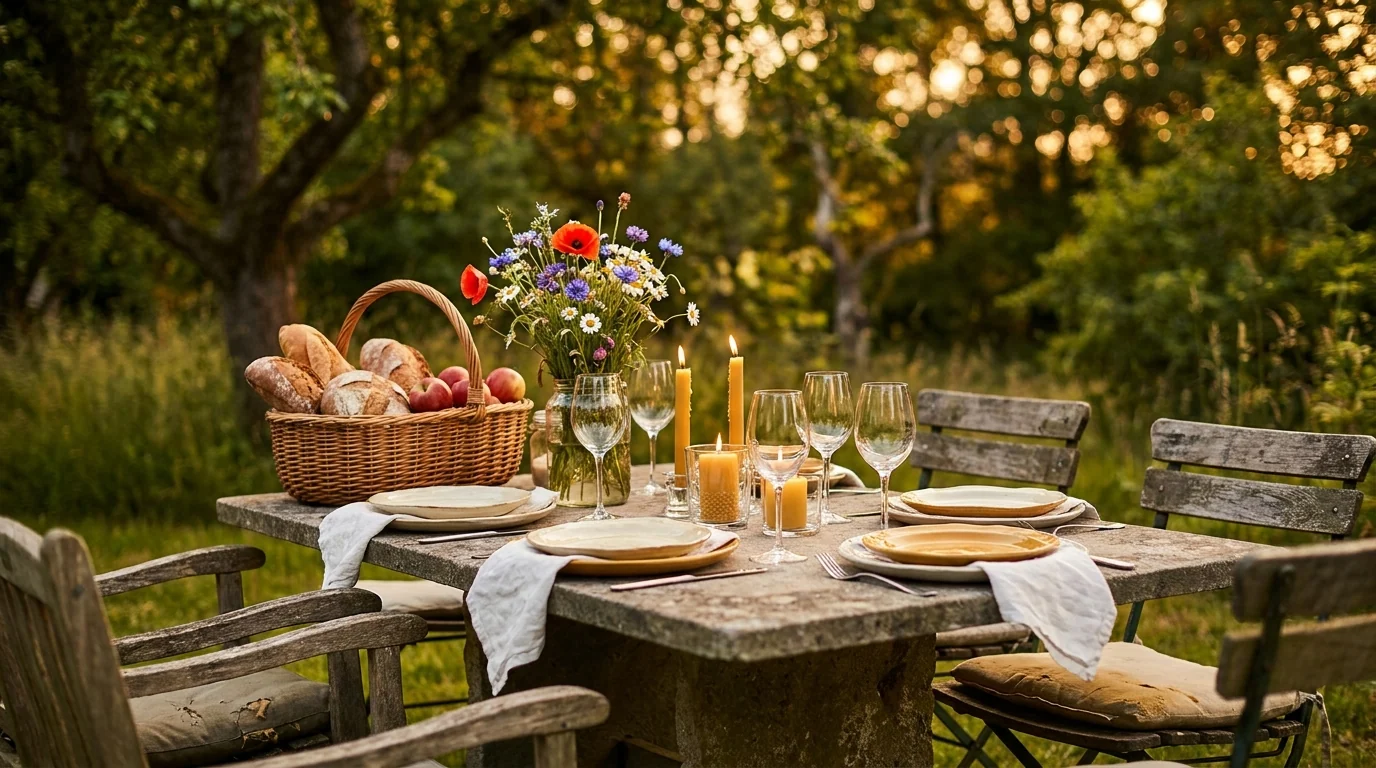
The last evening in the village
In the Gaume, you didn't die alone. Not really. The body was laid out in the bedroom, the stove still warm, and at dusk the door swung open. Neighbours came. Women brought candles, men a cup of maitrank coffee or a glass of schnapps. They sat around the bed — first in silence, then in words. They told stories about the departed: his harvests, his quarrels, his last apple-picking. The night lasted until daylight came to carry the body to the cemetery.
It wasn't a celebration, nor a fear. It was an act of presence. A way of saying: you don't cross alone, the village holds your hand until the night is over. The elders in Torgny, Sommethonne, or Latour still remember it in their bones, even if no one practices it quite that way anymore.
The rituals of the vigil
Before the neighbours arrived, the family had its own rites. The mirror was covered with a black cloth. The clock stopped, as if the time of the living had to pause. A small stoup of spring water stood against the front door, so each visitor could bless themselves at the threshold. The dead man's hands were clasped over a worn rosary, and sometimes a print from Orval Abbey — the image, not the beer — tucked into his shirt pocket.
People spoke in low voices. No one slept. The children stayed up, fascinated, because in the Gaume death was never hidden from the little ones: it had its place in the house, in the garden beneath the apple trees, in the language. They said è s'a-st-àtè — he has stopped — and the village knew it was time to light a candle.
A light that fades, but not entirely
Coffins now go to funeral homes towards Virton or Arlon. The vigil, as a communal institution, flickered out between the 1970s and '80s. Houses are too small, distances too long, the dead too anonymous in a village that still recognises faces but not quite the same ones.
And yet, on October 31, in the cemeteries along the Semois and the Meuse, you'll still find a candle burning on a cold stone. Someone passed by. They didn't wait for All Saints' Day. They did as the great-grandmother: set a flame in the night, then went home. The village no longer keeps watch all day long — but it doesn't forget, as the shortening days tip the year, that the Gaume stands between the living and the path beyond. Perhaps that's the truest thing left.
Want to discover the Gaume in person?
Six characterful houses, hot tub, walled garden — minutes from the sites we write about.
See the houses