
The stones of Orval: when the abbey falls silent beneath November mist
In November, the ruins of Orval look for no one. They dissolve in the mist rising off the Semois, and it is in that silence they speak best.
The cold that reveals
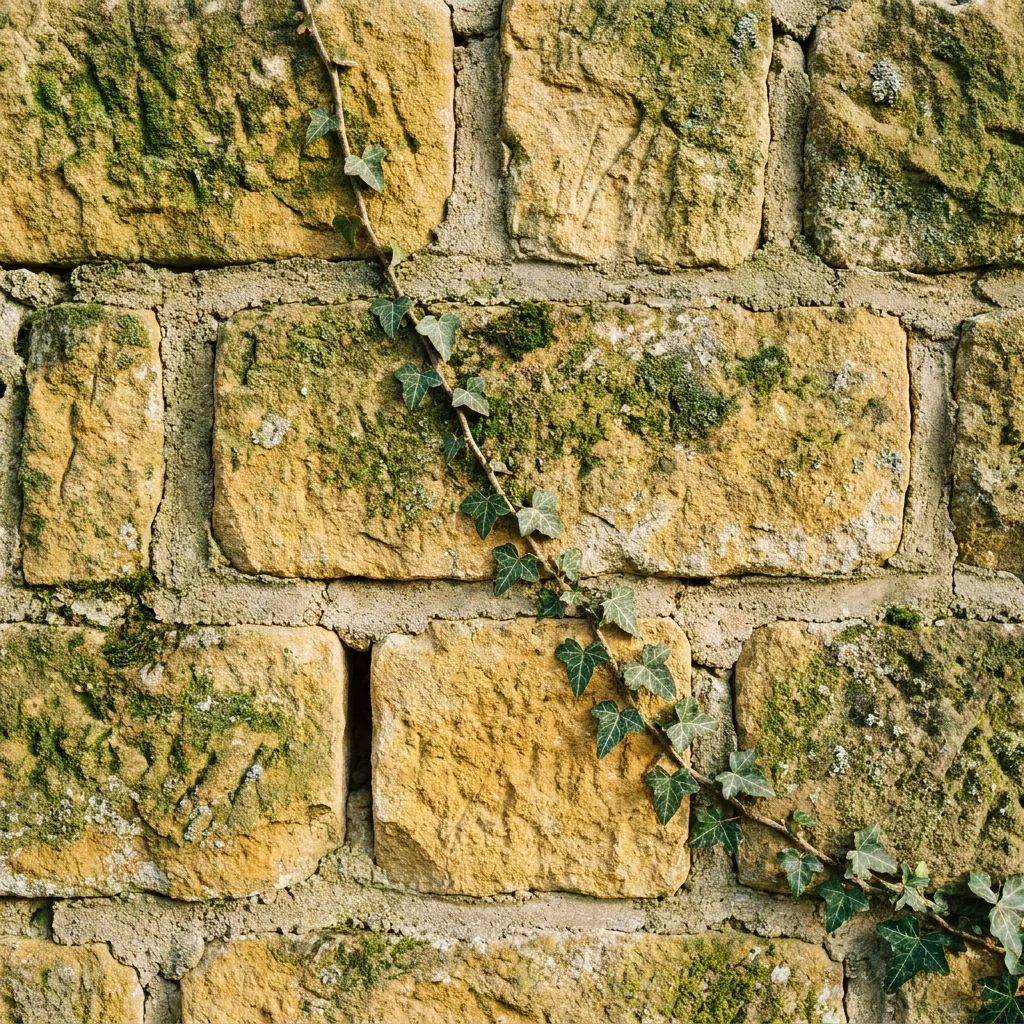
November arrives at Orval like a silent visitor. Mist descends from the heights of the Semois and slides between the Romanesque vaults of the cloister without sound, without hurry. The trees have lost their leaves, and what stayed hidden since spring — the veins of the stonework, the carved modillions, the mortar joints still holding — appears at once, with no artifice.
It is perhaps the only season when the old abbey gives itself entirely. No tour groups, no flowering season to distract the eye, no maitrank scent hanging in the air. Just grey stone, the dark green of pines, and that dampness rising from the Gaume soil like a slow breath.
One walks among the ruins as through a book left open at every page: the abbey church of the twelfth and thirteenth centuries, the remains of the refectory, the old forge that reminds us Orval was a place of iron before it was a place of monks. Every arch, every buttress speaks its era.
What the centuries left standing
What we see today is only a fragment of former power. Wars, fires, centuries of neglect gnawed away what should have been one of the most beautiful religious complexes in the Gaume. What remains is the beauty of ruins — that beauty which needs no completeness to move you.
The solitary visitor, the one who comes in November with a thermos of coffee and a scarf pulled up to the ears, is not looking for grandeur. He is looking for silence. And Orval, at this hour, offers it without condition. Crows trace circles above the apse. A drop falls from a gargoyle onto a flat stone. The wind snaps dry branches against a buttress. Nothing more.
This is the opposite of a spectacle. This is a presence.
The community living alongside
A few hundred metres away, the new abbey works. The Cistercian monks brew, make cheese, pray according to the rule they resumed in the nineteenth century after three hundred years of silence. Orval beer and cheese travel the world. But the old stones sell nothing.
They are not part of a marked tourist circuit with information panels and a gift shop. They are there like a forgotten garden at the back of an estate — you can see them if you wish, walk through them, lay your hands on them. No one asks for a ticket. No one narrates.
This coexistence of the living and the ruined is unique to Orval. In the Gaume, few sites carry such double memory: that of a construction still continuing and that of stone that has stopped. In November, the contrast sharpens. The mist makes the ruins unreal; the lights of the new abbey, meanwhile, stay warm in the night that falls early.
You come back in March, in July, in September. But returning in November means hearing something else. Hearing what the abbey was already saying when no one came to listen.
Want to discover the Gaume in person?
Six characterful houses, hot tub, walled garden — minutes from the sites we write about.
See the houses