
Maitrank on standby: beneath the frosted hedge, Gaume waits for spring
November stills the Gaume hedgerows. Beneath moss and frost, the sweet woodruff quietly prepares its golden glass for May.
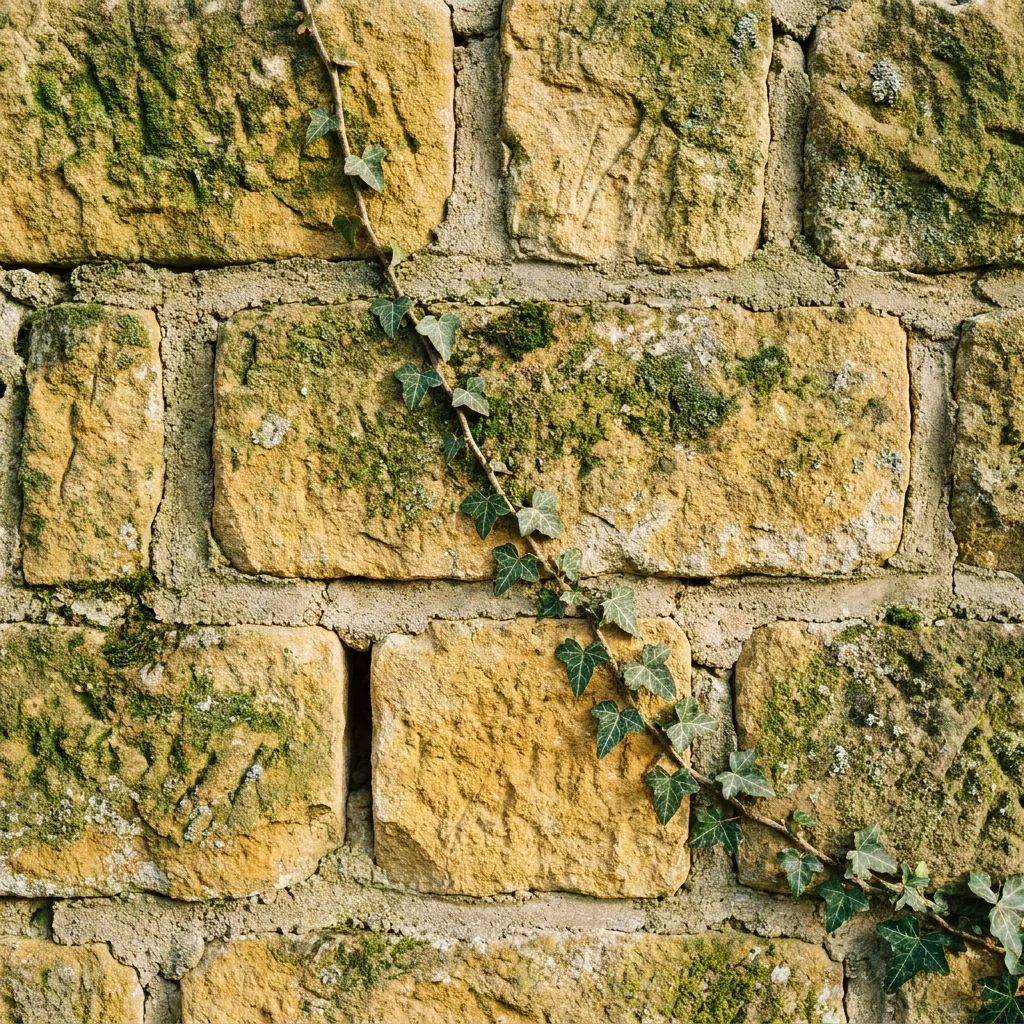
In Gaume, the haye is no backdrop. It is a living wall. In November, once the trees have let go of their last leaves, the hedgerows become the only green skeleton in the landscape. You scan them with your eye: blackthorn, hawthorn, dogwood, hornbeam bent by centuries of pruning. And beneath, pressed to the damp earth, the little rosette of Galium odoratum — sweet woodruff — waits. It does not stand up yet. It is patient. Its fine leaves, clasped in a star against the soil, shrug off frost like a closed fist that will open in April.
Sweet woodruff grows in the shadow of hedges, where moisture lingers and light never falls straight. Decades of bocage are needed to establish a colony. Each plant is a botanical heirloom, often older than the field it borders. The village elders simply called it « la plante du maitrank ». No speech. No Latin on the lips. One word, three syllables, a knowledge that passes through generations without ever being lost.
The patient recipe for a glass of spring
Maitrank is an assembly of three ingredients: young malt beer, dried sweet woodruff, and sugar. Nothing else. You place everything in a jug, seal it, lower it into the cellar, and forget about it for a month. No checking. No stirring. Just time, fermenting the herb into the hops. At Easter, you uncork. The glass takes on a golden colour, almost amber, and the woodruff's vanilla-honey bitterness floods the mouth.
But for there to be a glass in April, the malt must first be brewed in November, once the hop yards have given their yield. March beer is prepared in autumn. This is the Gaume paradox: spring is built in winter. You lower the casks into the cellar coolness, lay the woodruff in bundles on the slatted shelves, and you wait. The maitrank pie, with its golden pastry and filling of smoked ham and sweet onions slowly braised in butter, will compose the May table. The hands that will set it down have not yet been raised. The recipe is murmured from mother to daughter, in a half-Gaume, half-Walloon patois. No weighing. A thumb of sugar, a handful of dried herb, a jug of pale beer. The gesture knows, the memory of the fingers knows, before the eye ever measures.
Walking the hedge when frost writes upon it
In November, walking along Gaume's hedgerows is an exercise in attention. Frost draws ephemeral calligraphy on the dead leaves, and the woodruff, tiny, almost vanishes beneath lichen and the flattened fronds of ferns. You crouch, part the moss, recognise the little six-leafed star. A child of Virton or Latour who can perform this gesture will never again forget the taste of his first maitrank.
The hedge is a threshold. Between field and lane, between rain and shelter, between root and sky. Sweet woodruff is a threshold of season: it separates winter from May, forgetting from the glass. And when you seal the jug back into the cellar, at that hour when the last light tilts over the bare trees, you make a very Gaume wager: patience always ends up tasting good.
Want to discover the Gaume in person?
Six characterful houses, hot tub, walled garden — minutes from the sites we write about.
See the houses