
Fog on the Creuë: when the border vanished at nightfall
November 1840 or 2026, it matters little: the mist rising off the Creuë erases the line and makes neighbouring villages neighbours once again.
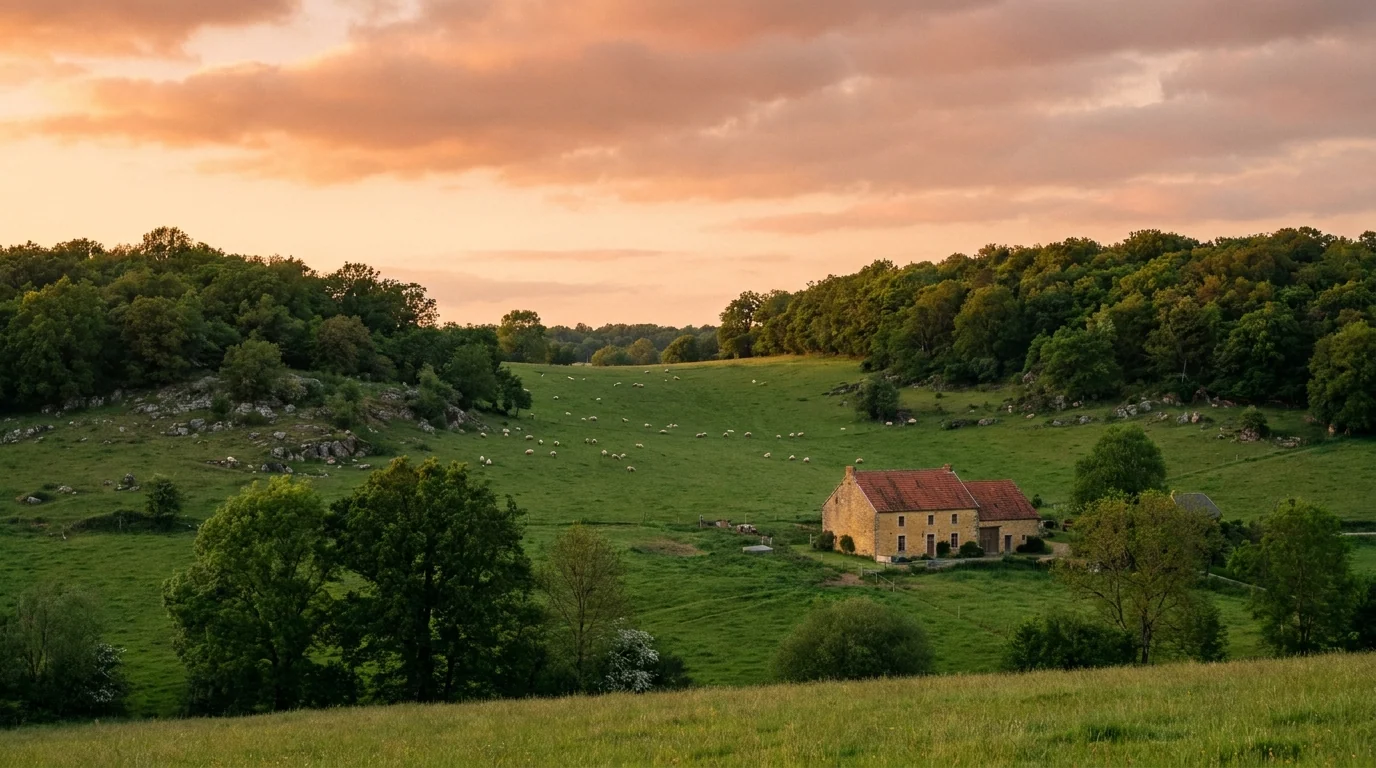
The border that did not cut the houses
It is five in the evening in November, and the Creuë overflows with mist between Montquintin and the Lorrain villages across the water. You cannot see twenty paces. The banks, the willows, the old rubble-stone walls vanish into a thick milk. This is precisely the hour and precisely the weather when, for decades after 1839, silhouettes walked along this stream without a light, without a sound, without a flag.
The Belgian-French border was drawn in 1839 by the Treaty of London. It cut through Gaume — a linguistic, agricultural, familial space — into two administrative halves. In Montquintin, Latour, Torgny, Sommethonne, people woke up with a field in France and a house in Belgium. Children still went to play on the other side of the meadow. The line existed only on paper.
In the first years, people crossed the Creuë without thinking. Then came the customs officers, the checks, the reports. And the border, little by little, became something to go around. Not out of rebellion. Out of neighbourly habit.
Coffee, tobacco, and November's patience
They did not carry gold or diamonds. They carried coffee — rare and expensive on the Belgian side, more accessible on the French side. Loose-leaf tobacco. Salt, sometimes, textiles, a bolt of cloth to be stretched out at Virton or Sedan depending on the season. Light sacks, boots in wet fields, a two-hour head start on the next morning's patrol.
November was a golden month for the quiet smugglers. Night falls fast. Fog clings to the valleys of the Creuë and the Chiers for hours. The hollow paths — still those — become invisible from the high road. You followed the wheel-ruts by touch, counted the willows, crossed the stream where the ford is shallow and where the grass has been flattened by other footsteps.
This was not large-scale contraband. It was a housewife's smuggling, a grandfather's, a cousin's. Everyone knew, no one wrote. Customs archives record a few modest seizures. Family memories speak of far more.
What the stones still hold
Today, no one hides coffee anymore. But the Creuë still flows, misty, between Torgny and Saint-Cérez, between the two tongues that were once one. The villages of the Gaume border strip keep in their architecture the trace of this double life: houses whose barn door opened toward Lorraine, orchards split between two cadastral records, cemeteries where surnames repeat on both sides.
And when, one November evening, you stand on the bridge at Montquintin and the mist swallows the valley, you understand why the old ones said, a little wryly: 'The border is made by the fog, or unmade by it.' The stream itself does not care. It flowed long before 1839 and will flow long after. Beneath it, Gaume remained one land, one speech, one wind that smells of damp beechwood and burnt leek in a cûtchau two hundred yards away.
Want to discover the Gaume in person?
Six characterful houses, hot tub, walled garden — minutes from the sites we write about.
See the houses