
Smugglers of the Mist: When Gaume Walked Through the Night
In November, daylight fades early and the border dissolves into fog. For generations, men and women of Gaume crossed the darkness carrying sacks of coffee or bales of tobacco.
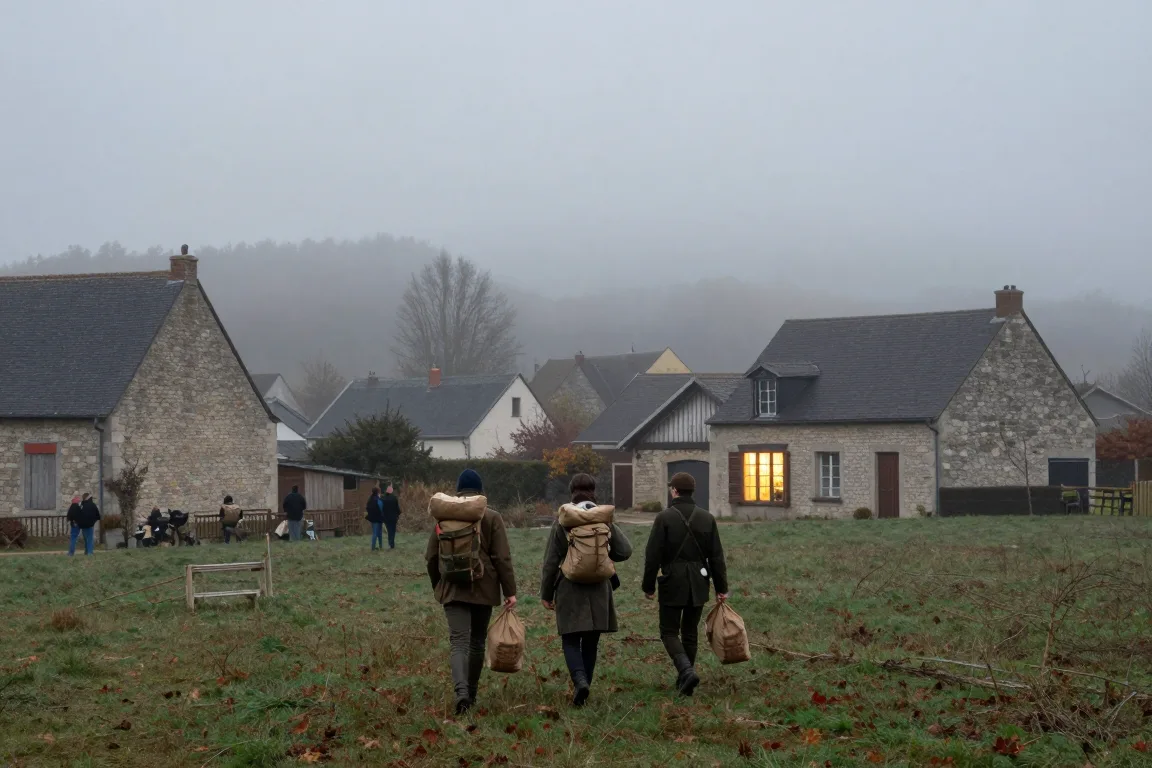
Night falls at four o'clock
In late November, Gaume loses its light before four. The meadows vanish beneath a white sheet rising from the valley floors, and the hawthorn hedges become opaque walls. At this hour, between Virton and Longuyon, between Bouillon and the Luxembourg border, the line drawn by geographers is worth nothing. You can no longer see the boundary stones. You can no longer see anything at all.
This was precisely what the smugglers sought. The coffee runners, above all. Coffee from the Grand Duchy, unloaded at the Arlon or Étalle railway station, carried lower taxes than in Belgium. A six-kilo bale on a wheelbarrow, a black scarf over the mouth to muffle coughs among the wooden pins, and off you went south, toward the Meuse. No marked paths. Gaps in the hedgerows, fords across the Creuë, trails that only a child's memory could identify by moonlight.
The coffee from Étalle, the tobacco from the Meuse
They were not brigands. They were people of the soil, the forge, or the brewery who saw customs as a fifth family member, a touch too severe. The women of Latour or Montquintin went to sell their eggs and chickens on the Longwy side, returning with sniffing-tobacco leaves sewn into their petticoat linings. The men gambled bigger: a sack of green coffee hidden beneath a load of beetroot, metres of linen cloth between two crate planks.
It was not criminality. It was geography. Neighbouring Luxembourg offered cheap coffee because it imported duty-free; France supplied tobacco that Belgium taxed at the border. And between the two, Gaume spread its gentle hills, its beech and oak forests, its Lorraine villages where people spoke a common patois on both sides of the frontier. The local gamekeepers on each side knew, better than the customs officers dispatched from Brussels or Bar-le-Duc, who was who. At night, some closed their eyes. Others did not.
The threshold we still cross in thought
Today, you drive thirty seconds from Sommethonne to France without looking up. Schengen has made the markers invisible, the officers have merged into the landscape, and Luxembourg coffee sits in any kitchen at Torgny or Chiny. Smuggling has yielded to the banality of crossing.
Yet in the isolated farms between Étalle and Florenville, the old folks still tell, with a half-smile, how their grandfather crawled into a ditch to let a patrol pass, or how the aunt in Sommethonne hid her stash beneath the attic straw when she heard the brigade's car approaching. These stories are not moral lessons. They say something simpler: Gaume is a land of thresholds. You cross boundaries the way you cross a lane — without thinking, because the terrain and the tongue are the same on both sides.
In this late November, when fog drowns the hedgerows and the horizon has lost its name, it is gentle to think that these night-paths are not quite dead. They wait, between the mud and the wet leaves, for someone to walk softly again — no longer for a sack of coffee, but for the pleasure of feeling the border dissolve beneath their soles.
Want to discover the Gaume in person?
Six characterful houses, hot tub, walled garden — minutes from the sites we write about.
See the houses